
Digital Marketing for Nepal Salons & Spas: 2026 Strategy
Industry Overview: The Beauty and Wellness Boom in Nepal
Market Profile: A Tale of Two Tiers
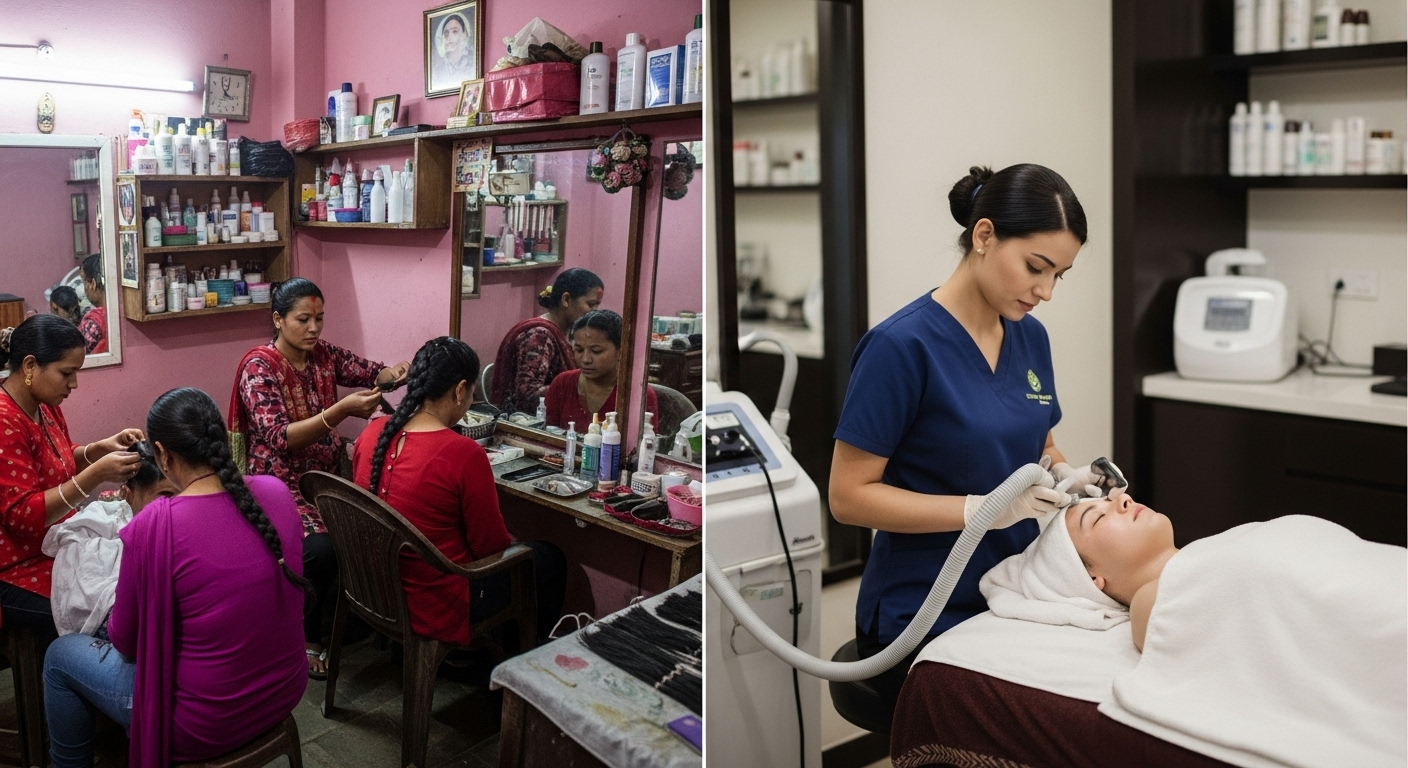
The salon and spa industry in Nepal presents a dynamic and stratified market, characterized by a dual structure that reflects the nation’s evolving economic and social landscape. The foundational tier, and the vast majority of the market, consists of small-scale “beauty parlors.” These establishments are predominantly concentrated in urban centers, often operating in compact spaces with minimal initial investment and a small staff of one or two employees. A significant characteristic of this tier is its role in fostering female entrepreneurship; these businesses are largely operated by women, providing a vital avenue for financial independence and familial support. They have been a cornerstone of the local beauty culture for over three decades, making beauty services accessible to a broad segment of the population.
In parallel, a sophisticated upper tier of “luxury” and “professional” salons and spas is rapidly emerging, catering to a new generation of discerning clientele. Establishments such as Ananeke Beauty Salon and Spa in Kathmandu and the Tranquility Spa chain exemplify this trend. These businesses differentiate themselves by offering a world-class, experience-driven service model that prioritizes hygiene, ambiance, and personalized care. They often employ internationally trained professionals and provide an expanded menu of advanced services, including specialized treatments like hydrotherapy, aromatherapy, and modern aesthetic procedures, setting a new standard for quality and luxury in the Nepalese market.
Market Dynamics: Growth, Trends, and Economic Significance
The Nepalese beauty and wellness industry is in the midst of an unprecedented growth phase. Over the past decade, the sector has “surged rapidly,” transitioning from a niche luxury into what is increasingly considered a necessity for a large portion of the urban population. This boom is propelled by several key socio-economic factors: a growing and aspirational middle class, accelerating urbanization, and a profound cultural shift towards valuing personal grooming, self-care, and wellness. The economic data underscores this trajectory; the broader skin care market in Nepal was projected to grow at a Compound Annual Growth Rate (CAGR) of 9.1% between 2020 and 2025, with the skin aesthetics segment alone expected to reach a market size of NPR 34 billion (approximately USD 280 million) by 2024.
One of the most telling indicators of this market maturation is the dramatic shift in spa clientele. A decade ago, the customer base for high-end spas was predominantly composed of foreigners, with some operators reporting that 90% of their clients were international visitors. Today, that ratio has completely inverted, with 90% of clientele being Nepalis. This signifies a deep and sustainable domestic demand, driven by local consumers who now view wellness services as an integral part of their lifestyle. This is further corroborated by rising consumer spending on cosmetic products, which are no longer seen as mere expenses but as investments in personal image and well-being.
This growth is not confined to the capital. While historically centralized in Kathmandu, the industry is strategically expanding into other major cities and tourist destinations. Pokhara, for instance, has transformed from a city with only a handful of spas to a vibrant wellness hub with over 100 centers. This geographic diversification signals a maturing market and highlights the significant potential for developing Nepal as a premier destination for wellness tourism, blending its natural scenic beauty with holistic healing services.
Core Operational Challenges
Despite its vibrant growth, the salon and spa industry in Nepal is fraught with significant operational challenges that can hinder sustainability and profitability.
- Intense Competition: The rapid proliferation of salons has led to a hyper-competitive and saturated market, with beauty parlors found on “every corner” in urban areas. This saturation often leads to aggressive price wars, making it difficult for businesses to maintain healthy profit margins and forcing them to compete on cost rather than quality.
- Inconsistent Income: Many businesses, particularly those in their nascent stages, grapple with unpredictable and inconsistent revenue streams. Seasonal fluctuations and the struggle to build a steady client base can make it challenging to cover fixed overheads such as rent and employee salaries, creating financial instability.
- Human Capital Issues: A critical challenge is the high rate of staff turnover. Salons invest time and resources in training stylists and therapists, only for them to leave once they have acquired valuable skills and experience. This constant churn not only increases recruitment and training costs but also threatens the consistency and quality of service, which is paramount for client retention.
- Financial and Regulatory Hurdles: As small and medium-sized enterprises (SMEs), salons and spas face systemic challenges common in Nepal. These include limited access to finance for expansion or equipment upgrades, navigating a complex and often-changing tax compliance system, and dealing with lengthy bureaucratic processes for registration and licensing.
- Reputation Management: The spa sector, in particular, has historically contended with negative societal perceptions that incorrectly associate the term “massage” with illicit activities. Legitimate businesses have had to invest significant effort in building a professional, safe, and trustworthy brand image to differentiate themselves and attract a discerning clientele.
These challenges are not isolated; they are deeply interconnected, creating a cycle of instability. Intense competition fuels price wars, which leads to inconsistent income. This financial pressure makes it difficult to offer competitive wages, which in turn contributes to high staff turnover. High turnover compromises service quality, making it harder to compete on value, thus perpetuating the cycle. A strategic approach is required to break this pattern by building a strong brand and a loyal customer base that is not solely motivated by price.
The New Digital Landscape in Nepal: Navigating a Post-Ban Environment
Internet and Mobile Penetration: A Connected Nation
Nepal’s digital foundation is robust and predominantly mobile-centric, creating a fertile ground for digital marketing. As of early 2025, the country is home to 16.5 million internet users, achieving a national penetration rate of 55.8%. While this indicates that a significant portion of the population remains offline, the connected segment is substantial and actively engaged.
The most critical aspect of this landscape is the ubiquity of mobile connectivity. There were 39.0 million active cellular mobile connections in early 2025, a figure equivalent to 132% of the total population. This demonstrates that a large number of users possess multiple SIM cards or devices, cementing Nepal’s status as a mobile-first market. Any successful digital strategy must be optimized for mobile screens and user behaviors. Furthermore, with a median fixed internet download speed of 70.94 Mbps, the infrastructure is capable of supporting rich media content, including the high-quality video that is essential for the beauty industry.
The Social Media Shake-Up of September 2025: A Paradigm Shift
In September 2025, the digital marketing landscape of Nepal was fundamentally and irrevocably altered. Acting on a Supreme Court directive, the government enforced a ban on 26 major social media and communication platforms that had failed to register with local authorities under the ‘Directive on Regulating the Use of Social Media, 2080’. This sweeping decision resulted in the overnight blocking of global giants including Facebook, Instagram, YouTube, WhatsApp, Messenger, and X (formerly Twitter).
The impact was immediate and profound. For thousands of small and medium-sized businesses, including a vast number of salons and spas, these platforms were not just marketing channels; they were their primary digital storefronts, communication lines, and sales funnels. The ban severed this critical connection to customers, disrupting operations and threatening livelihoods. The move also sparked widespread youth-led protests across the country, underscoring the deep integration of these platforms into the social, economic, and personal fabric of Nepali life.
The Rise of Permitted Platforms: The New Ecosystem
The regulatory vacuum created by the ban was quickly filled by the platforms that had complied with the government’s registration requirements.
This led to a dramatic consolidation of user attention and marketing activity onto a handful of key players.
- TikTok: Having officially registered in November 2024, TikTok emerged from the shake-up as the undisputed dominant social media platform in Nepal. It rapidly evolved from an entertainment app into a central hub for news, commerce, community building, and even political mobilization, becoming the primary channel for brands to engage with consumers.
- Viber: As a registered and operational messaging application, Viber’s importance grew significantly. It became a crucial tool for direct-to-customer communication, replacing the functionalities previously offered by WhatsApp and Messenger for appointment reminders, customer service, and promotional messaging.
While many users quickly adopted Virtual Private Networks (VPNs) to circumvent the restrictions, with searches for VPNs surging by over 8,000%, building a sustainable business strategy on this workaround is fraught with risk and uncertainty. The legitimate, stable, and long-term digital ecosystem for businesses in Nepal is now centered on these officially permitted platforms.
Evolving Consumer Online Behavior
The sudden removal of dominant platforms has forced a significant evolution in how Nepalese consumers discover and interact with businesses online.
- A Decisive Shift to Search: With the endless, algorithm-driven discovery feeds of Facebook and Instagram no longer accessible, consumer behavior has pivoted from passive scrolling to active searching. Search engines, primarily Google, have become the principal tool for finding local services. High-intent queries like “best salon in Kathmandu,” “spa packages in Pokhara,” or “unisex salon near me” are now the primary starting point for a customer’s journey.
- Amplified Importance of Reviews and Influencers: Trust signals have become more critical than ever. Research indicates that Nepalese consumers are heavily influenced by the quality and quantity of online reviews when making purchasing decisions for cosmetic products. Similarly, the role of influencers has been magnified. With user attention concentrated on TikTok, Nepalese influencers on this platform have become powerful voices whose recommendations carry significant weight in guiding consumer choices.
- Accelerated Adoption of Online Booking: The move towards digital convenience is gaining momentum. While traditional phone calls remain common, leading salons like Ananeke and Supercuts Nepal are already offering integrated online booking systems on their websites. Online forums and discussions reveal a clear consumer appetite for this functionality, especially among busy urban professionals who value the ability to schedule appointments without friction.
This seismic shift in the digital landscape presents a monumental strategic realignment. Before the ban, a salon’s digital prowess was often measured by its follower count on Facebook or Instagram—a valuable but ultimately “rented” asset built on a third-party platform. The ban effectively neutralized this advantage overnight, resetting the competitive field. The businesses that will thrive in this new era are not those with a legacy social media following, but those that are most visible and effective on the channels that now matter most: Google Search and owned digital properties. This makes a professional, search-engine-optimized website the single most valuable digital asset a salon can possess, a complete strategic reversal from the pre-2025 environment.
Digital Marketing Opportunities
How Digital Marketing Solves Key Challenges
A strategic digital marketing approach is uniquely positioned to address the core operational challenges that create instability for salons and spas in Nepal. By moving beyond traditional marketing methods, businesses can build more resilient and profitable models.
- Countering Inconsistent Income: The challenge of unpredictable revenue streams can be directly mitigated through digital tools. An online booking system integrated into a salon’s website provides a real-time view of the appointment schedule, allowing for better financial forecasting. More importantly, it creates a direct line of communication with clients. During traditionally slow periods, targeted email or Viber marketing campaigns offering limited-time promotions can be deployed to fill empty slots, smoothing out revenue peaks and troughs and creating a more predictable income flow.
- Overcoming Intense Competition: In a saturated market where businesses are often physically located on the same street, digital marketing allows a salon to differentiate itself beyond location and price. A strong brand identity, consistently communicated through a professional website and high-quality video content on TikTok, builds a unique appeal. Crucially, Local Search Engine Optimization (SEO) allows a salon to become highly visible to potential new clients who are actively searching online for specific services, effectively bypassing the crowded physical marketplace and capturing high-intent customers.
- Reducing High Staff Turnover: While digital marketing cannot solve all human resource issues, it can significantly contribute to a positive work environment that fosters loyalty. Content marketing can be used to build and showcase a strong salon culture. Featuring stylists in “Meet the Team” TikTok videos or blog posts makes them feel valued and recognized as experts. A successful digital strategy that ensures a steady stream of new and returning clients also means that stylists are consistently busy and earning commissions, which is a primary driver of job satisfaction and retention.
- Proactive Reputation Management: Digital platforms provide the tools to proactively manage and build a professional reputation, directly countering the historical negative stereotypes associated with the spa industry. Encouraging and prominently displaying positive client reviews on a Google Business Profile and the salon’s website builds immediate trust. Using video tours and high-quality photos to showcase a clean, hygienic, and welcoming environment provides tangible proof of professionalism and quality.
Best Strategies for Salons and Spas in Nepal
In the wake of the 2025 social media ban, the strategic priorities for digital marketing in Nepal have been reshuffled. The following strategies represent a comprehensive and effective approach for the current landscape.
- Website & Local SEO (The Foundation): This is the non-negotiable cornerstone of any modern digital strategy in Nepal. The reliance on “rented” social media pages has been proven to be a fragile model. A professionally designed, mobile-friendly website is an “owned” digital asset that gives a business full control over its brand, messaging, and customer journey. Key features must include a clear showcase of services and pricing, high-quality imagery, and an easy-to-use online booking form. Paired with this is a relentless focus on Local SEO. Optimizing the website and a comprehensive Google Business Profile (GMB) for location-based search terms (e.g., “haircut in Thamel,” “best spa in Lakeside Pokhara”) is now the most direct and effective method for attracting new, high-intent clients.
- TikTok & Video Content (The Engagement Engine): As the dominant social platform, a strong presence on TikTok is essential for brand building and audience engagement, particularly with younger demographics. The visual nature of the beauty industry is perfectly suited to TikTok’s short-form video format. Content should be creative, authentic, and provide value. Highly effective formats include dramatic before-and-after transformations, quick tutorials (e.g., “3 steps to the perfect blowout”), “day-in-the-life” videos of stylists, and featuring satisfied client testimonials. This strategy showcases expertise, builds brand personality, and keeps the salon top-of-mind.
- Influencer Marketing (The Trust Builder): Nepalese consumers place significant trust in the recommendations of online personalities. Collaborating with local Nepalese TikTok influencers who align with the salon’s brand aesthetic is a powerful shortcut to building credibility and reaching a highly targeted and engaged audience. Rather than focusing only on macro-influencers with huge followings, partnerships with micro-influencers (those with smaller, more dedicated communities) can often yield a higher return on investment due to their perceived authenticity and stronger connection with their followers.
- Email & Viber Marketing (The Retention Tool): Acquiring a new customer is far more expensive than retaining an existing one. The online booking process provides a perfect opportunity to ethically collect client contact information (email addresses and phone numbers). This database becomes a powerful asset for building long-term loyalty. Use Viber and email to send automated appointment reminders (which drastically reduces costly no-shows), exclusive special offers, personalized birthday discounts, and newsletters containing useful beauty tips. This consistent, value-added communication fosters a strong client relationship and significantly increases repeat business.
Local and Global Examples/Case Studies
Analyzing successful models provides a clear blueprint for implementation.
Local Example (Ananeke Beauty Salon): Ananeke’s digital strategy exemplifies the power of an “owned media” approach in the Nepalese context.
Their professional website serves as the central hub for their brand, effectively communicating their luxury positioning with high-quality visuals and clear messaging. Crucially, they have integrated a direct online booking system, demonstrating a forward-thinking understanding of consumer demand for convenience and a commitment to controlling their own customer acquisition funnel.
-
Global Example (Omaggio Salon & Spa): This US-based salon provides a compelling case for the power of search visibility. By implementing a focused SEO and Google Ads strategy, they achieved a 258.7% increase in new website visitors and secured top rankings on Google for critical local search terms.
Adaptation for Nepal: This case is profoundly relevant. While paid Google Ads may be a secondary consideration, the core SEO strategy is directly applicable and even more critical in Nepal’s post-ban environment, where organic search has become the primary discovery channel. The results from Omaggio demonstrate the immense potential traffic and client growth waiting for the Nepalese salon that masters Local SEO.
-
Global Example (Casagrande Salon): This case study highlights the effectiveness of targeted digital advertising. The salon used Meta (Facebook/Instagram) ads to successfully rent out vacant suites to other stylists, achieving an extraordinary 60x return on their ad spend.
Adaptation for Nepal: The underlying principle—using a platform’s powerful targeting capabilities to reach a specific niche audience with a relevant offer—is universal. In Nepal, this exact strategy would be transferred to TikTok Ads. A salon could run a highly targeted campaign promoting a high-margin service like a “Pre-Wedding Bridal Package” specifically to users in their city who have demonstrated an interest in wedding-related content, maximizing the efficiency of their marketing budget.
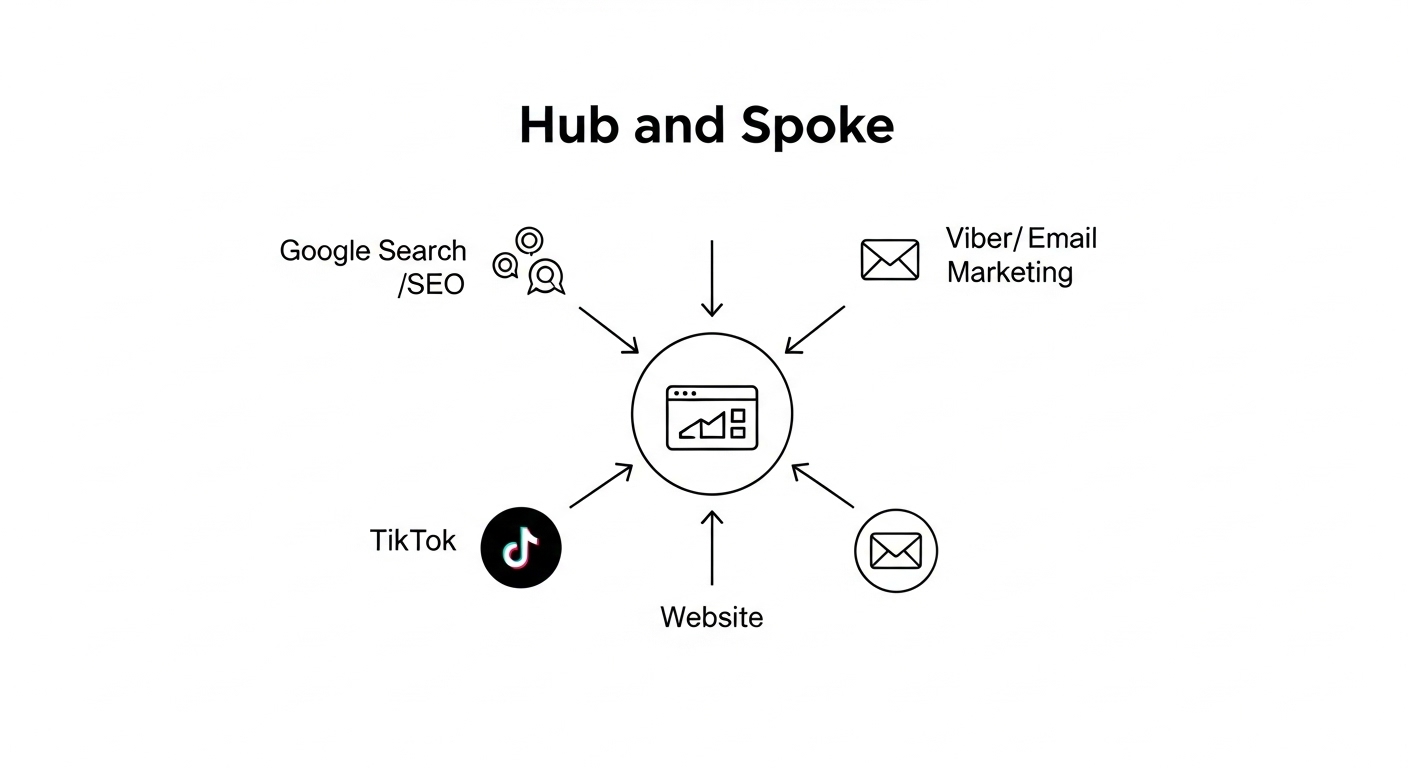
The most effective digital strategy for a Nepalese salon today is a “hub-and-spoke” model. The website is the central, conversion-focused hub—the “owned land” where business is transacted. All other channels are spokes designed to drive qualified traffic to this hub. SEO’s role is to make the hub discoverable on Google. TikTok’s purpose is to build awareness and drive interest towards the website. Viber and email marketing exist to bring past visitors back to the website to re-book. This fundamental shift from a platform-centric to a website-centric strategy is the single most important pivot a salon owner must make to succeed in the current digital climate.
Competitive Analysis
Current Digital Presence of Top Salons and Spas in Nepal
An analysis of the digital footprint of leading players in Nepal’s major markets reveals a landscape of emerging digital maturity with significant and exploitable gaps.
-
Kathmandu Leaders (e.g., LAVISH, The Next Level Saloon, Melong Salon): Top-tier salons in the capital generally maintain a professional online presence through dedicated websites. These sites typically function as digital brochures, clearly listing services, providing transparent pricing, and highlighting their use of international products and experienced staff to justify their premium positioning. The more digitally advanced competitors, such as Melong Salon, have gone a step further by integrating online booking functionality and prominently featuring customer testimonials to build social proof. Their social media activity, following the 2025 ban, would be heavily concentrated on any new platforms they adopt, like TikTok, or may have become dormant if they have not yet pivoted.
-
Pokhara Leaders (e.g., Ayurveda Spa & Salon, The Retreat Spa, Jiva Spa): The digital presence of leading spas in Pokhara is often strategically tailored to the tourism sector. Their messaging emphasizes relaxation, rejuvenation, and recovery, with services specifically designed for travelers and post-trekking clients. They effectively leverage their unique selling propositions, such as Jiva Spa’s serene lakeside location or the focus on authentic Ayurvedic treatments. Ayurveda Spa & Salon stands out with a particularly strong and comprehensive digital strategy, featuring a detailed website, clear spa packages, an active blog for SEO content, and aggressive promotions for online booking.
What They Are Doing Well
Despite the evolving landscape, leading competitors demonstrate a solid understanding of foundational digital marketing principles.
-
Professional Websites: The top salons and spas recognize that a high-quality website is the modern-day business card. Their sites are generally visually appealing, well-structured, and serve as a credible and comprehensive source of information for potential clients.
-
Clear Service Menus & Pricing: Transparency is a key strength. Most leading businesses provide detailed service menus with clear, upfront pricing. This practice builds trust, manages client expectations, and facilitates a smoother decision-making process.
-
Adoption of Online Booking: The most forward-thinking players have already implemented online booking systems. This demonstrates an awareness of the growing consumer demand for convenience and represents a significant competitive advantage over businesses that still rely exclusively on phone-based appointments.
Gaps and Opportunities to Outperform Them
The current digital strategies of many competitors, even top-tier ones, contain significant gaps that a savvy business can exploit to gain market share.
-
Underdeveloped Local SEO: While many competitors have a website, few appear to be actively and strategically optimizing it for local search. Their digital presence is often passive. A potential client searching for a specific, high-value service like “balayage in Kathmandu” or “deep tissue massage in Pokhara” is unlikely to find these businesses on the first page of Google search results. This creates a massive opportunity to capture this high-intent traffic through a targeted and consistent SEO strategy, effectively leapfrogging competitors in digital visibility.
-
Static Content Strategy: The majority of competitor websites function as static online brochures. They are informative but not engaging. There is a significant opening for a salon that implements a dynamic content marketing strategy. An active blog featuring genuinely helpful articles (e.g., “Tips for Protecting Your Hair During Nepal’s Monsoon Season”), video tutorials, and local-interest stories can attract substantial organic traffic, establish the salon as a trusted authority, and build a loyal community. Ayurveda Spa & Salon’s blog is a nascent example of this powerful strategy.
-
Slow Adaptation to TikTok: In the post-ban environment, many businesses will be slow to pivot their social media efforts to a TikTok-first model. A salon that moves quickly to build a creative, consistent, and engaging presence on TikTok can capture a disproportionate share of audience attention and establish itself as a trendsetter in the new social media landscape.
-
Absence of Digital Loyalty Programs: There is little evidence that competitors are systematically using digital tools like email or Viber for customer retention. Implementing a simple digital loyalty program (e.g., offering a discount on a fifth visit, sending a birthday voucher) is a low-cost, high-impact strategy to increase customer lifetime value and build a resilient base of repeat clients, creating a competitive moat that is difficult for others to penetrate.
Competitive Digital Footprint Matrix
The following table provides a comparative overview of the digital presence of selected competitors, highlighting key areas of strength and weakness.
| Competitor Name | Website Quality | Mobile-Friendly | Online Booking | GMB Optimized | Active TikTok Presence |
|---|---|---|---|---|---|
| LAVISH (Kathmandu) | 4 | Yes | No | Partially | Inactive |
| The Next Level Saloon (Kathmandu) | 4 | Yes | Yes (Form) | Partially | Active |
| Ananeke Beauty Salon (Kathmandu) | 5 | Yes | Yes | Yes | Inactive |
| Ayurveda Spa & Salon (Pokhara) | 5 | Yes | Yes | Yes | Inactive |
| Typical Local Parlor | 1 | No | No | No | None |
This matrix clearly illustrates the opportunity. While top competitors like Ananeke and Ayurveda Spa & Salon have strong foundational elements (website, booking), there is a widespread lack of a cohesive, multi-channel strategy, particularly regarding TikTok engagement and comprehensive GMB optimization. A new or existing business that executes flawlessly across all these columns can establish a dominant digital position.
Recommended Strategy for Salons and Spas in Nepal
Target Audience Personas
A successful digital strategy begins with a deep understanding of the target customer. Two key personas represent the primary growth segments for salons and spas in Nepal.
-
Persona 1: “Priya, the Urban Professional”
-
Demographics: Aged 28–40, female. Works in a demanding corporate, INGO, or professional services role in Kathmandu. Commands a mid-to-high disposable income.
-
Behavior and Motivations: Priya is time-poor and places a premium on convenience, quality, and experience over pure price. Her journey begins online; she meticulously researches salons, reads reviews on Google, and compares services before making a decision. She prefers to book appointments online, often outside of standard business hours. She seeks services that offer relaxation and a sense of escape, such as spa treatments, alongside professional styling that fits her sophisticated image.
-
Pain Points: Her primary frustrations are friction and unreliability.
-
She is annoyed by the inefficiency of phone-based appointment systems, the unpredictability of waiting in queues, and inconsistent service quality that makes her question the value of her time and money.
Persona 2: “Aarav, the Trend-Conscious Student”
- Demographics: Aged 18–24, of any gender. A university student based in an urban area like Lalitpur or Pokhara. While budget-conscious, Aarav is highly influenced by trends and is willing to allocate funds for services that enhance social status and self-expression.
- Behavior and Motivations: Aarav lives on TikTok. This is where new styles, salons, and trends are discovered, primarily through Nepalese influencers and viral video content. Booking decisions are often spontaneous and heavily influenced by peer recommendations and limited-time special offers.
- Pain Points: Aarav often finds high-end salons to be intimidating or financially out of reach. There is a strong desire to replicate the latest styles seen on social media, but a significant fear of receiving a bad haircut or service from an untrusted provider.
Recommended Channels and Campaign Types
The marketing strategy should be built around a multi-channel approach, with each channel serving a specific purpose in the customer journey and tailored to our target personas.
- Foundation Channel: Professional Website with Integrated Booking
This is the central conversion hub for the business. It must be mobile-first, load quickly, and feature a seamless, integrated online booking system (e.g., using a platform like Booksy or a custom web solution). This directly addresses Priya’s need for convenience.
- Primary Discovery Channel: Google Business Profile & Local SEO
This is the most crucial channel for attracting new clients like Priya who are actively searching for services. The campaign is an “always-on” effort focused on optimizing the GMB profile and website content to rank for high-intent local keywords.
- Primary Awareness & Engagement Channel: TikTok
This is the main channel for capturing the attention of Aarav. Campaigns will be content-driven, focusing on visually appealing transformations, showcasing the personality of the stylists, and participating in relevant local trends.
- Primary Retention Channel: Viber & Email Marketing
This is the engine for building loyalty and driving repeat business from both Priya and Aarav. Campaigns will be promotional and relationship-focused, including appointment reminders, “we miss you” discounts, birthday offers, and announcements for new services or products.
Content Ideas Specific to Salons and Spas in Nepal
Content must be tailored to the local context to be effective. It should address specific needs, cultural moments, and environmental factors relevant to Nepal.
- Website Blog Content (Optimized for SEO):
-
Title: “Choosing the Best Facial for Kathmandu’s Air Quality: A Guide to Protecting Your Skin”
-
Title: “Your Ultimate Guide to Pre-Wedding Bridal Packages in Nepal: What to Expect and How to Prepare”
-
Title: “Recover and Rejuvenate: The Best Post-Trekking Spa Treatments in Pokhara”
-
Title: “How to Fight Monsoon Hair Frizz: Tips from Nepal’s Top Stylists”
-
- TikTok Video Content (Designed for Engagement):
-
Transformation Series: A series of satisfying 15-second before-and-after videos showcasing a dramatic balayage, a modern men’s haircut, or intricate nail art. Use trending Nepali music to increase reach.
-
Educational Quick Tips: “One simple trick to make your henna last longer.” or “This is why you should never skip heat protectant.”
-
Behind-the-Scenes & Culture Building: A quick tour highlighting the salon’s stringent hygiene and sterilization practices. A “Meet the Team” segment: “Meet Sunita, our nail art expert! Ask her anything in the comments.”
-
Local Trend Participation: “We tried the viral hairstyle from the latest Nepali movie. Here’s how it went!”
-
Budget-Friendly Digital Marketing Approaches
Effective digital marketing does not require a massive budget. The following high-impact tactics can be implemented with minimal financial investment.
- Google Business Profile (GMB) Optimization: This is the single highest ROI marketing activity a local business can undertake, and it is completely free. The focus should be on completing every section of the profile, regularly uploading high-quality photos of the salon and its work, and actively encouraging every satisfied client to leave a review.
- Organic TikTok Content: Building an audience on TikTok is primarily an investment of time and creativity, not money. Consistently posting engaging, valuable content can generate significant organic reach. Encourage clients to create their own content by offering a small discount if they post a video and tag the salon.
- On-Page SEO: The fundamentals of on-page SEO—optimizing page titles, meta descriptions, headings, and image alt-text with target keywords—can be learned and implemented without hiring an expensive agency initially.
- Customer Referral Program: Leverage the power of word-of-mouth by creating a simple referral program. Offer a tangible incentive, such as a 20% discount, to both the existing client who makes the referral and the new client they bring in. This can be promoted easily via Viber, email, or with small, professionally printed cards handed out at the end of each service.
Keywords & SEO Opportunities
In the post-ban digital landscape of Nepal, Search Engine Optimization (SEO) is no longer a luxury but a fundamental requirement for discoverability. A strategic approach to keywords is essential to capture potential clients at the exact moment they are looking for services.
High-Intent Keywords for Ranking
These are transactional or “money” keywords, used by individuals who are at the bottom of the sales funnel and are ready to make a booking. Ranking for these terms drives direct business.
- Examples: “best salon in Kathmandu,” “spa packages Pokhara,” “bridal makeup price in Nepal,” “unisex salon near me,” “eyelash extension Lalitpur,” “hair salon Durbarmarg,” “manicure deals in Thamel.”
Long-Tail Keyword Opportunities (Nepal-Specific)
These are longer, more specific phrases that have lower search volume but often a much higher conversion rate. They attract highly qualified traffic from users who know exactly what they want.
- Examples: “keratin hair treatment cost in Kathmandu,” “best place for pedicure in Baneshwor,” “ayurvedic massage for trekkers in Pokhara,” “L’Oréal hair color salon near Civil Mall,” “organic facial treatment in Sanepa,” “what is the price of hair straightening in Nepal.”
Priority Keyword List for a Kathmandu Salon
A successful SEO strategy requires mapping keywords to the user’s intent and creating specific content to satisfy that intent. The following table provides a strategic framework for this process.
| Keyword | Location Modifier | Search Intent | Suggested Content Type |
|---|---|---|---|
| “hair fall treatment” | “in Nepal” | Informational | Blog Post: “5 Common Causes of Hair Fall in Nepal’s Climate and How to Treat It” |
| “best balayage salon” | “in Kathmandu” | Commercial | A dedicated “Balayage Service” page with a gallery of work, pricing, and client testimonials. |
| “book haircut online” | “in Baneshwor” | Transactional | The main online booking page, optimized with local schema markup. |
| “The Next Level Saloon price” | (N/A) | Navigational | A clear and comprehensive “Pricing” page on the website. |
| “how to choose a bridal makeup artist” | “in Nepal” | Informational | Blog Post: “10 Questions to Ask Before Hiring Your Bridal Makeup Artist in Nepal” |
| “L’Oréal hair spa” | “near me” | Commercial | A “Hair Treatments” service page detailing the benefits and process of the L’Oréal spa. |
This structured approach transforms a simple list of keywords into an actionable content blueprint. It clarifies what information a potential customer is seeking at each stage of their journey. A user with “informational” intent is not yet ready to buy but is a potential future customer who can be captured with helpful blog content. A user with “commercial” or “transactional” intent is actively looking to book, and they must be directed to a service or booking page that makes it easy for them to convert. By creating content that aligns with these different intents, a salon can build a comprehensive SEO strategy that attracts, nurtures, and converts potential clients.
Implementation Roadmap
A structured, phased approach is crucial for successfully implementing this digital marketing strategy. The roadmap is divided into short-term foundational work and a long-term growth strategy.
Short-Term Quick Wins (Months 1–3): The Foundation
This initial phase is focused on establishing the essential digital infrastructure and securing the most immediate opportunities for new client acquisition.
- Month 1: Audit and Foundation
- Action: Conduct a comprehensive audit of all existing digital assets (old website, social media pages, directory listings).
- Action: Priority #1: Claim and meticulously optimize the salon’s Google Business Profile (GMB). This includes uploading at least 10-15 high-quality photos of the interior, exterior, and client results; writing a keyword-rich business description; adding all available services with pricing; ensuring hours and contact information are 100% accurate.
- Action: Secure a professional domain name and initiate the development of a new, mobile-first website. The core focus should be on a clean design, a clear service menu, and the integration of a reliable online booking system.
- Month 2: Launch and Activate
- Action: Launch the new, fully functional website.
- Action: Establish a professional TikTok account.
- Create and post 3-4 foundational videos: a high-energy salon tour, a “meet the owner/founder” introduction, and a showcase of the salon’s best transformation work.
- Action: Implement a systematic process for requesting Google reviews from every satisfied client. This can be done via a simple follow-up message on Viber or a small printed card with a QR code given at checkout. The goal is to accumulate 10-15 positive reviews by the end of the month.
Month 3: Content and Outreach
- Action: Based on the keyword research, write and publish the first two SEO-optimized blog posts on the new website.
- Action: Begin systematically building a client contact list (collecting email addresses and Viber numbers) through the online booking system and in-person at the reception desk.
- Action: Research and identify 3-5 local micro-influencers on TikTok whose audience and aesthetic align with the salon’s brand. Initiate contact and plan a small-scale collaboration for the following month.
Long-Term Strategy (Months 4–12): Growth and Dominance
This phase focuses on scaling the initial efforts, building a loyal community, and establishing the salon as a market leader.
Months 4–6: Scaling Content and Retention
- Action: Maintain a consistent content schedule by publishing two new, high-quality blog posts per month.
- Action: Execute the first TikTok influencer collaboration. Track results meticulously (website clicks from their bio link, mentions in new bookings, follower growth).
- Action: Launch the first retention campaign. Send a promotional message via Viber or email to the client list (e.g., “Monsoon Season Special: Get 15% Off Our Anti-Frizz Keratin Treatment This Month Only”).
- Action: Begin foundational off-page SEO by ensuring the salon is listed with consistent information (Name, Address, Phone Number) in major local online directories.
Months 7–12: Optimization and Expansion
- Action: Use Google Analytics to analyze website traffic and booking data. Identify which services, blog posts, and traffic sources are performing best. Re-invest effort and resources into what is proven to work.
- Action: Formalize the retention strategy by launching a digital loyalty program (e.g., “Your 5th Haircut is 50% Off,” tracked within the salon’s client management system).
- Action: Begin experimenting with paid advertising. Allocate a small, controlled budget to TikTok Ads to promote a specific high-margin service (like bridal packages or advanced facials) to a highly targeted local demographic.
- Action: Establish a consistent content calendar for TikTok, aiming for 4-5 posts per week to build a strong, engaged community and solidify the salon’s position as a go-to source for beauty trends and inspiration in Nepal.
Conclusion
Summary: Why Digital Marketing is Crucial for Survival and Growth
The salon and spa industry in Nepal stands at a critical inflection point. The market is experiencing a vibrant boom, fueled by a cultural shift towards wellness and self-care. However, this growth is paired with hyper-competition and, most significantly, a digital landscape that has been fundamentally reshaped by the 2025 social media ban. In this new reality, the old marketing paradigms are obsolete. Survival and growth are no longer achievable by relying on simple foot traffic or the ghost of defunct social media platforms.
The path forward requires a decisive and strategic pivot. Success will be captured by those businesses that embrace a modern digital approach centered on three core pillars: being effortlessly discoverable to clients actively searching for services (via SEO and Google Business Profile), being actively engaging on the platforms where consumer attention is now focused (TikTok), and building direct, lasting relationships with clients (through a professional website and retention marketing channels like Viber and email). This is not merely a marketing plan; in the current Nepalese market, it is a fundamental business imperative for long-term viability and success.
Your Partner in Digital Growth: Gurkha Technology
Navigating this new and complex digital terrain demands specialized expertise, a clear strategy, and flawless execution. The blueprint outlined in this report provides the ‘what’ and the ‘why’ of the necessary transformation. However, true success lies in the ‘how’—the professional implementation of these strategies.
Gurkha Technology (www.gurkhatech.com) is Nepal’s leading digital marketing agency, with a proven track record of delivering results and a service portfolio that is perfectly aligned with the essential needs of salons and spas in today’s market. Our team of experts specializes in the very strategies that are now critical for your success:
- Search Engine Optimization (SEO): We employ advanced techniques to ensure your salon appears at the top of Google search results at the exact moment a potential client is looking for your services, driving a consistent flow of high-quality leads.
- Professional Web Development: We build high-performing, mobile-first websites with integrated booking systems that act as the powerful, conversion-focused core of your business operations.
- TikTok Ads in Nepal: We possess the specialized knowledge to leverage Nepal’s most powerful social platform, creating targeted advertising campaigns that build your brand and drive measurable growth.
Partnering with Gurkha Technology provides you with a dedicated team of digital experts committed to implementing this strategic roadmap. We transform insights into revenue, helping you navigate the challenges of the market and securing your salon’s place as a distinguished leader in Nepal’s dynamic beauty industry.
Contact Gurkha Technology today for a free consultation and begin your digital transformation journey.