

NewMew.com: Nepal’s Omnichannel Eyewear E-commerce Case Study
Introduction and Methodology

1.1 Background of the Study
The global commercial landscape has undergone a seismic shift over the last three decades, transitioning from traditional, location-bound retail models to dynamic, boundary-less electronic commerce systems. This paradigm shift, driven by the ubiquity of the internet and the proliferation of mobile computing, has fundamentally altered how businesses create value and how consumers access products. E-commerce, or electronic commerce, is no longer merely a supplementary sales channel; it has evolved into the central nervous system of modern trade, encompassing the buying and selling of goods, services, and information via computer networks.
The study of e-commerce requires a multi-disciplinary approach, integrating concepts from computer science, marketing, management, business law, and economics. As outlined in the course objectives for IT 204, understanding e-commerce necessitates a deep dive into business models, security infrastructure, payment mechanisms, and the sociotechnical trends shaping the digital marketplace. This report serves as a comprehensive case study of NewMew, a pioneering eyewear brand in Nepal that exemplifies the evolution of domestic e-commerce from a chaotic, informal sector to a structured, omnichannel industry.
1.1.1 Global and Local Trends in E-commerce
To contextualize NewMew’s operations, one must first appreciate the macro-environment. Globally, the e-commerce sector has matured into a multi-trillion-dollar engine of economic growth. According to recent data, international digital trade currently amounts to approximately $5.2 trillion annually, with projections suggesting a surge to over $8 trillion by the mid-2020s. This growth is not linear but exponential, driven by “New Retail” concepts that blend online convenience with offline experiences. In markets like the United States and China, the distinction between “e-commerce” and “commerce” is vanishing; consumers move fluidly between Instagram ads, mobile apps, and flagship stores, expecting a unified brand experience across all touchpoints.
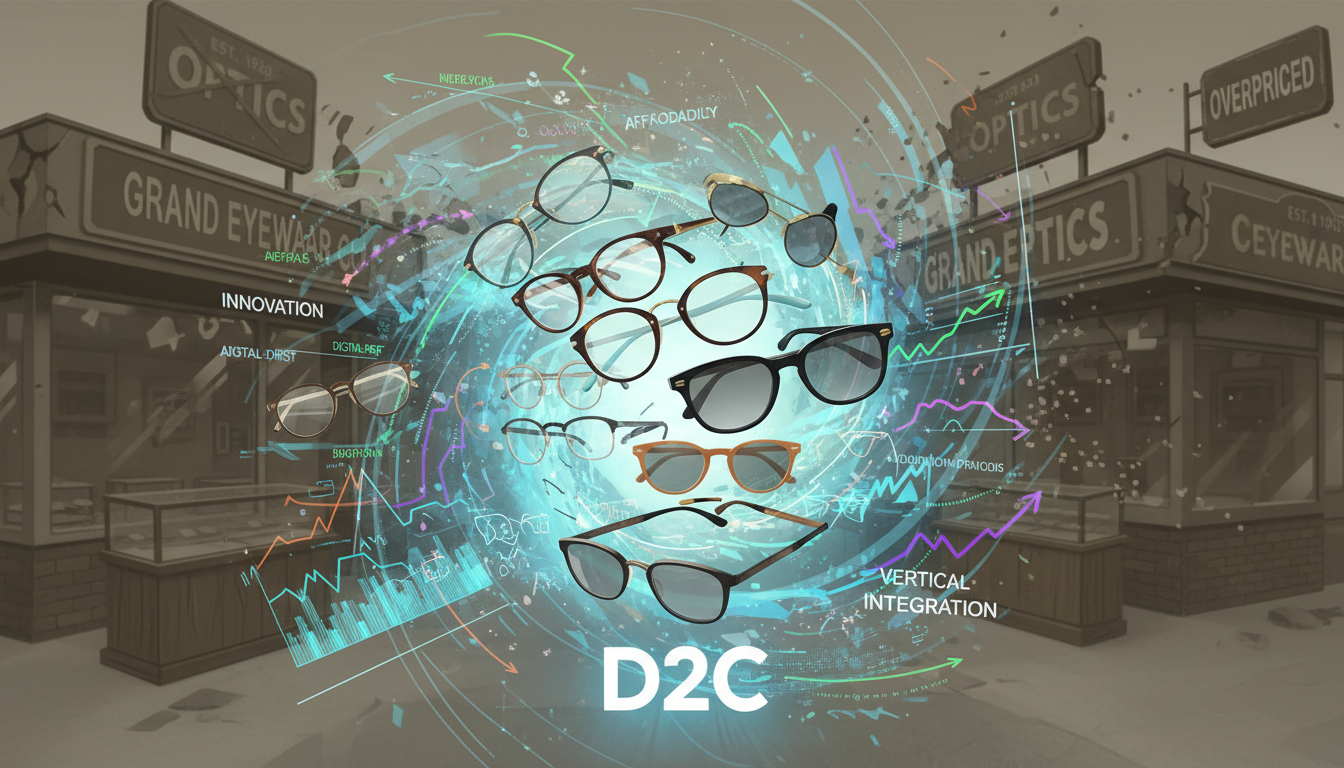
A critical global trend relevant to the eyewear industry is the rise of the Direct-to-Consumer (D2C) model. Historically, the eyewear market was dominated by manufacturing conglomerates that controlled licensing for luxury brands, creating high barriers to entry and inflated consumer prices. The disruption began with companies like Warby Parker in the US, which demonstrated that by vertically integrating—designing, manufacturing, and selling directly to consumers via the web—brands could offer high-quality eyewear at a fraction of the traditional retail price. This “Warby Parker effect” has inspired a wave of digital-native vertical brands (DNVBs) worldwide, including NewMew in Nepal.
Furthermore, the global market is witnessing a shift toward Social Commerce. Platforms like TikTok, Instagram, and Facebook are no longer just marketing channels; they have become transaction engines. The integration of “Shop” features directly into social feeds allows for impulse purchases driven by influencer content, a trend that is particularly potent in fashion and lifestyle categories.
1.1.2 E-commerce in Nepal
While global trends provide the trajectory, the local context dictates the velocity of change. Nepal’s e-commerce landscape is unique, characterized by a “leapfrog” phenomenon where the market bypassed the desktop-internet era and moved directly to a mobile-first ecosystem. The evolution of e-commerce in Nepal can be segmented into three distinct phases:
- Phase I: The Gifting Era (Early 2000s): Platforms like Muncha.com targeted the Nepali diaspora, allowing them to send gifts to family back home. Payment was international (credit cards), and logistics were rudimentary.
- Phase II: The Marketplace Era (2010s): The entry of Daraz (acquired by Alibaba) and domestic players like SastoDeal introduced the marketplace model. This era normalized online shopping for domestic consumers, though it was plagued by logistical inefficiencies and a deep-seated trust deficit.
- Phase III: The Vertical & D2C Era (2020s – Present): The current phase sees the rise of specialized, niche brands like NewMew (eyewear), Goldstar (footwear), and various fashion startups that control their own inventory and brand narrative.
Recent economic indicators suggest a fertile ground for this third phase. Nepal’s economic growth picked up to 4.6 percent in FY25, supported significantly by wholesale and retail trade. Digital infrastructure has expanded rapidly; by 2022, internet penetration reached 45% of the population, primarily via smartphones, creating a potential e-commerce user base of 16 million people. This is projected to grow to 25 million by 2025, creating a massive addressable market for digital brands.
However, structural challenges remain. The Nepali market is heavily reliant on Cash on Delivery (COD) due to low credit card penetration and historical fraud concerns. While digital wallets like eSewa, Khalti, and Fonepay are rapidly changing this, COD still dictates logistics strategies, often leading to high return rates. Legally, the environment is transitioning from a “wild west” to a regulated industry with the introduction of the E-commerce Act 2080, which mandates registration, consumer data protection, and transparent refund policies.
1.2 Types of E-commerce
Understanding the theoretical frameworks of e-commerce is essential for analyzing NewMew’s positioning. The industry is generally categorized into the following models:
- Business-to-Consumer (B2C): The most visible form of e-commerce where businesses sell directly to end-users. This includes pure-play online retailers (e.g., Amazon) and direct sellers.
- Business-to-Business (B2B): Transactions between businesses, such as a manufacturer selling raw materials to a factory. This sector typically involves higher volumes and more complex logistics.
- Consumer-to-Consumer (C2C): Platforms enabling individuals to trade with each other, exemplified by Hamrobazar in Nepal or eBay globally.
- Consumer-to-Business (C2B): Individuals selling services or goods to businesses, often seen in the gig economy (freelancing platforms).
NewMew’s Classification:
NewMew operates primarily under a B2C Hybrid (Omnichannel) Model.
- B2C Component: They sell eyewear directly to individual customers through and social media channels.
- Hybrid/Omnichannel: Unlike a “pure-play” e-tailer that exists only online, NewMew has integrated a network of physical retail outlets. This “Bricks-and-Clicks” strategy is crucial in the eyewear sector, where the physical need for eye exams and the tactile desire to try on frames often necessitates an offline touchpoint.
1.3 Introduction to Group Members
This case study is a collaborative effort by the following group members, each focusing on specific dimensions of the e-commerce analysis:
- Lead Analyst: Focused on business model architecture, strategic SWOT analysis, and regulatory compliance. Responsible for synthesizing the impact of the E-commerce Act 2080 on NewMew’s operations.
- Technical Researcher: Focused on the technology stack, security protocols, and payment gateway integration. Responsible for the technical audit of the website and analysis of the logistics/fulfillment cycle.
- Marketing Specialist: Focused on digital marketing strategies, social commerce, and consumer behavior. Responsible for analyzing NewMew’s brand positioning and customer engagement tactics on platforms like Instagram and TikTok.
1.4 Objectives of the Case Study
The primary objective of this project is to apply the theoretical knowledge gained in the IT 204 course to a real-world Nepali business, thereby bridging the gap between academic concepts and industrial practice.
Specific Objectives:
- Operational Analysis: To dissect NewMew’s operational workflow, from inventory procurement to “last-mile” delivery, and understand how they manage the complexities of the Nepali supply chain.
- Strategic Evaluation: To evaluate the effectiveness of NewMew’s hybrid business model in a market that is price-sensitive yet aspirational.
- Technological Assessment: To audit the digital infrastructure of, identifying the technologies used for content management, analytics, and security.
- Marketing Deconstruction: To analyze the “social-first” marketing strategy that allowed a local startup to build a brand comparable to international players.
- Regulatory Impact Study: To assess how the new E-commerce Act 2080 influences NewMew’s policies regarding data privacy and consumer rights.
1.5 Scope and Limitations of the Study
Scope:
This study focuses exclusively on NewMew as a corporate entity and its digital interface. The temporal scope covers the company’s evolution from its inception in 2015 through its expansion phase ending in 2025. The functional scope includes marketing, operations, technology, and legal compliance within the geographical boundaries of Nepal.
Limitations:
- Financial Confidentiality: As NewMew is a private company, audited financial statements (balance sheets, profit & loss accounts) are not publicly available. Revenue estimations and profitability are inferred from store expansion rates and public pricing data rather than exact figures.
- Dynamic Market Conditions: The e-commerce sector in Nepal is volatile. Features, prices, and stock levels observed during the research period (December 2025) are subject to rapid change.
Third-Party Data: Analysis of logistics performance (Nepal Can Move) and payment reliability (eSewa/Khalti) is based on general market reputation and stated policies, not internal performance audits of those service providers.
1.6 Research Methodology
To ensure a rigorous analysis, this report employs a mixed-method approach combining secondary data review with observational platform testing.
1. Secondary Data Analysis:
- Literature Review: We reviewed academic texts (Laudon & Traver, Chaffey) to establish the theoretical framework for e-commerce business models.
- Document Analysis: We analyzed NewMew’s public documents, including their “About Us” page, “Privacy Policy”, and “FAQ” sections. This provided the foundational data on their history, mission, and stated policies.
- External Reports: We utilized macroeconomic reports from the World Bank and industry articles to understand the broader Nepali e-commerce context.
- Social Listening: We analyzed customer sentiment on public forums like Reddit (r/Nepal) and social media comments to gauge brand perception and service quality.
2. Observational Platform Testing (Digital Mystery Shopping):
- User Journey Simulation: The research team simulated the purchasing process on www.newmew.com. This involved browsing products, adding items to the cart, testing the checkout flow (up to the payment page), and testing the “Store Locator” and “Appointment Booking” features.
- Technical Audit: We used browser developer tools to inspect the website’s source code. This allowed us to identify the underlying technology stack (WordPress/WooCommerce), analytics tools (Facebook Pixel), and security markers (SSL certificates, reCAPTCHA).
Overview of the Selected E-commerce Platform
2.1 Company Profile
NewMew represents a quintessential case study in the scalability of digital-first brands. Founded in 2015 by entrepreneur Ashim Thapa, the company began with a clear mission: to democratize access to stylish, high-quality eyewear in Nepal. The eyewear market in Nepal was historically polarized between expensive, branded optics and low-quality street vendors. NewMew identified the “missing middle”—the aspirational youth demographic that desired trendy aesthetics without the luxury price tag.
Corporate History and Evolution:
- The Digital Incubation (2015–2017): For the first two years, NewMew operated as a “pure-play” online retailer. This lean phase allowed them to validate product-market fit with minimal capital expenditure. They leveraged social media to generate demand, witnessing a “significant upsurge” in sales.
- The Physical Pivot: Recognizing the limitations of online-only sales for tactile products like eyewear, NewMew pivoted to a hybrid model. They opened their flagship store in Baneshwor, Kathmandu. This was a strategic move to build trust; in Nepal, a physical office validates the legitimacy of an online business.
- The Expansion Phase (2018–2025): Following the success of the first store, the company embarked on aggressive expansion. By 2025, NewMew established a presence in major economic hubs including New Road, Pokhara, Butwal, Itahari, Dharan, and Chitwan.
- Brand Diversification: To capture the higher end of the market, the company launched “Limitless,” a premium sub-brand featuring superior materials and polarized lenses, effectively segmenting their customer base.
2.2 Key Features of the Platform
The digital platform, accessible at www.newmew.com, is the central nervous system of the brand. It is not merely a catalog but a fully functional transactional engine.
- Responsive Design: The website utilizes a responsive framework that adapts seamlessly to mobile, tablet, and desktop viewports. This is critical in Nepal where mobile traffic dominates.
- Advanced Product Taxonomy: The site features deep categorization capabilities. Users can filter products by Gender (Men, Women, Kids), Shape (Aviator, Cat Eye, Round, Square), Material (Acetate, Metal, Wooden), and Function (Polarized, Blue Cut).
- Educational Content Integration: Unlike standard e-commerce sites that only list products, NewMew integrates value-added content. Features like the “Face Shape Guide” and “Eyewear Guide as per Skin Tone” function as digital sales assistants, helping users make informed decisions remotely.
- O2O (Online-to-Offline) Features: The platform bridges the digital and physical worlds through a “Store Locator” and an “Eye Checkup Appointment Booking” system. This acknowledges that while purchase may happen online, the service component (eye exams) is physical.
2.3 Products/Services Offered
NewMew acts as a vertical specialist, focusing deeply on the eyewear niche rather than diluting its brand with general merchandise.
Core Product Lines:
- Sunglasses:
- Standard Line: Fashion-forward designs targeted at casual users. Includes trendy shapes like “Retro,” “Clubmaster,” and “Rimless.”
- Limitless Series: The premium private label. These products feature polarized lenses, TR-90 or Acetate frames, and target the “luxury for less” segment.
- Prescription Eyeglasses (Optical Frames):
This category targets the medical necessity market.
- Blue Cut Lenses: A major bestseller category. These glasses filter blue light from digital screens, targeting students and IT professionals. The site offers different grades (A+, A, B) at varying price points.
- Contact Lenses: The company retails daily disposable and monthly lenses, catering to users who prefer contacts over spectacles.
- Accessories: Ancillary revenue streams from cleaning kits, hard cases, and chains.
Service Offerings:
- Free Eye Checkups: Offered at physical clinics to drive footfall.
- Prescription Customization: Online users can input their prescription details to receive custom-fitted lenses.
Target Demographics:
The primary target audience is Gen Z and Millennials (ages 16–35). This is evident from the “cool” branding, the focus on digital trends (e.g., “Y2K Sunglasses”), and the affordable pricing strategy.
2.4 Buying and Selling Workflow
The operational workflow determines the efficiency of the e-commerce cycle.
2.4.1 Customer Journey (Buying Process)
The NewMew buying process is optimized for conversion while mitigating fraud risk.
- Discovery: The user enters the funnel via social media ads or organic search.
- Evaluation: The user browses the catalog. They might use the “Face Shape Guide” to narrow down options. High-resolution images allow for virtual inspection.
- Selection & Configuration: The user selects a frame. If buying optical glasses, they select lens options (e.g., Blue Cut).
- Checkout & Risk Profiling:
- Scenario A (Inside Kathmandu Valley): The user proceeds to checkout. They can select Cash on Delivery (COD). No advance payment is strictly required, leveraging the lower logistics cost of local delivery.
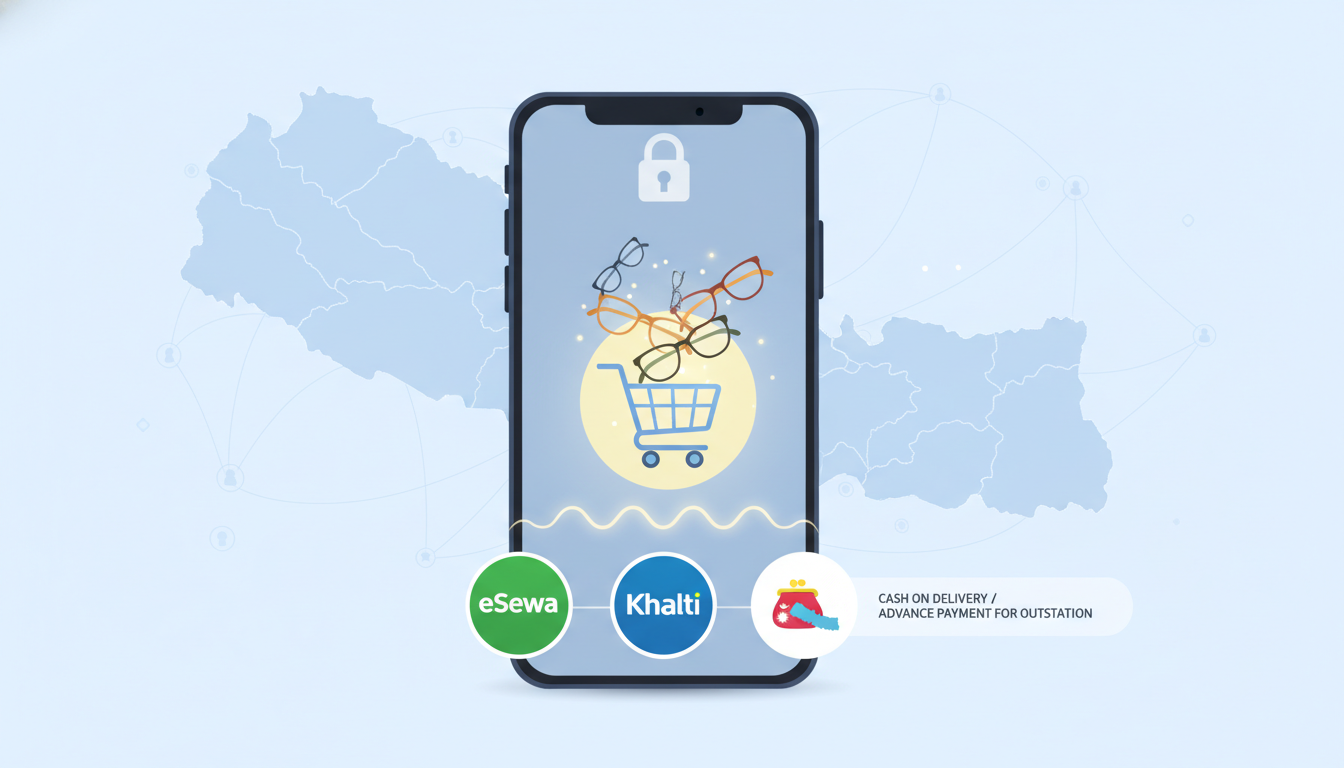
- Scenario B (Outside Kathmandu Valley): The user enters an outstation address. The system (or manual follow-up) requires an Advance Payment of Rs. 200. This is a critical procedural step to confirm the intent to purchase and cover return logistics costs if the customer refuses delivery.
- Payment: Users pay the advance or full amount via eSewa, Khalti, or Fonepay.
- Fulfillment: The order is packed at the central warehouse and handed to the logistics partner.
- Delivery: The product reaches the customer (24 hours in Valley, 3 days outside).
2.4.2 Seller Onboarding (Selling Process)
Unlike a marketplace (e.g., Daraz) where third-party vendors register to sell, NewMew operates an Inventory-Led Model.
- Sourcing: NewMew sources its inventory directly from manufacturers (likely in China or India) under its own brand specifications.
- Quality Control: All items are vetted internally before being listed.
- Listing: The internal content team photographs products and uploads them to the CMS. There is no external seller interface.
2.5 Business Model
2.5.1 B2C/B2B/Hybrid Analysis
NewMew utilizes a Hybrid Direct-to-Consumer (D2C) Business Model.
- D2C (Direct-to-Consumer): By manufacturing/sourcing its own brand (Limitless/NewMew) and selling directly to customers, NewMew bypasses wholesalers and distributors. This vertical integration allows them to capture the full margin, which they can either retain as profit or pass on to consumers to undercut competitors.
- Omnichannel (Hybrid): The business is not purely digital. The 14+ physical outlets act as:
- Experience Centers: Customers can try frames physically.
- Trust Anchors: Physical presence reduces the perceived risk of online shopping.
- Service Points: Eye checkups can only be performed offline.
- Fulfillment Nodes: Stores likely act as mini-warehouses for local delivery.
2.6 Network Infrastructure & Technology Stack
A technical audit of www.newmew.com reveals a robust, cost-effective stack typical of scaling SMEs.
| Component | Technology Identified | Implication |
|---|---|---|
| CMS Platform | WordPress / WooCommerce | Identified via PixelYourSite and URL structures. This provides flexibility, a vast plugin ecosystem, and lower operating costs than enterprise solutions like Magento. |
| Analytics | Facebook Pixel | ID: 1657317944926797. Enables precise retargeting of visitors on Facebook/Instagram. |
| Security | Google reCAPTCHA | Protects forms from bot spam and brute-force attacks. |
| Frontend | HTML5 / CSS3 / jQuery | Standard web technologies ensuring compatibility across all browsers. |
| Server/Hosting | Apache/Nginx (Inferred) | Standard hosting environments for WordPress. |
2.7 Security Features and Policies
Security in e-commerce is twofold: technical security and procedural security.
Technical Security:
- SSL Encryption: The site employs HTTPS (TLS 1.2/1.3) to encrypt data in transit.
This prevents “Man-in-the-Middle” attacks where hackers intercept credit card or personal data.
- Compliance: The platform must align with the E-commerce Act 2080, which mandates the protection of consumer data. While explicit PCI-DSS compliance is handled by the payment gateways (eSewa/Khalti) rather than NewMew directly, the site must securely handle personal identifiable information (PII).
Procedural Security:
- Advance Payment Verification: The policy of requiring Rs. 200 advance for outstation delivery is a financial security measure to prevent operational losses from fake orders.
- Data Privacy Policy: The site maintains a privacy policy detailing how user data is used, a requirement under Nepali law.
Payment Gateways and Systems Used
NewMew has integrated the “Holy Trinity” of Nepali digital payments to ensure maximum accessibility.
- eSewa: As Nepal’s first and largest digital wallet, this is essential for reaching the mass market.
- Khalti: Popular among the youth demographic, Khalti provides seamless API integration for web payments.
- Fonepay: Enables bank-to-bank transfers and QR code payments. This is critical for high-value transactions where wallet limits might be an issue.
- Cash on Delivery (COD): Despite the push for digital, COD remains a necessary evil in Nepal’s e-commerce to service unbanked customers or those lacking trust in digital systems.
Selection Rationale:
NewMew chose these systems because they cover nearly 100% of the banked and digital-literate population in Nepal. Integrating international gateways (like PayPal) would be redundant as they are not usable by domestic Nepali customers due to capital controls.
Marketing and Customer Engagement
Digital Marketing Strategies
NewMew’s ascent from a startup to a national brand is a case study in digital marketing excellence. Their strategy is “Social-First,” prioritizing engagement on platforms where their Gen Z audience spends the most time.
Social Media Integration
Social media is not just a funnel for NewMew; it is their primary marketplace.
- Instagram & Facebook Strategy: The brand treats its Instagram profile as a digital lookbook. High-quality lifestyle photography features young, trendy Nepali models wearing the products in relatable settings (cafes, colleges, travel). This builds a “lifestyle brand” image rather than just a commodity seller.
- Cross-Promotion: They leverage strategic partnerships, such as the campaign with Ncell (Nepal’s leading private telecom). The “Valentine’s Day Flash Sale” offered Ncell data packs and NewMew sunglasses as prizes. This cross-pollination exposed NewMew to Ncell’s millions of subscribers, significantly lowering the cost of customer acquisition.
SEO/SEM Approaches
- Search Engine Optimization (SEO): NewMew invests heavily in content marketing to drive organic traffic. Their blog covers topics like “Eyewear Guide as per Skin Tone” and “Find Your Match: Face Shape Guide”. These articles target high-volume “informational” search queries. When a user searches “best sunglasses for round face,” they land on NewMew’s blog, establishing brand authority before a product is even pitched.
- Search Engine Marketing (SEM): The presence of tracking pixels suggests they run retargeting ads. If a user browses the “Limitless” collection but drops off, they will likely see ads for those specific glasses on their Facebook feed later.
Content & Influencer Marketing
- Influencer Economy: NewMew taps into the “Micro-Influencer” network. Instead of only hiring expensive celebrities, they likely seed products to fashion bloggers and TikTok creators. These influencers create authentic content (unboxing videos, styling tips) that feels more organic and trustworthy to their followers than corporate ads.
- Narrative Branding: The “Limitless” sub-brand is marketed with a distinct narrative of luxury and aspiration, differentiating it from the standard line.
Mobile and Location-Based Marketing Techniques
- Store Locator Integration: With 45% of internet access being mobile, the “Store Locator” feature is a key mobile marketing tool. It uses the user’s location intent to drive foot traffic to the nearest physical outlet.
- SMS Campaigns: In Nepal, SMS is a high-engagement channel. NewMew likely utilizes bulk SMS (via providers like Sparrow SMS) to announce “Flash Sales” or confirm orders, ensuring the message reaches customers even when they are offline.
Social Commerce and Online Communities
- Community Building: NewMew actively engages with its community. Comments on platforms like Reddit show that users discuss the brand’s quality and pricing. Even critical feedback (e.g., “overpriced”) generates buzz and visibility.
- Interactive Campaigns: Seasonal campaigns (Dashain, Tihar, Valentine’s) act as community events. By aligning product drops with cultural festivals, NewMew inserts itself into the national conversation.
Advertising Campaigns and Communication Channels
- Sales Promotions: The brand utilizes “Urgency Marketing.” Tactics like “Flash Sales,” “Pre-Christmas Sale”, and limited-time discount codes drive immediate conversion.
- Newsletter Marketing: The website captures emails via a footer subscription box. This “Owned Media” channel allows NewMew to market to customers without paying platform fees to Facebook or Google, improving long-term ROI.
Customer Retention and Loyalty Programs
- Service as Retention: The Free Eye Checkup is a brilliant retention tool. It brings a customer back into the ecosystem physically. Once a customer trusts NewMew with their medical eye health, they are unlikely to switch to a competitor for their next pair of glasses.
- Customer Support: Dedicated support channels (phone, email) help resolve post-purchase dissonance, crucial for retaining customers who might be unhappy with a fit or style.
Technical and Strategic Analysis
Website and App UI/UX Evaluation
User Interface (UI):
The visual language of newmew.com is minimalist and image-centric. It avoids clutter, focusing on large product photos. The color palette is neutral, allowing the colorful eyewear products to pop. This design choice aligns with modern fashion e-commerce standards (e.g., ASOS, Ray-Ban).
User Experience (UX):
- Navigation: The menu is intuitively structured (Sunglasses > Men/Women > Shape).
- Friction Points: The lack of a “Guest Checkout” option (if forced to register) can be a friction point. However, the advance payment requirement for outstation orders, while adding friction, is a necessary operational tradeoff.
- Mobile Responsiveness: The site is fully responsive, resizing elements for vertical scrolling on smartphones.
SWOT Analysis
A strategic SWOT analysis provides a snapshot of NewMew’s current standing.
Strengths (Internal)
- Hybrid Infrastructure: The network of 14+ physical stores provides a competitive moat against pure-online players like Daraz sellers.
- Brand Equity: Strong recall among Gen Z as a “cool” brand.
- Private Label Margins: Owning the “Limitless” brand allows for higher profit margins compared to reselling.
- SEO Dominance: Strong organic search presence via educational blogs.
Weaknesses (Internal)
- Price Perception: Significant negative sentiment on social forums regarding pricing (“overpriced for the quality”).
- Tech Gaps: Lack of a native mobile app and Virtual Try-On features.
- Logistics Reliance: Dependency on third-party (NCM) for delivery leads to a lack of control over the final customer experience.
Opportunities (External)
- Market Expansion: E-commerce user base in Nepal growing to 25 million.
- Technological Leaps: Implementing AR (Augmented Reality) for virtual try-ons could revolutionize conversion rates.
- B2B & Corporate: Huge potential in supplying safety eyewear to industries or corporate gifting.
Threats (External)
- Regulatory Tightening: The E-commerce Act 2080 imposes strict penalties for non-compliance, increasing compliance costs.
- Competition: Deep-pocketed competitors like Lenskart entering the market or Daraz aggressively discounting.
- Economic Downturn: Eyewear (especially sunglasses) is discretionary spending; inflation affects sales.
Mobile Commerce and Cross-Platform Features
NewMew is heavily optimized for m-commerce. The integration of mobile wallets (eSewa/Khalti) means the entire transaction can happen on a phone. The lack of a native app is a missed opportunity for “Push Notification” marketing, but the mobile web experience is robust enough to compensate for now.
Use of EDI or Integration Tools
While traditional EDI (Electronic Data Interchange) is rare in Nepali SMEs, NewMew likely uses API Integrations:
- Payment APIs: To communicate with eSewa/Khalti servers in real-time.
- Logistics APIs: Integration with Nepal Can Move’s system to automatically generate tracking numbers and waybills upon order confirmation.
Reviews, Ratings, and Customer Feedback Loop
Analysis of public feedback reveals a dichotomy.
- Positive: Customers appreciate the convenience, the styles, and the store ambience.
- Negative: A persistent thread on Reddit critiques the price-to-quality ratio, with some users calling products “hand copies” (replicas) sold at a premium.
Strategic Implication: NewMew needs to better communicate its value proposition (e.g., lens quality, UV protection certifications) to justify its pricing and combat these perceptions.
Innovation, Trends, and Future Technologies
The e-commerce sector is moving toward Hyper-Personalization.
- AI: Future implementation of AI could allow users to upload a selfie and get instant frame recommendations based on facial analysis.
- Virtual Try-On: This is the “holy grail” for online eyewear.
Implementing a plugin (like Wanna or Fitzsimmons) would drastically reduce return rates by allowing users to “see” the glasses on their face digitally.
Conclusion and Strategic Recommendations
Summary of Key Findings
NewMew has successfully transitioned from a niche online startup to a dominant player in Nepal’s eyewear retail sector. Their success is built on a Hybrid Business Model that correctly identified the Nepali consumer’s need for both digital convenience and physical trust. By vertically integrating their product line (Limitless) and controlling the retail experience, they have insulated themselves from the commoditization of the general marketplace. Technologically, they employ a standard but effective stack (WordPress/WooCommerce) bolstered by strategic integrations with local payment and logistics leaders.
Limitations of the Study
The primary limitation remains the opacity of financial data. Without access to Customer Acquisition Cost (CAC) and Lifetime Value (LTV) metrics, the efficiency of their marketing spend can only be estimated. Additionally, the rapid pace of regulatory change (E-commerce Act 2080) means their compliance status is a moving target.
Strategic Suggestions and Recommendations
Based on the analysis, the following strategic pivots are recommended:
- Invest in AR Technology (Virtual Try-On):
The biggest barrier to buying eyewear online is “fit uncertainty.” NewMew should integrate a WebAR solution. This would allow customers to use their smartphone cameras to virtually “wear” the glasses. This innovation would position NewMew as the undisputed tech leader in the sector.
- Launch a Dedicated Mobile App:
With a loyal customer base, an app would unlock high-value features like:
- Loyalty Points Wallet: Reward repeat purchases.
- Push Notifications: Alert users to “Flash Sales” instantly, bypassing the cluttered social media feed.
- Prescription Management: A secure vault for users to store their eye power details.
- Address the “Price Perception” Gap:
To counter the “overpriced” narrative, NewMew should launch a “Transparency Campaign.” They should create content explaining the cost of high-quality Acetate vs. cheap plastic, and the medical importance of certified UV400 protection. Educating the consumer justifies the premium.
- Strengthen B2B Channels:
NewMew should develop a dedicated B2B portal to supply safety glasses to factories or blue-light glasses to IT companies for their employees. This would diversify revenue beyond individual consumers.
Potential for Expansion or Innovation
- Tele-Optometry:
As internet speeds improve, NewMew could trial remote eye consultations, allowing ophthalmologists to screen patients in remote Nepal via video link, followed by shipping prescription glasses.
- Subscription Model:
A “Contact Lens Subscription” service would ensure recurring monthly revenue (MRR), stabilizing cash flow.
In conclusion, NewMew is well-positioned to ride the wave of Nepal’s digital transformation. By doubling down on technology (AR/App) and focusing on brand transparency, they can solidify their status as not just the “coolest” but also the most “trusted” eyewear brand in the nation.