

Mr. Bio Nepal: E-Commerce Case Study in Himalayan Organic Market
Chapter 1: Introduction
1.1 The Digital Renaissance of Commerce in Nepal
The commercial landscape of Nepal is currently undergoing a structural transformation of historical significance. We are witnessing a transition from a traditional, fragmented retail economy rooted in physical proximity and cash transactions to a burgeoning digital ecosystem defined by connectivity, convenience, and emerging trust mechanisms. This report serves as a comprehensive academic and strategic analysis of this shift, using Mr. Bio Nepal as a primary case study to illustrate the broader dynamics of the market.
To understand the operational reality of Mr. Bio Nepal, one must first contextualize the digital environment in which it operates. The trajectory of internet adoption in Nepal has been nothing short of explosive. As recently as 2019, only 39% of the population had embraced the benefits of the internet. However, the global COVID-19 pandemic acted as a potent catalyst, forcing a behavioral shift among the populace. Nepal’s “resourceful spirit” found solace in online platforms during lockdowns, fundamentally altering consumption patterns. By 2022, internet access had permeated 45% of the population, primarily driven by mobile device adoption. This surge has created a total addressable market (TAM) of approximately 16 million potential e-commerce users, a figure that is forecasted to grow to 25 million by 2025.
This digital enfranchisement is not uniformly distributed. It is characterized by a “Mobile E-commerce Boom,” where handheld devices are the primary gateway to the digital economy. Mobile transactions globally are projected to exceed $710 billion, and Nepal is mirroring this trend, skipping the desktop era to leapfrog directly into a mobile-first economy. For an e-commerce entity like Mr. Bio Nepal, this dictates a fundamental strategic imperative: the platform must not only be mobile-responsive but mobile-optimized, catering to a user base that demands the “convenience of handheld devices” to explore new joys.
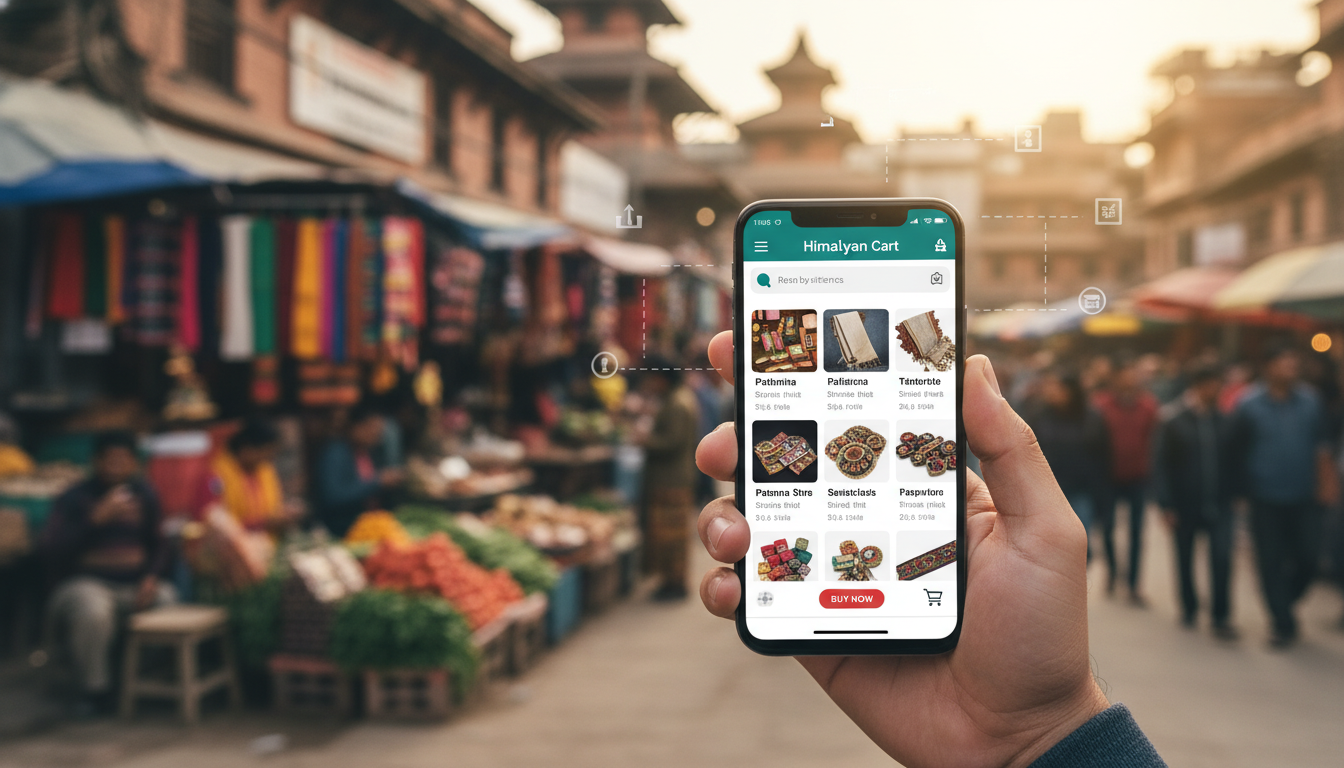
The economic implications of this shift are profound. The electronics industry may have led the market in 2023 with sales of $837.2 billion globally, but in Nepal, the democratization of access has opened the door for niche markets. The ability to source products from specific regions—such as organic goods or hand-woven rugs from the Terai—and sell them to a dispersed national or international audience eliminates historic geographic constraints. This phenomenon, known as the “death of distance,” is the core economic engine driving platforms like Mr. Bio Nepal.
1.2 The Organic Movement: A Convergence of Health and Digital Trends
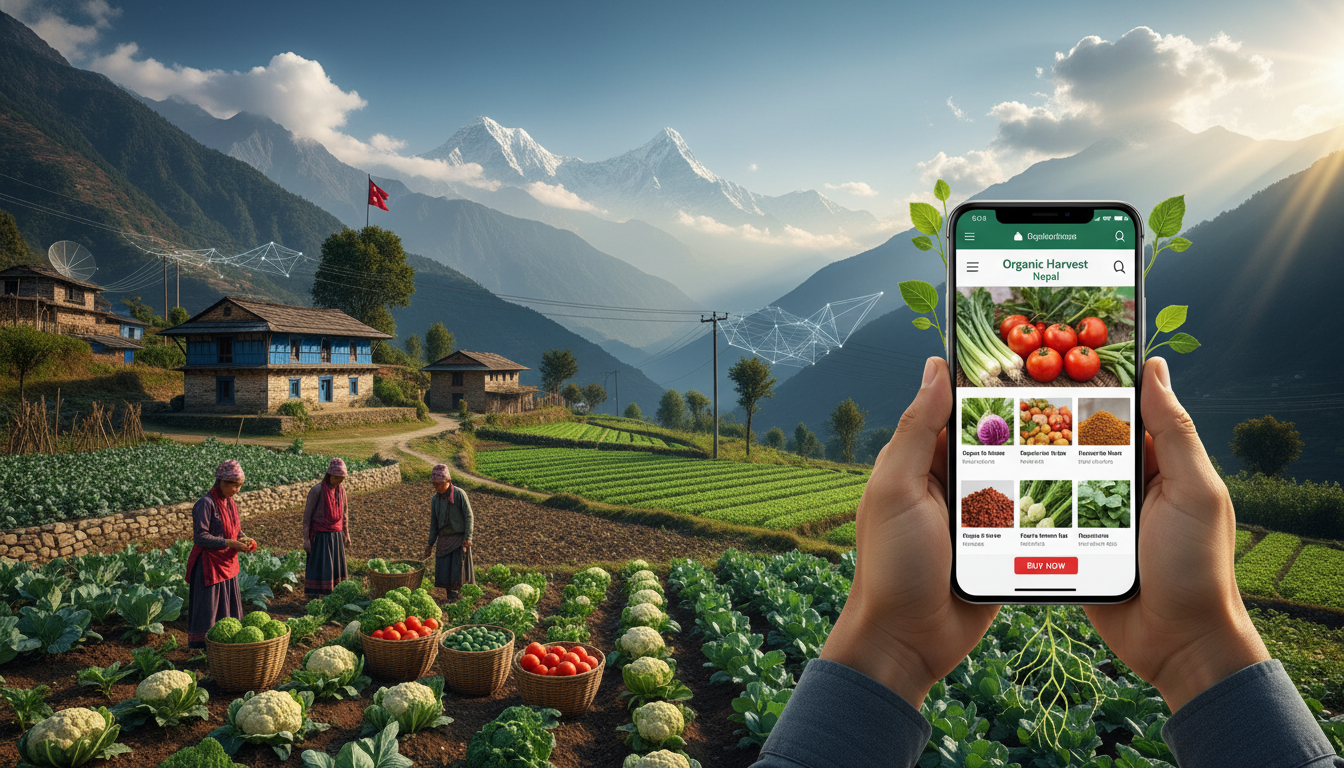
Parallel to the digital revolution is a subtle but powerful shift in consumer consciousness regarding health and sustainability. The global demand for organic food is rising, driven by increasing customer awareness, environmental consciousness, and a desire for chemical-free nutrition. In the context of Nepal, this is not merely a trend but a response to urbanization and the industrialization of the food supply.
Academic research conducted in urban centers like Itahari, Biratnagar, and Dharan indicates that health consciousness is the most significant driver of organic food purchase intention among Nepalese consumers. However, the market suffers from severe inefficiencies. Organic producers are often smallholders located in rural areas, while the demand is concentrated in urban hubs like Kathmandu. Traditional supply chains are plagued by intermediaries who inflate prices and degrade quality.
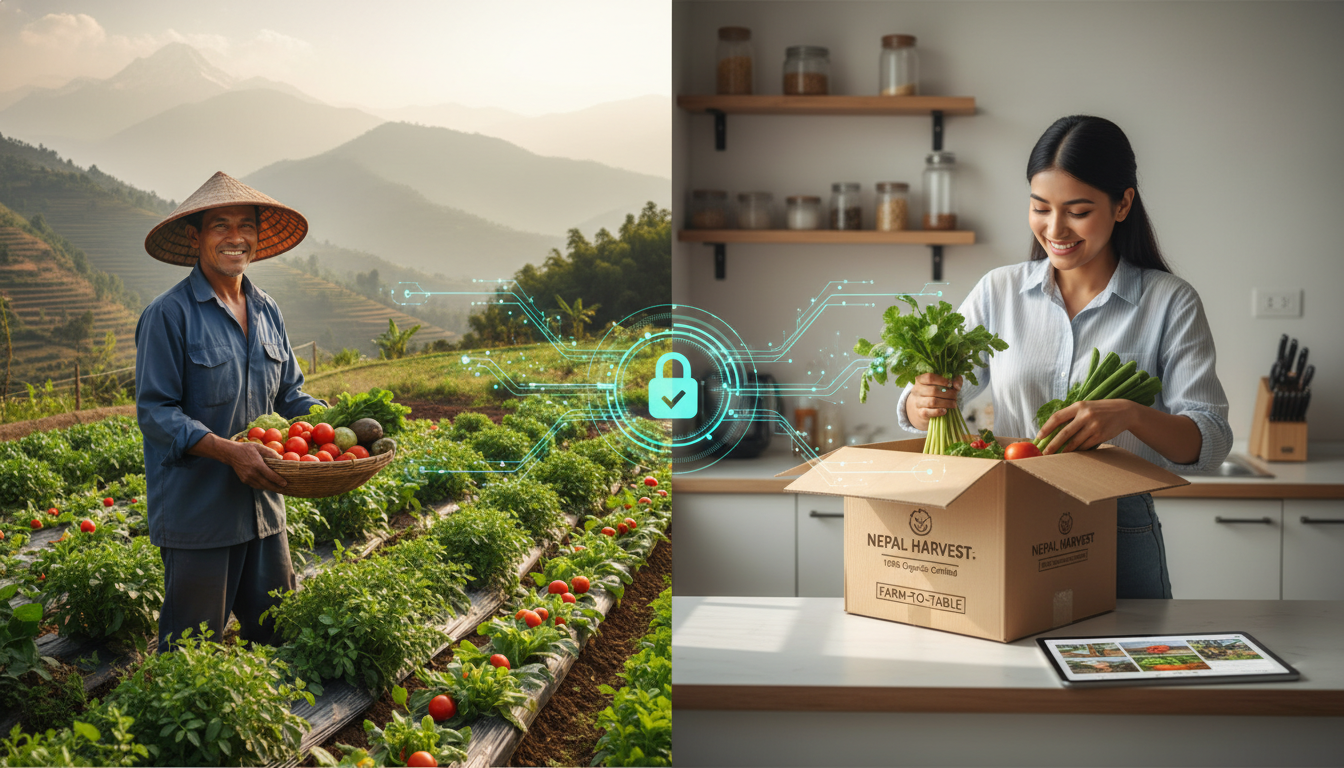
Mr. Bio Nepal situates itself at this precise intersection: the convergence of the digital revolution and the organic wellness movement. By leveraging e-commerce infrastructure, the company attempts to solve the information asymmetry and logistical barriers that have historically stifled the organic market. The platform promises “100% Organic Certified” products, effectively commoditizing “trust” in a market rife with adulteration.
1.3 Case Study Objectives and Scope
This report is commissioned for the BBA course ‘IT 204: E-Commerce’ and is designed to provide an exhaustive analysis of Mr. Bio Nepal. It moves beyond a superficial website review to dissect the underlying business logic, technological infrastructure, and legal compliance of the firm.
The primary objectives are:
- Business Model Deconstruction: To analyze how Mr. Bio Nepal creates, delivers, and captures value. We will explore whether it operates as a pure retailer, a marketplace, or a hybrid entity, and how it sustains margins in a price-sensitive economy.
- Marketing Strategy Evaluation: To audit the company’s application of the Marketing Mix (7Ps) in a digital context. This includes an analysis of their social commerce integration (TikTok), pricing psychology, and brand positioning.
- Technical Architecture Assessment: To reverse-engineer the platform’s technology stack. We will investigate the role of Crab Tech Pvt. Ltd., the use of WordPress/WooCommerce, and the integration of payment gateways like eSewa and Khalti.
- Operational and Logistics Review: To understand the physical reality behind the digital storefront. How does the company manage the “Last Mile” problem in Kathmandu versus rural Nepal?
- Legal and Regulatory Compliance: To scrutinize the platform’s adherence to the newly enacted Electronic Commerce Act, 2080 . This section will identify gaps between current operations and the strict new mandates regarding transparency and consumer protection.
1.4 Methodology
This report utilizes a qualitative case study methodology, supported by quantitative data from secondary research snippets. The analysis is grounded in established theoretical frameworks, including:
- The Business Model Canvas (BMC) for structural analysis.
- The Technology Acceptance Model (TAM) for user adoption analysis.
- Porter’s Five Forces for competitive landscape assessment.
- The 7Ps of Marketing for strategic audit.
The data sources include live analysis of the domain, market trend reports from Makura Creations and Delta Creation, legal texts from Law Imperial and the Government of Nepal, and academic journals regarding organic food pricing in Nepal.
Chapter 2: Platform Overview and Business Model Analysis
2.1 Corporate Identity and Mission
Mr. Bio Nepal operates as a digital-first entity with a clear, purpose-driven identity. The platform’s slogan, “Go Bio, Live Better!“, encapsulates a mission that transcends mere commerce. The stated mission is “To revolutionize the way Nepal eats by providing accessible, certified organic products that nourish the body while respecting the earth“.
This “Purpose-Driven” approach is a strategic differentiator. In a crowded e-commerce space dominated by generalist giants like Daraz, niche players must compete on values rather than just price. By explicitly committing to “Sustainable Farming” and “Locally Sourced” goods, Mr. Bio Nepal builds an emotional connection with its customer base. The narrative of “Supporting local farming communities” serves as a powerful psychological heuristic for consumers who wish to feel that their consumption is ethical and constructive for the national economy.
2.2 Theoretical Business Model Framework
To understand the economic engine of Mr. Bio Nepal, we must apply the Business Model Canvas (BMC). This framework breaks down the organization into nine structural building blocks.
2.2.1 Customer Segments
The platform does not target the mass market. Its pricing and product portfolio indicate a focus on three distinct segments:
- The Urban Health Conscious: Residents of Kathmandu and major metros who are aware of global health trends (e.g., Apple Cider Vinegar, Oats). They have higher disposable income and are less price-sensitive regarding food quality.
- The “Gatekeeper” Parent: Mothers and fathers of infants (4-6 months+). This segment is biologically primed to be risk-averse. The “Baby Cereal” product line targets this group, who prioritize “No Preservatives” and “100% Natural” attributes over cost.
- The Fitness Demographic: Consumers of high-protein items like peanut butter. This group overlaps with the mobile-savvy youth demographic active on platforms like TikTok.
2.2.2 Value Propositions
The central value proposition is Verified Purity. In the Nepalese market, “organic” is often a self-claimed and unverified attribute. Mr. Bio counters this with specific claims:
- “100% Organic Certified“: Reducing the cognitive load for customers who otherwise have to inspect produce physically.
- “With Mother” (Probiotics): A specific technical value proposition for their Apple Cider Vinegar, signaling authenticity to enthusiasts.
- Convenience: The “Simplicity Quotient” of 24/7 accessibility.
2.2.3 Channels
The primary channel is the Direct-to-Consumer (DTC) website. However, the integration of social media links (TikTok) suggests a “Social Commerce” approach. The company effectively uses the website as a transaction engine while using social platforms as the engagement engine.
2.2.4 Customer Relationships
The business employs a “Personal Assistance” relationship model. The prominent display of a mobile support number on the homepage is a critical design choice in Nepal. In a “high-context” culture where trust is established interpersonally, the ability to speak to a human before purchasing reduces the perceived risk of online transactions.
2.2.5 Revenue Streams
The model appears to be Transactional Sales (one-time payments). However, the nature of the products (consumables like oats, vinegar) lends itself perfectly to a high Repeat Purchase Rate.
The revenue is likely volume-driven on staples and margin-driven on specialized imports.
Key Resources
- Digital Infrastructure: The WordPress/WooCommerce platform developed by Crab Tech.
- Brand Trust: The reputation for selling genuine organic goods.
- Inventory: Physical stock of perishable and semi-perishable goods.
Key Activities
- Sourcing & Quality Control: Ensuring that products labeled “Organic” actually meet the standards to avoid legal liability under the new Consumer Protection acts.
- Content Creation: Managing the “Blog” and TikTok presence to educate consumers.
- Fulfillment: Picking, packing, and handing over orders to logistics partners.
Key Partnerships
- Farmers/Suppliers: “Locally Sourced” implies contracts with Nepalese organic farmers.
- Technology Partner: Crab Tech Pvt. Ltd. for site maintenance.
- Logistics Providers: Third-party courier services (likely Pathao, Upaya City Cargo, etc.) for last-mile delivery.
Cost Structure
- Platform Maintenance: Hosting, domain, and development fees.
- COGS (Cost of Goods Sold): Procurement of organic produce.
- Marketing: Social media ad spend.
- Logistics: Shipping subsidies (if any).
2.3 Product Portfolio Analysis
The product mix is curated to maximize high-margin, low-spoilage items.
Product Category: Apple Cider Vinegar (ACV)
Target Demographic: Health Conscious, Weight Loss seekers
Strategic Value: High Margin / Hero Product. ACV is a trend-driven product. Positioning it as “Raw Power” allows for premium pricing (Nrs. 1075).
Product Category: Organic Oats (Melvit)
Target Demographic: Families, Fitness enthusiasts
Strategic Value: Volume Driver. Oats are a daily staple. They drive recurring traffic to the site. The partnership with “Melvit” (an international brand) lends credibility.
Product Category: Baby Cereal
Target Demographic: New Parents
Strategic Value: Trust Anchor. Once a parent trusts a brand with their baby’s food, they are likely to buy other products. This is a “gateway” product.
Product Category: Peanut Butter
Target Demographic: Youth, Gym-goers
Strategic Value: Add-on Item. Often bought as an impulse purchase alongside oats. Available in different price tiers (Creamy vs. Crunchy) to capture different willingness-to-pay.
2.4 Competitive Landscape Analysis (Porter’s Five Forces)
To assess the viability of this business model, we apply Porter’s Five Forces to the Nepalese organic e-commerce sector.
- Threat of New Entrants (High): The barriers to entry are low. Any entity can set up a WordPress site and source organic goods. The E-Commerce Act 2080 requires registration, which raises the bar slightly, but not prohibitively.
- Bargaining Power of Suppliers (Moderate): True organic farmers in Nepal are scarce. If Mr. Bio relies on specific high-quality farms, those farmers hold power. However, for imported goods (like Melvit Oats), suppliers are abundant.
- Bargaining Power of Buyers (High): The Nepalese consumer is price-sensitive. With competitors like Kathmandu Organics and general grocery stores, switching costs are zero. Mr. Bio must compete on brand loyalty and service quality.
- Threat of Substitutes (High): Conventional (non-organic) food is the primary substitute and is significantly cheaper. The “organic” label must provide enough perceived value to justify the price delta.
- Rivalry Among Existing Competitors (High): The market is fragmented. Players like Kathmandu Organics operate similar B2C models with “fair trade” values. Large players like Daraz also sell organic sections. Mr. Bio’s “Niche Brand” positioning helps it avoid direct price wars with the giants.
Chapter 3: Marketing Strategy
3.1 The Extended Marketing Mix (7Ps)
In the service-heavy domain of e-commerce, the traditional 4Ps are insufficient. We analyze Mr. Bio Nepal through the lens of the 7Ps.
3.1.1 Product
The product strategy focuses on Certification as a Feature. The website emphasizes “100% Organic Certified” and “Free from Chemicals”. This is not just a description; it is the product. The packaging (visible in snippets) likely uses earth tones to signal eco-friendliness. The inclusion of “Mother” in ACV is a specific product feature designed to signal “unprocessed” quality to connoisseurs.
3.1.2 Price
Mr. Bio utilizes a Premium Pricing Strategy backed by Psychological Anchoring.
- Anchor Pricing: The site displays the “original” price crossed out (e.g., Nrs. 1100) next to the “sale” price (Nrs. 1075). This anchors the consumer’s perception of value at the higher number, making the selling price feel like a bargain, even if the discount is minimal (approx. 2%).
- Tiered Options: Offering Peanut Butter at Nrs. 315 (Creamy) and Nrs. 465 (Crunchy) allows them to capture different segments of the demand curve.
3.1.3 Place (Distribution)
The “Place” is virtual (www.mrbionepal.com), but the physical distribution strategy is Hyperlocal. Given the concentration of online activity in Kathmandu, the marketing likely targets geo-fenced areas within the valley for rapid delivery. The “Mobile E-commerce” focus ensures that the “store” is in the pocket of every user with a smartphone.
3.1.4 Promotion
The promotional mix is heavily skewed towards Digital and Social Channels.
- TikTok: The explicit link to TikTok in the footer is a strategic masterstroke. TikTok is a dominant cultural force in Nepal. Short-form videos demonstrating recipes (e.g., “How to make overnight oats”) or explaining the benefits of ACV are highly effective for engagement.
- Content Marketing: The presence of a “Blog” section suggests a strategy of Inbound Marketing. By publishing articles on “Health benefits of Organic Food,” they attract traffic via SEO.
3.1.5 People
Customer service personnel are the face of the brand. The prominent mobile number suggests a strategy of Accessibility. In Nepal, customers often prefer to call and confirm stock before placing an order. The staff handling these calls (+977-9801030766) essentially act as sales closers. The “About Us” section also highlights the farmers, humanizing the supply chain.
3.1.6 Process
The user journey is streamlined: Landing Page -> Product Selection -> Cart -> Checkout.
- The “Buy Now” buttons are prominent.
- The process likely involves a confirmation call (a standard practice in Nepal to reduce return rates).
- The checkout process must handle various payment methods (Digital Wallets vs COD), which is a critical part of the user experience.
3.1.7 Physical Evidence
In the absence of a physical store, the Website UI and Packaging serve as physical evidence.
- Digital: The clean, white-and-green aesthetic of the site signals freshness.
- Certifications: The display of organic certification logos acts as “proof” of quality.
- Social Proof: “500+ Happy Customers” is a quantitative trust signal displayed to reassure new visitors.
3.2 Digital Marketing Dynamics in Nepal
The digital marketing landscape in Nepal is evolving rapidly. According to Delta Creation, digital marketing is the “most important factor for online growth in 2025”.
3.2.1 Search Engine Optimization (SEO)
For a niche player, SEO is vital. Mr. Bio likely targets long-tail keywords such as:
- “Organic Apple Cider Vinegar in Nepal”
- “Baby food no sugar Nepal”
- “Melvit Oats price Kathmandu”
These keywords have high purchase intent. The blog content helps in ranking for informational queries like “benefits of organic oats,” which then funnel users to product pages.
3.2.2 Social Commerce
Social media is not just for awareness; it is for conversion. With social media playing an “increasingly important role in influencing online shopping decisions”, Mr. Bio’s strategy likely involves:
- Influencer Marketing: Collaborating with local health influencers to review products.
- Facebook/Instagram Shops: While the website is the hub, the actual discovery often happens on Facebook or Instagram, which are ubiquitous in Nepal.
3.3 Consumer Behavior and Trust
The primary barrier to e-commerce in Nepal is Trust.
- The “Touch and Feel” Deficit: Nepalese consumers are used to inspecting fresh produce. Mr. Bio overcomes this by selling packaged organic goods (sealed oats, vinegar), which are perceived as more standardized and less risky than fresh vegetables.
- Payment Trust: The dominance of Cash on Delivery (COD) stems from a fear of non-delivery. By offering COD, Mr. Bio aligns with consumer preference, effectively financing the transaction risk until the moment of delivery.
Chapter 4: Technical and Operational Analysis
4.1 Technology Stack Architecture
Mr. Bio Nepal’s digital platform is the backbone of its operation. The site is crafted by Crab Tech Pvt. Ltd. An analysis of Crab Tech’s profile reveals a specialization in WordPress development.
4.1.1 The CMS Choice: WordPress & WooCommerce
It is highly probable that Mr. Bio Nepal runs on WordPress with the WooCommerce plugin.
- Why WordPress? It is the global standard for SME e-commerce. It is open-source (low cost), highly customizable, and has a vast ecosystem of plugins.
- Local Compatibility: WooCommerce has extensive support for Nepalese payment gateways (eSewa, Khalti) through third-party plugins, making integration seamless for developers like Crab Tech.
- Responsiveness: WordPress themes are inherently mobile-responsive.
This is non-negotiable in a market where 45% of access is mobile. The site likely uses a “Mobile-First” design philosophy, prioritizing vertical scrolling and touch-friendly buttons.
Performance and UI/UX
The site claims to be “Simple, fast, and delightful”.
- Speed: In a mobile-heavy market with variable data speeds (4G/3G), page load speed is critical for conversion.
- Navigation: The categorization (Organic, Natural, Wholesome) simplifies the user journey.
- Search: An effective search bar is essential for users who know exactly what they want (e.g., “Oats”).
Payment Infrastructure and Financial Operations
The financial transaction layer is where the sale is consummated. Nepal’s payment landscape is fragmented but modernizing.
The Digital Wallet Ecosystem
Digital wallets are the de facto credit cards of Nepal.
- Key Players: eSewa (market leader, preferred by end-users), Khalti (developer-friendly, likely favored by Crab Tech), and IME Pay.
- Integration: These gateways are integrated via APIs. When a customer pays, they are redirected to the secure gateway portal, ensuring Mr. Bio never touches sensitive banking credentials. This reduces PCI-DSS compliance burdens.
- Trends: The rise of “invisible payments” and frictionless checkout is noted globally. In Nepal, QR code payments (Fonepay) are becoming ubiquitous. Mr. Bio likely supports “Scan to Pay” options even for COD orders upon delivery.
The Cash on Delivery (COD) Reality
Despite the rise of wallets, COD remains dominant.
- Operational Cost: COD introduces cash handling costs and the risk of “refusal on delivery.”
- Trust Mechanism: For a relatively new brand like Mr. Bio, COD is a necessary evil to lower the barrier to entry for skeptical customers.
Logistics and Supply Chain Management
Logistics is the physical fulfillment of the digital promise.
Inventory Management
- Nature of Goods: Products like Oats and Vinegar have a shelf life. The inventory model must be First-In-First-Out (FIFO) to prevent expiration.
- Stocking: Unlike a “Dropshipping” model where inventory is held by suppliers, Mr. Bio likely holds its own inventory (implied by “Locally Sourced” and “Crafted”). This requires warehousing space in Kathmandu.
Last-Mile Delivery
- Urban: Delivery within the Kathmandu Valley is likely handled by bike-based courier aggregators (e.g., Pathao, Upaya). This allows for “Hyperlocal delivery”, potentially offering same-day or next-day service.
- Rural: Delivering to the “16 million” potential users outside the valley is challenging. It requires partnership with national logistics carriers who have reach in the Terai and Hilly regions.
- Cost: Shipping costs are a major factor in cart abandonment. Mr. Bio may offer “Free Shipping” above a certain cart value (e.g., Nrs. 2000) to encourage bulk buying.
Security and Data Privacy
- SSL Encryption: The site uses HTTPS (indicated by the secure connection), encrypting data in transit.
- Data Minimization: Collecting only essential data (Name, Phone, Location) minimizes the risk profile in case of a breach.
- Fraud Protection: Digital wallets like eSewa use OTP (One Time Password) for transactions, shifting the liability of authentication to the payment provider.
Legal and Regulatory Landscape
The legal environment for e-commerce in Nepal has shifted from a “gray market” to a regulated industry with the introduction of the Electronic Commerce Act, 2080.
The Electronic Commerce Act, 2080
This landmark legislation fundamentally alters the compliance landscape for Mr. Bio Nepal. It was enacted to ensure consumer trust and create clear rules.
Mandatory Registration and Platform Establishment
- Requirement: The Act mandates that any e-commerce business must establish an electronic platform and be legally registered.
- Status: Mr. Bio Nepal operates a platform. However, the footer must explicitly display the Registration Number and VAT/PAN details to be fully compliant. Failure to “enlist” or disclose details can attract fines from NPR 20,000 to NPR 100,000.
Transparency and Disclosure
The Act requires the disclosure of:
- Full details of goods (specifications, price, tax, delivery time).
- Return/Refund Conditions: The website must have a clear policy.
- Misleading Information: Presenting false specifications is an offense punishable by imprisonment (6 months to 3 years) or a fine of NPR 50,000 to NPR 500,000. This places a heavy burden on Mr. Bio to ensure that its “Organic” certifications are legally valid and current. If a product is labeled “100% Organic” but contains traces of pesticides, the company is now criminally liable.
Consumer Rights and Grievance Redressal
- Right to Return: Customers have the right to replace defective products or get a refund.
- Nodal Officer: A designated employee to handle complaints is mandatory. Their name, phone number, and address must be on the website.
- Analysis: Mr. Bio provides a support number. To strictly comply, they should list the specific name of the Grievance Officer on their “Contact Us” page.
- Cancellations: Customers can cancel an order before shipment without fees.
Other Relevant Legislation
Consumer Protection Act, 2075
This act protects consumers from unfair trade practices. It complements the E-Commerce Act by providing a broader framework for product liability. If the “Baby Cereal” causes health issues, this Act would govern the liability claims.
Value Added Tax (VAT) Act, 2052
E-commerce businesses are required to collect and remit VAT. Mr. Bio must issue a VAT invoice for every digital sale. The display of prices must be inclusive of VAT to avoid misleading consumers about the final cost.
Data Privacy
While a specific “Data Protection Act” is evolving, the general principles of privacy apply. Mr. Bio is the custodian of customer data (phone numbers, addresses). Any leak of this data could be litigated under the Electronic Transactions Act, 2063.
Compliance Gap Analysis for Mr. Bio Nepal
| Requirement | Current Status (Inferred) | Gap / Risk |
|---|---|---|
| Platform Registration | Website exists. | Must ensure company registration details are visible in the footer. |
| Grievance Officer | Support number provided. | GAP: Name and specific designation of the officer are likely missing. |
| Product Accuracy | “100% Organic” claims. | HIGH RISK: Claims must be backed by valid certificates to avoid “Misleading Info” penalties (NPR 500k fine). |
| Return Policy | Implicit (standard practice). | Must be explicitly written and compliant with the statutory “Right to Return.” |
| VAT Compliance | Prices listed. | Must ensure final invoice includes VAT breakdown. |
Conclusion and Strategic Recommendations
Summary of Findings
Mr. Bio Nepal stands as a progressive example of the modern Nepalese e-commerce entity. It effectively leverages the “Mobile E-commerce Boom” and the “Organic Wellness Trend” to carve out a defensible niche.
- Business Model: It operates a robust B2C model with high-margin, low-competition products, supported by a “Purpose-Driven” narrative that resonates with the local market.
- Marketing: It understands the pulse of the market, utilizing TikTok for social commerce and “Anchor Pricing” psychology to drive sales.
- Technology: It utilizes a scalable, cost-effective stack (WordPress/WooCommerce) appropriate for the market size, integrated with key local payment gateways.
- Legal: It operates in a tightening regulatory environment. While largely compliant, specific disclosures regarding grievance redressal and registration details need to be tightened to avoid significant financial penalties under the Act of 2080.
Future Outlook
The future for Mr. Bio Nepal is buoyant but challenging. The e-commerce user base will grow to 25 million by 2025, offering a massive tailwind. However, the market will bifurcate:
- Commoditization: General items will move to large marketplaces (Daraz).
- Specialization: Niche players like Mr. Bio will thrive only if they deepen their value proposition.
Emerging trends like AI-driven personalization and Buy Now Pay Later (BNPL) financing will define the next phase of growth. As 67% of consumers want personalized interactions, Mr. Bio cannot remain a static catalog; it must become an intelligent health partner.
Strategic Recommendations
To secure its position and scale sustainably, the following strategic roadmap is proposed:
Compliance as a Competitive Advantage
Mr. Bio should proactively audit its website against the E-Commerce Act 2080. Explicitly listing the Grievance Officer and publishing a “Consumer Charter” will not only ensure legal safety but will also build immense trust in a market where consumers are wary of scams.
The “Subscription Economy” Pivot
For high-frequency consumables like Oats and Baby Cereal, Mr. Bio should introduce a Subscription Model. Allowing parents to subscribe to a “Monthly Cereal Box” guarantees recurring revenue (ARR) and improves inventory forecasting, reducing spoilage waste.
Content-Led Commerce Integration
Expand the TikTok strategy into a comprehensive content ecosystem.
- Traceability: Post videos showing the farms where the products are sourced.
This visual proof validates the “Locally Sourced” claim and justifies the price premium.
- Education: Use the blog to explain why “Mother” in ACV matters, establishing the brand as a thought leader, not just a retailer.
Technological Evolution
- AI Recommendation Engine: Implement simple algorithms to cross-sell products (e.g., “People who bought Oats also bought Peanut Butter”).
- Data Analytics: Use Google Analytics to track user behavior and optimize the “Add to Cart” funnel, reducing drop-offs.
Logistics Optimization
Explore partnerships with Hyperlocal Delivery startups to offer “2-Hour Delivery” within Kathmandu. Speed is the ultimate luxury in e-commerce and fits the “Instant” nature of food cravings.
Final Verdict
Mr. Bio Nepal is a microcosm of the potential within Nepal’s digital economy. It demonstrates that with the right mix of Technology, Trust, and Targeting, niche businesses can thrive even in a developing market. By navigating the new legal landscape with transparency and continuing to innovate on product quality, Mr. Bio Nepal is well-positioned to lead the organic revolution in the Himalayas.