


Hospitality Design: Short-Stay Comfort, Long-Stay Practicality
The Architecture of Adaptive Hospitality: Designing for Short-Stay Comfort and Long-Stay Practicality
The modern hospitality landscape is undergoing a fundamental transformation, driven by a convergence of transient travel demands and extended-stay residential requirements. This shift has necessitated a move away from the rigid, aesthetically focused designs of the past toward a model predicated on human-centric ergonomics, technical performance standards, and material durability. Research indicates that the primary driver of guest satisfaction—and, by extension, positive online reviews—is physical comfort rather than superficial decor. Consequently, the success of a short-stay or long-stay unit depends on a nuanced understanding of spatial flow, acoustic mitigation, lighting precision, and the functional lifecycles of materials.
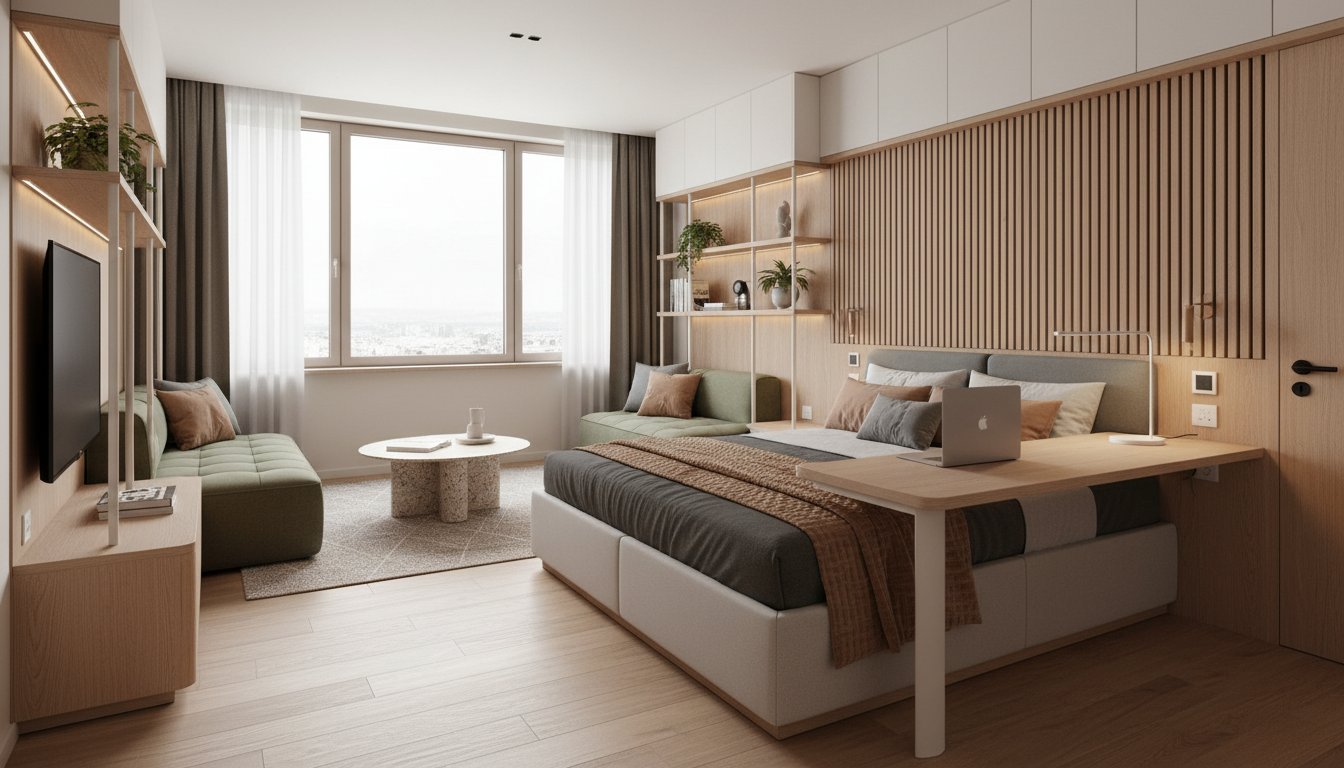
Spatial Ergonomics and Anthropometric Standards in Unit Design
The perception of a hospitality unit begins with its spatial proportions. Guests inherently notice the alignment of movement, storage, and rest zones before they engage with the interior design themes. For a standard double-occupancy unit, the optimal footprint typically ranges between 250 and 350 square feet (23 to 33 m), which allows for the integration of essential functional zones without creating bottlenecks in circulation. When units fall below 220 square feet, the design must pivot toward wall-mounted elements, sliding doors, and integrated casework to preserve usable floor area.
Circulation and Clearance Baselines
Effective ergonomics in hospitality is defined by the clearances provided for guest movement. A primary circulation path of at least 36 inches (915 mm) from the entry to the bed is required to prevent a feeling of congestion. Furthermore, providing 24 to 30 inches of clearance on both sides of a bed is standard for high-end comfort, though tighter configurations may drop to 18 inches in budget-constrained layouts.
| Functional Area | Measurement / Standard | Ergonomic Rationale |
|---|---|---|
| Primary Circulation Path | 36 in (915 mm) | Allows unobstructed passage with luggage |
| Bedside Clearance | 24–30 in (610–760 mm) | Facilitates ease of ingress and egress from sleep |
| Luggage Bench Frontage | 30 in (760 mm) | Prevents physical strain when accessing suitcases |
| Bed Height | 22–25 in (560–635 mm) | Optimizes sit-to-stand transitions for all ages |
| Entry Vestibule Depth | 10–15% of total sq ft | Provides an acoustic and thermal buffer zone |
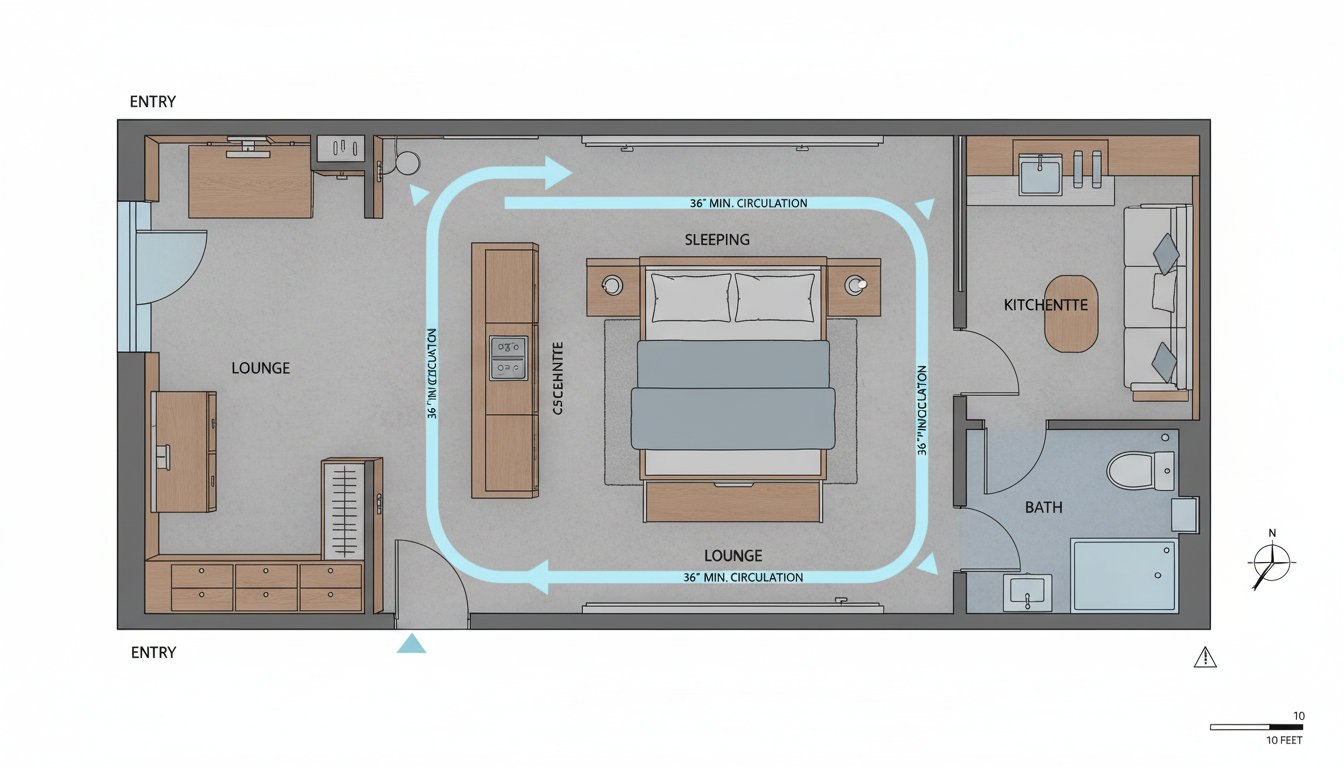
The distribution of space generally follows a guest-centric balance: 60 to 65 percent for sleeping and lounging, 20 to 25 percent for the bathroom, and 10 to 15 percent for the entry and storage areas. This zoning ensures that the sleeping zone remains the quietest and most sequestered part of the unit, often shielded by the bathroom core from corridor-based acoustic distractions.
Workspace Ergonomics and Productive Environments
The rise of the “digital nomad” and the hybrid work model has elevated the importance of the in-room workspace. While traditional mahogany desks are increasingly viewed as dated, the need for a functional surface remains paramount. Standard hospitality desks should be set at a height of 28 to 30 inches (710–760 mm), allowing for chair heights that maintain a 90 to 100-degree knee angle. A desk depth of 20 to 24 inches supports modern laptop use without crowding the occupant, and a knee clearance of 12 to 14 inches is essential for varied body sizes.
For guests who prefer more casual work environments, the integration of a lounge chair with a lap table or a small round side table (18 to 22 inches in diameter) provides ergonomic versatility. These secondary work surfaces should avoid sharp edges and prioritize smooth transitions between dining, working, and relaxation. The placement of power and data outlets at 30 to 40 inches above the finished floor at the desk, and 16 to 20 inches beside the bed, ensures that device charging is intuitive and hassle-free.
Engineering Acoustic Privacy and Noise Mitigation
Acoustic distraction is one of the most significant factors reducing cognitive performance and guest satisfaction in hospitality settings. Research from Steelcase and major hospitality brands indicates that corridor noise, HVAC rumble, and plumbing vibrations are common sources of dissatisfaction that lead to negative reviews and refund requests.
Sound Transmission Class (STC) and Isolation Benchmarks
The Sound Transmission Class (STC) rating quantifies how well a partition attenuates airborne sound. While a rating of STC 50 is the baseline requirement for new construction under the International Building Code (IBC), it is often insufficient for guest comfort, as muffled speech and television audio can still be heard through the walls.
| STC Rating | Apparent Sound Perception | Performance Level in Hospitality |
|---|---|---|
| 30 | Loud speech easily understood | Unacceptable; fails to provide privacy |
| 40 | Loud speech heard as a murmur | Marginal; common in budget retrofits |
| 50 | Loud speech not heard; TVs faint | Minimum code requirement; borderline |
| 55 | Speech unintelligible; TVs inaudible | Preferred standard for demising walls |
| 60+ | Superior sound isolation | Required for gyms, elevators, and plant rooms |
An increase from STC 50 to STC 55 represents a significant improvement in perceived privacy. At STC 55, most real-world distractions disappear, which is why major brands specify this threshold for guestroom partitions. For multi-story layouts, an Impact Isolation Class of 50 or higher is required to mitigate the sound of footsteps and furniture movement from rooms above.
Mitigation Strategies for Flanking Paths and Leakage
Real-world acoustic performance often falls short of lab-tested ratings due to “flanking paths”—indirect routes for sound to travel. These include gaps under doors, unsealed electrical boxes, and poorly connected floor plates. The lack of a few cents’ worth of acoustical sealant can reduce an STC 60 wall to an effective rating of less than 45.
- Decoupling: Using staggered or double-stud construction or resilient channels to break the physical connection between drywall layers, preventing vibration transfer.
- Mass Loading: Adding layers of 5/8-inch gypsum board or Mass-Loaded Vinyl increases the partition’s mass, making it harder for sound waves to penetrate.
- Damping: Utilizing viscoelastic polymers like “Green Glue” between layers of drywall converts sound energy into heat, providing superior performance below the 125 Hz frequency cutoff typical of standard STC measurements.
- Penetration Sealing: Ensuring that electrical outlets, pipes, and ducts are airtight and sealed with flexible acoustic caulk.
- Door Upgrades: Installing solid-core doors with perimeter weatherstripping and automatic door sweeps can eliminate the dominant leak path for corridor noise.
Lighting Precision and Circadian Regulation
Lighting design is a primary determinant of a guest’s emotional response to a space. It must serve functional requirements for task performance while supporting the body’s natural sleep-wake cycles. A layered lighting strategy—incorporating indirect ambient ceiling wash, directed task lighting, and subtle accent points—is essential for creating a “lifestyle” feel in a hybrid unit.
Illuminance and Color Temperature Targets
The Illuminating Engineering Society (IES) and the WELL Building Standard provide benchmarks for light levels in hospitality. Ambient lighting should generally be maintained between 150 and 300 lux, whereas task areas like the desk or vanity require 400 to 500 lux to reduce eye strain and support grooming.
| Zone | Illuminance (Lux) | Color Temp (Kelvin) | Contextual Use |
|---|---|---|---|
| General Living | 150–300 | 2700–3000K | Evening wind-down and relaxation |
| Task (Desk/Vanity) | 400–500 | 3000–3500K | Work, reading, and grooming |
| Bedside Reading | 300–500 | 2700–3000K | Directed light with cutoff optics |
| Night Lighting | Low Level | < 2700K | Low-blue light for safe navigation |
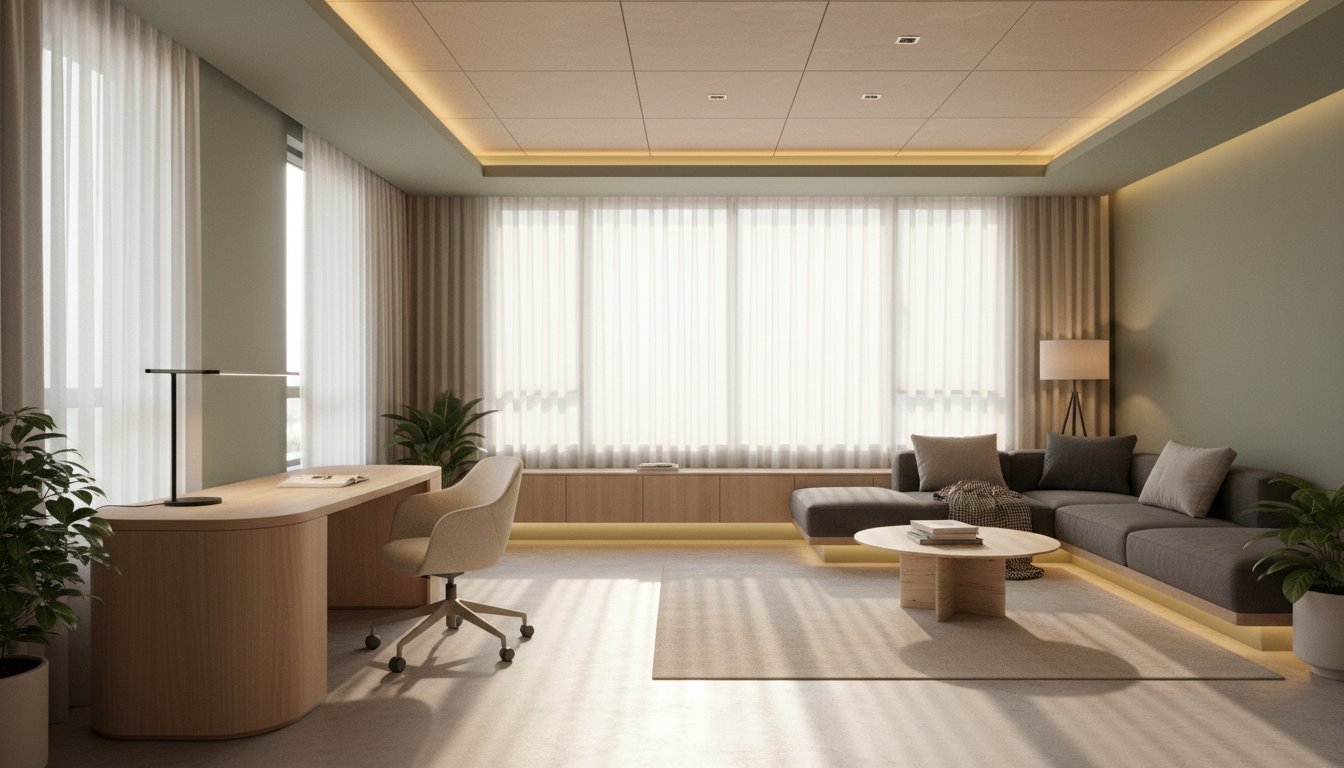
The use of warm color temperatures (2700K to 3000K) is critical for guestrooms as they evoke a sense of coziness and reduce the suppression of melatonin in the evening. For long-stay guests, adjustable lamps and smart lighting systems that allow for personalization of the environment can improve the sense of “home” and control. Additionally, avoiding glossy finishes opposite light sources or windows is a standard practice to limit reflected glare, which is often a source of discomfort during prolonged screen use.
Smart Integration and Efficiency
Sustainable design practices now mandate the use of LED technology and motion sensors to reduce energy consumption. Modern code requirements, such as Title 24, often necessitate occupancy sensing zone controls that shut off ventilation and lighting within five minutes of a room becoming unoccupied. These technologies, while improving operational efficiency, must be integrated subtly to avoid jarring transitions for the guest. Automated controls for lighting and temperature empower guests to personalize their experience, leading to higher perceived luxury and satisfaction.
Ventilation and Indoor Air Quality (IAQ)
Indoor air quality (IAQ) is often a silent contributor to guest comfort.
Stale air, unpleasant odors, and poorly controlled humidity can undermine even the most luxurious furnishings. Standards such as ASHRAE 62.1 and 62.2 specify minimum ventilation rates and filtration levels to ensure occupant health and thermal comfort.
Demand-Controlled Ventilation and Whisper-Quiet Operation
Hospitality units require “gentle, whisper-quiet” ventilation that does not disturb the sleeping occupant. Centralized systems often face challenges with pressure drops across extensive ductwork, leading to noise problems and uneven distribution. To counter this, many modern developments utilize Demand-Controlled Ventilation systems equipped with presence sensors. These systems can improve energy performance by 30% to 80% compared to constant air volume systems, as they only operate at full power when the room is occupied.
| Ventilation System Component | Design Requirement | Rationale |
|---|---|---|
| Filtration Standard | MERV 11 (minimum) | Traps bacteria and fungal spores |
| Exhaust Air Solution | Target Odor Extraction | Critical for units with kitchenettes |
| Heat Recovery (HR) | High Efficiency | Reduces heating/cooling energy loads |
| Fire Protection | Dampers & Fireproof Ducts | Essential for multi-unit safety |
For units with kitchens—a defining feature of long-stay accommodations—ventilation must be powerful enough to handle grease, moisture, and heat while remaining unobtrusive. Decentralized ventilation units with heat recovery represent an energy-efficient solution that also provides superior protection against outside noise penetration.
The Bedding Ecosystem: Sleep Quality as the Ultimate Metric
Sleep satisfaction is the strongest predictor of overall hotel satisfaction. Guests consistently rate their sleep experience based on tangible attributes such as mattress firmness, pillow support, and linen quality. Regression analysis shows that uncomfortable pillows and linens are significantly more likely to drive negative reviews than the actual size of the room.
Linen Standards and Tactile Psychology
High-quality hospitality linens must look and feel premium while surviving the rigors of commercial laundering. The tactile experience of touching soft, well-woven sheets creates an emotional connection, making guests feel “cared for”. Contrary to common marketing, the most durable hospitality linens are typically found in the 200 to 400 thread count range; higher thread counts often use thinner, more delicate yarns that deteriorate quickly under industrial washing conditions.
| Weave Type | Characteristics | Application |
|---|---|---|
| Percale | Crisp, breathable, durable | High-volume hotels |
| Sateen | Smooth, silky, luxurious | Upscale or boutique units |
| Twill | Strong, wrinkle-resistant | Towels and heavy bedding |
Certification standards such as OEKO-TEX and GOTS ensure that linens are free from harmful substances and environmentally responsible, appealing to the growing demographic of wellness-conscious travelers.
The Pillow Menu and Hypoallergenic Imperative
“Pillow menus” have emerged as a unique selling point that aids in guest satisfaction by offering personalized comfort. This is particularly relevant given that unsupportive pillows are a major source of poor sleep among business travelers. Furthermore, the demand for hypoallergenic bedding is rising. Traditional hotel bedding can harbor dust mites and mold spores; investing in waterproof, breathable, and anti-allergy mattresses and zippered encasements can prevent allergic reactions that frequently ruin stays. This proactive approach to hygiene extends the lifespan of the bedding and reduces late-night housekeeping calls and poor ratings.
Storage Architecture for Short and Long Stays
Storage needs transition from transient “un-packing” to residential “stowing” as the duration of a stay increases. A unit that serves both must offer a blend of high-visibility zones for short-term convenience and high-capacity zones for long-term organization.
Integrated Luggage Zones and Wardrobe Layouts
For short-term stays, luggage drop opportunities near the entry simplify the guest experience. Modern closet designs often feature “Integrated Luggage Zones,” where a lower shelf or cubby is dedicated specifically to carry-on suitcases, while larger trunks are placed on reinforced top shelves. This keeps suitcases accessible without cluttering the floor space.
| Closet Layout Typology | Description | Best Use Case |
|---|---|---|
| Symmetrical Hanging | Split evenly into two sections | Couples/Shared occupancy |
| Double Hanging Rod | Two vertically stacked rods | Maximize space for long-stay wardrobes |
| Rod + Drawers Combo | Single rod with bins below | Small units without dressers |
| U-Shaped Walk-In | Wraparound storage on three walls | High-end/Large-footprint suites |
| Vertical Storage | Wall-mounted grids/shelves | Small studio rentals |
Modular Flexibility and Multi-Functional Furniture
Modular closet systems—such as IKEA’s AURDAL or PAX—allow for customization without permanent structural modifications, making them ideal for renters or operators who need to adapt rooms for different demographics. In smaller units, multi-functional furniture is essential for providing storage without infringing on the living area. Examples include:
- Storage Ottomans: Providing hidden space for books or blankets.
- Lift-Top Coffee Tables: Converting from a decorative piece to a functional work or dining surface.
- Under-the-Bed Storage: Utilizing the most underused zone in any unit for seasonal items or extra linens.
- Sliding Doors: Saving significant floor area compared to traditional swing doors, which is critical in compact bathroom or closet configurations.
Case Studies: The Evolution of Hybrid Hospitality
The professionalization of the short-term rental (STR) market has created new “hybrid” models that combine the reliability of traditional hotels with the residential footprint of apartments. These case studies illustrate the diverse strategies for balancing short-stay comfort and long-stay practicality.
stayAPT Suites: The Residential Paradigm
stayAPT Suites differentiates itself by rejecting the “standard hotel room” model in favor of a residential footprint across its entire portfolio. Every suite features a “true” living room, a full kitchen with full-size appliances, and a separate private bedroom.
- Design Premise: The layout allows business professionals and relocation personnel to maintain familiar routines while providing short-term families with more space than a standard room.
- Operational Rationale: The model supports a lean labor force (typically 5 to 7 members per property) because longer stays reduce the “churn” of daily check-ins and check-outs, leading to lower turnover costs.
Sonder: Tech-Enabled Professionalism
Sonder pioneered the “managed hospitality” brand by leasing entire buildings or floors and converting them into high-end apartments.
- Standardization: Every Sonder unit offers modern furnishings, keyless entry, and a digital concierge experience, providing predictable quality across diverse global locations.
- Lessons from Collapse: Sonder’s abrupt shutdown in late 2025 serves as a warning about the fragility of the master-lease model when combined with SPAC-era overvaluation and high operational overhead. It highlights that even the most elegant technology cannot offset the underlying economics of asset-heavy lease commitments.
Mint House: Native Retail and Immersive Design
Mint House integrates luxury hotel amenities into high-end residential buildings, such as the Art Deco landmark 70 Pine in New York City.
- Space Advantage: Their units offer up to three times the space of traditional rentals, featuring full kitchens and smart technology.
- Shop Your Stay: Mint House transformed its rooms into “native retail environments” where guests can purchase curated amenities and decor straight from their phones via QR codes. This model creates a collaborative design process that incorporates local makers and artists, making the unit feel like a “testing ground” for adaptable design.
Airbnb: The Professionalization of Private Hosts
Airbnb has evolved from a peer-to-peer sharing platform to a sophisticated marketplace where high-quality visuals and trust-building features (profiles, reviews) are non-negotiable.
- Materiality and Durability: Multi-unit hosts increasingly utilize standardized design features to increase efficiency, though this risks decreasing flexibility. Successful hosts prioritize durable materials like Luxury Vinyl Plank (LVP) and quartz to withstand the 30% increase in wear and tear typically seen in short-term rentals compared to long-term leases.
- Guest Sentiment: Analysis of 250,000 reviews indicates that sentiment expressed in text (e.g., “comfortable bed”) has a stronger influence on pricing than purely quantitative star metrics.
Material Lifecycle and the Economics of Durability
The choice of materials in a hospitality unit is an exercise in balancing upfront cost against the total cost of ownership over the building’s lifecycle. Guests in short-term rentals are statistically less likely to handle property issues with care, making durability a primary “friend” to the operator.
Flooring Comparative Cost Analysis
Flooring is subject to constant abuse from heavy luggage and spills. While carpet is inexpensive and helps with acoustics, it is not waterproof and requires frequent replacement.
Flooring Material Comparison
Quarry/Ceramic Tile: Lifespan: 75+ Years; Lifecycle Cost (LCCA): Lowest (NPV); Key Characteristics: Waterproof, high labor cost, cold underfoot.
Solid Hardwood: Lifespan: 50–100 Years; Lifecycle Cost (LCCA): Moderate; Key Characteristics: High initial cost, refinishable, moisture sensitive.
Luxury Vinyl Plank (LVP): Lifespan: 10–20 Years; Lifecycle Cost (LCCA): Efficient; Key Characteristics: Waterproof, DIY friendly, warm underfoot.
Laminate: Lifespan: 15–25 Years; Lifecycle Cost (LCCA): Higher (Replacement); Key Characteristics: Budget friendly, prone to water damage.
LVP and LVT are increasingly favored for STRs because they offer realistic wood or stone visuals with waterproof performance, making them ideal for “wet” areas like kitchens and bathrooms without the grout maintenance required by tile.
Cabinetry and Upholstery Trade-offs
Cabinetry selection follows a similar cost-durability framework. Laminate cabinets are highly resistant to water and scratches, making them ideal for high-traffic kitchens, though they cannot be refinished once damaged. Wood cabinets, while more expensive and susceptible to moisture, offer unmatched longevity because they can be sanded and refinished multiple times.
Cabinet Material Comparison
Laminate (HPL): Cost per Linear Foot: $50–$300; Resistance Profile: Superior Scratch/Moisture; Longevity: 10–15 Years.
Thermofoil: Cost per Linear Foot: $80–$150; Resistance Profile: High Moisture; Longevity: Heat sensitive (warps).
Wood Veneer: Cost per Linear Foot: $150–$500; Resistance Profile: Heat Resistant; Longevity: 25+ Years (refinishable).
For upholstery, the “double rub” count is the benchmark for performance. For high-turnover rentals, fabrics with counts above 50,000 are recommended. Synthetic fibers like polyester and nylon, often sold as “performance fabrics” (e.g., Crypton), provide superior stain resistance and odor protection by sealing the technology into each individual fiber. These investments can reduce furniture replacement cycles by years, with a performance-fabric sofa potentially lasting three to five times longer than a standard option.
Conclusions and Practical Implications
The synthesis of the aforementioned design principles suggests that modern unit design must transcend the “home vs. hotel” dichotomy to become a high-performance, adaptive machine for living.
- Prioritize the Sleep Core: Sleep satisfaction is the ultimate driver of reputation. Operators should invest in high-quality (200-400 thread count) linens, a variety of pillow densities, and rigorous acoustic isolation (STC 55+).
- Engineer for the “Bleisure” Guest: The unit must provide a seamless transition between work and rest. This requires ergonomic task seating, intuitive lighting controls with warm color temperatures, and ubiquitous power outlet placement.
- Invest in the Floor and the Surface: In high-turnover environments, material durability is the best protection for the bottom line. Waterproof Luxury Vinyl Plank and High-Pressure Laminate or wood veneer cabinetry provide the best balance of aesthetic appeal and functional longevity.
- Adopt a Hybrid Spatial Logic: Effective units use the bathroom and entry as acoustic buffers for the sleeping zone and incorporate modular storage that accommodates both the overnight bag of the transient traveler and the full wardrobe of the long-stay guest.
- Leverage Technology for Comfort, Not Just Novelty: Tech integration should focus on empowering the guest to control their environment (lighting, temperature, digital concierge) and improving operational efficiency (occupancy sensors, keyless entry) rather than providing gimmicks.
By focusing on these ergonomic and technical fundamentals, hospitality units can deliver a level of comfort that consistently exceeds guest expectations, driving the positive reviews and repeat bookings that define success in a competitive global market. The transition toward adaptive units represents the future of professionalized lodging, where the quality of the “stay” is measured by how well the space disappears into the background of a productive and restful human experience.
