

Hamrobazaar Case Study: Nepal E-commerce & Digital Economy

Chapter 1: The Macro-Environmental Landscape and Genesis of Hamrobazaar
1.1 The Digital Awakening: Nepal’s E-Commerce Landscape
To understand the strategic positioning of Hamrobazaar.com, one must first deconstruct the macroeconomic and technological soil in which it is rooted. The Nepalese digital economy is currently navigating a critical inflection point, transitioning from a phase of infrastructural acquisition to one of behavioral consolidation. As of 2024, the nation’s digital demographics present a compelling narrative of untapped potential and rapid mobilization. The total addressable market is defined by a population of approximately 31.07 million, yet the internet penetration rate stands at roughly 49.6%, with 15.40 million active internet users. This statistic reveals a dual reality: while half the population remains disconnected, representing a massive reservoir for future growth, the connected half is highly active and mobile-centric.
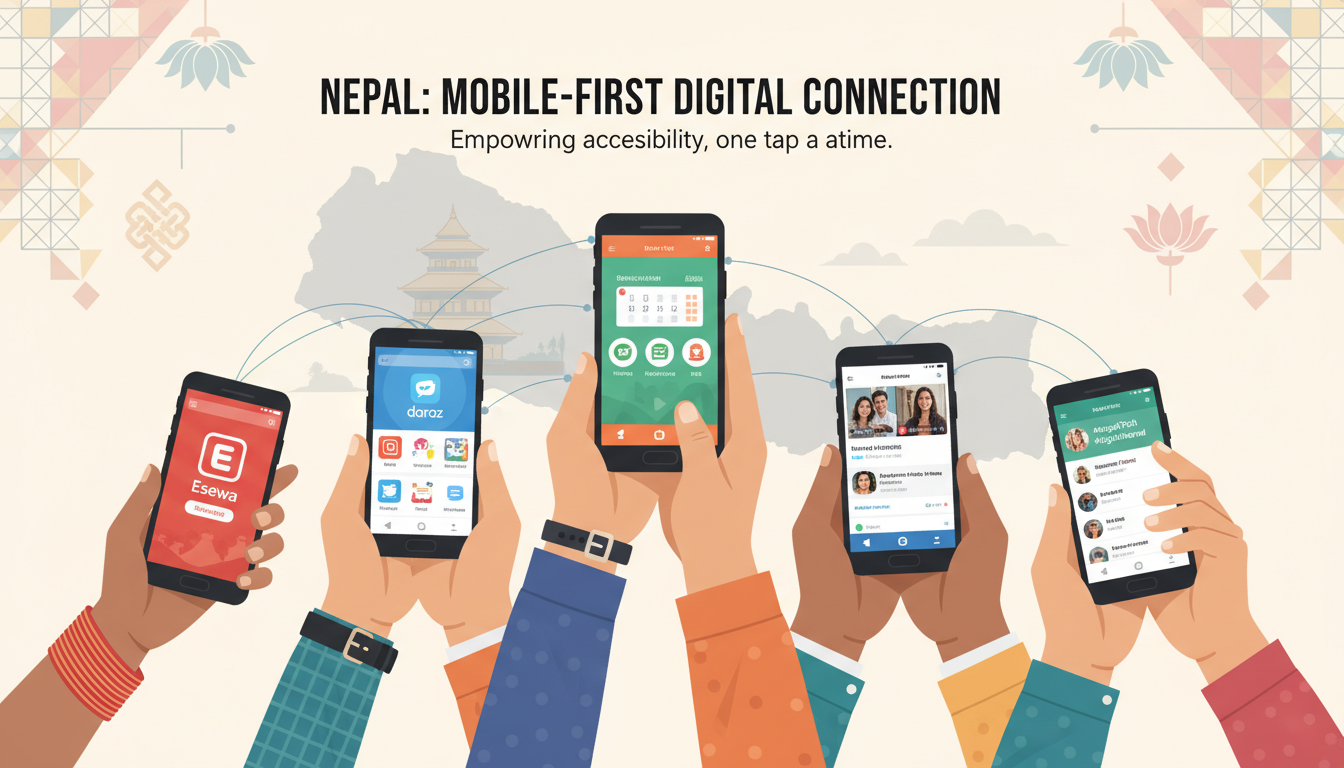
The architecture of connectivity in Nepal is uniquely skewed towards mobile devices. Mobile connections have surged to 37.47 million, a figure that represents 120.6% of the population. This multi-SIM environment confirms that for the average Nepali consumer, the internet is not a desktop experience but a handheld one. Over 90% of internet users access digital platforms via smartphones, mandating that any successful e-commerce strategy must be fundamentally “mobile-first”. This dominance of Mobile Commerce (M-Commerce) dictates the user interface, data consumption patterns, and engagement strategies for platforms like Hamrobazaar.
Economically, the stakes are rising. The Nepali e-commerce market generated an estimated revenue of US$889 million in 2024, reflecting a robust annual growth rate of 20-25%. While projections for 2025 suggest a stabilization of this growth curve to between 0-5%, the sector has undeniably graduated from a niche curiosity to a central pillar of the urban retail economy. The fundamental drivers of this shift include a tech-literate youth demographic, the forced digitization brought about by the COVID-19 pandemic, and the gradual erosion of resistance to digital payments. However, the market remains heavily fragmented, with the online share of total retail trade hovering between 0-5%. This marginal penetration underscores the immense runway available for platforms that can solve the twin challenges of logistics and trust.
1.2 Corporate Genesis and Organizational History
Hamrobazaar.com was established in 2005, a period when the internet in Nepal was largely restricted to dial-up connections and cyber cafés. Founded by Prabal Saakha, Pranav Shrestha, and Pranay Shrestha, the platform was conceived not as a high-growth startup but as a digital utility. Its foundational philosophy was rooted in the concept of a “free classifieds” board—a digital equivalent of a community noticeboard where citizens could buy and sell goods without the friction of intermediary fees or commissions.
For nearly 16 years, Hamrobazaar operated with a minimalist, almost utilitarian ethos. It prioritized function over form, ensuring that the platform remained accessible even on low-bandwidth connections. This strategy allowed it to amass a dominant market share in the C2C (Customer-to-Customer) segment, becoming the default destination for second-hand automobiles, real estate, and used electronics. By avoiding the complexities of inventory ownership and logistics, Hamrobazaar scaled efficiently, relying on the users themselves to populate the site with content.
A watershed moment in the company’s history occurred in March 2021, when MNS Investments, a prominent Nepalese conglomerate with interests in media and technology, acquired the platform. This acquisition signaled a shift from a founder-led “hobbyist” operational model to a corporate strategic asset. Sambhav Sirohiya, President of MNS Investments, articulated a vision that sought to professionalize the platform while retaining its core “free-to-use” DNA. The appointment of Rohit Tiwari as CEO marked the beginning of this new era, characterized by aggressive feature expansion, including fintech integrations and B2C partnerships, aimed at competing with global entrants like Alibaba-backed Daraz.
1.3 Vision, Mission, and Strategic Objectives
The strategic orientation of Hamrobazaar has evolved significantly post-acquisition. While the original mission was loosely defined around “transferring technology and offering the best free buying experience”, the contemporary strategic objectives are far more nuanced.
The Democratization of Commerce:
Hamrobazaar positions itself as the “home for unofficial entrepreneurs”. In an economy where formal business registration involves bureaucratic friction, Hamrobazaar serves as a launchpad for students, homemakers, and small traders. By lowering the barrier to entry to zero (no listing fees), it empowers individuals to become micro-merchants. This aligns with the broader economic trend of the “gig economy,” enabling users to monetize underutilized assets—from a used textbook to a spare room.
Strategic Duality (C2C + B2C):
The platform’s current objective is to bridge the gap between the informal and formal economies.
- C2C Supremacy: To defend its position as the market leader in used goods against rising social commerce threats (e.g., Facebook Marketplace).
- B2C Expansion: To cultivate a layer of trusted, “Verified Sellers” and authorized retailers who use the platform as a lead-generation tool for new products, thereby increasing the platform’s average order value (AOV) and perceived trustworthiness.
1.4 Comparative Market Positioning
To understand Hamrobazaar’s strategic dilemma and opportunity, one must contrast it with the market leader in the B2C space, Daraz.
Table 1.1: Strategic Comparison of Market Leaders
| Feature | Hamrobazaar (The Venue) | Daraz Nepal (The Retailer) |
|---|---|---|
| Core Business Model | C2C Classifieds & Hybrid Marketplace: Connects buyers/sellers directly; platform takes no part in the transaction for general listings. | Managed B2C Marketplace: Facilitates the entire transaction chain including payment collection and delivery. |
| Revenue Source | Advertising (AdSense/Direct), Premium Listings, Lead Gen, BNPL Commissions. | Sales Commission (2.5% – 17.2%), Shipping Fees, Payment Processing Fees. |
| Seller Friction | Zero: No commission for general listings. Instant setup for individuals. | High: Strict onboarding, commission fees, mandatory packaging guidelines. |
| Logistics | Decentralized: Buyer/Seller arrange meetings. Optional 3PL integration (Baato). | Centralized: Proprietary fleet (Daraz Express/DEX) and strictly managed 3PL partners. |
| Trust Mechanism | “Caveat Emptor” (Buyer Beware): Minimal platform intervention. Trust is peer-to-peer. | Platform Guarantee: Buyer Protection policies, refund windows, and dispute resolution. |
| Inventory Type | High liquidity in Used/Second-hand goods, Real Estate, Vehicles. | Dominance in Brand New FMCG, Fashion, and Electronics. |
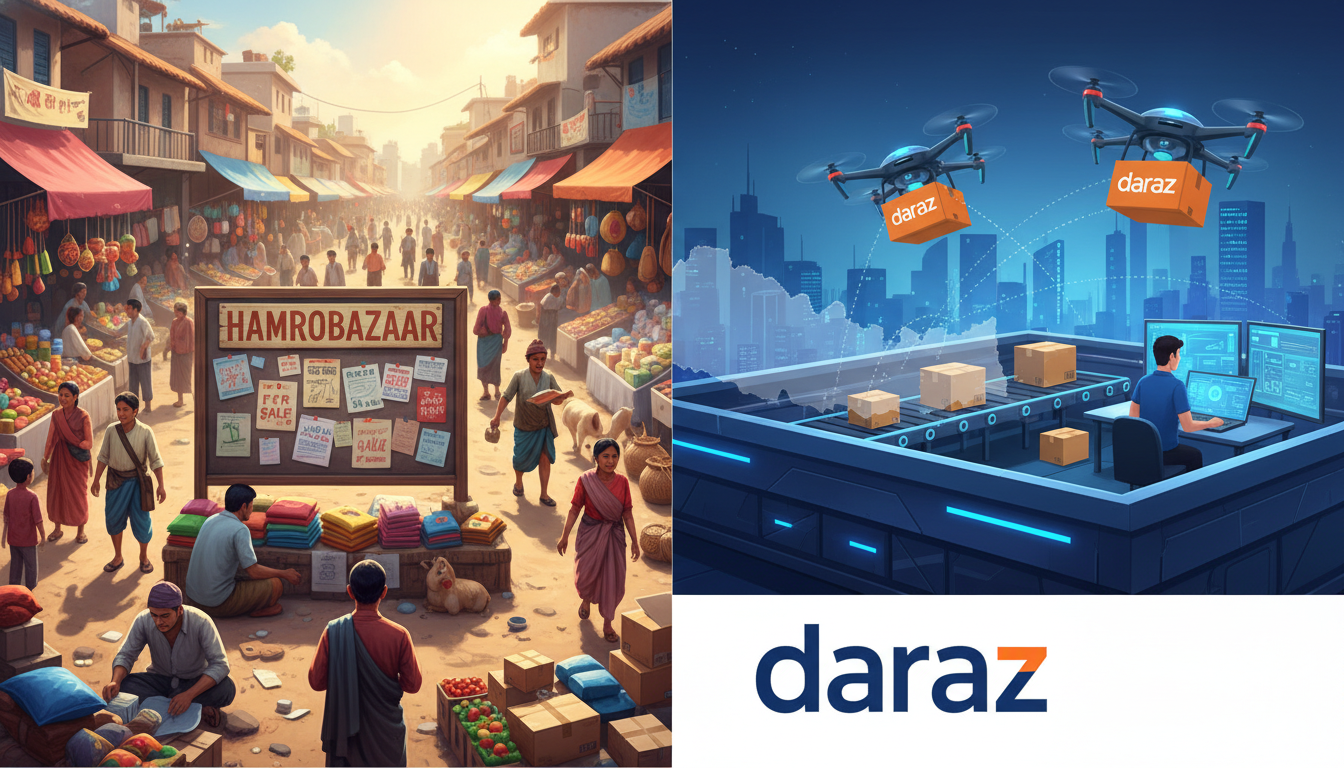
This comparison highlights Hamrobazaar’s unique value proposition: it is the path of least resistance. For a seller looking to get rid of a used sofa or a phone quickly without losing 15% to commissions, Hamrobazaar is the rational choice. However, for a buyer seeking a guaranteed authentic iPhone with a warranty, Daraz offers a safer, albeit often more expensive, environment. Hamrobazaar’s strategic roadmap for 2025 involves encroaching on Daraz’s territory by introducing trust layers like “Hamro BNPL” without losing the liquidity of its free marketplace roots.
Chapter 2: Organizational Architecture and Business Model Deep Dive
2.1 The Hybrid Business Model
Hamrobazaar operates on a distinct Hybrid Model that layers a nascent B2C marketplace on top of a foundational C2C classifieds infrastructure.
- The Classifieds Core: This is the high-traffic engine of the business. It functions on the “Network Effect” theory—more sellers attract more buyers, which in turn attracts more sellers. The critical success factor here is “Liquidity”—the speed at which an item sells. By keeping this service free, Hamrobazaar ensures maximum liquidity.
- The Marketplace Layer: Recognizing that classifieds are hard to monetize directly, the platform has introduced features for businesses. This includes “Hamro BNPL” (Buy Now Pay Later) and “Trade-In” services, effectively turning the platform into a fintech-enabled marketplace for authorized retailers (e.g., Evo Store, Oliz Store).
2.2 Revenue Stream Analysis: Beyond the “Free” Myth
A common misconception is that Hamrobazaar acts as a charity due to its free listings. In reality, its revenue model is diversified and strategic.
2.2.1 Third-Party Advertising (The Cash Cow)
The primary revenue engine is traffic monetization. With millions of page views, Hamrobazaar is one of the most visited domestic sites in Nepal.
- Display Advertising: The platform sells prime real estate (homepage banners, category headers) to corporate advertisers, including banks, ISPs, and automobile brands.
- Programmatic Ads: It utilizes networks like Google AdSense to fill unsold inventory, monetizing the long-tail traffic visiting niche listings.
2.2.2 The “Freemium” Listing Model
While posting an ad is free, visibility is not. The platform monetizes seller urgency through:
- Featured Ads: Sellers can pay a fee to pin their listings to the top of search results or the homepage, significantly increasing view velocity.
- Booster Services: Old ads get buried under new submissions. Users can pay to “bump” their ads back to the top of the feed.
2.2.3 Fintech Revenue (Hamro BNPL)
The introduction of Hamro BNPL represents a sophisticated pivot to transaction-based revenue.
By partnering with Foneloan and major banks (Kumari, NIMB, Laxmi Sunrise, Agricultural Development Bank), Hamrobazaar facilitates 0% EMI purchases for high-value electronics.
- Mechanism: When a user buys an iPhone via BNPL, the platform likely earns a commission or a “lead fee” from the banking partner or the merchant. This model monetizes the high-intent purchase traffic that traditionally would have leaked to physical stores.
Organizational Structure and Seller Ecosystem
Post-acquisition, the organizational structure has professionalized.
- Seller Onboarding: The platform distinguishes between “Individual” and “Verified” sellers. While individuals need only a mobile number, businesses must submit PAN/VAT registration to unlock “Store” features. This bifurcation allows Hamrobazaar to serve two distinct masters: the casual user clearing out their garage and the SME trying to move inventory.
- Operational Hubs: The team has expanded to include specialized roles in Content Moderation (to fight scams) and Business Development (to onboard BNPL partners). The acquisition by MNS Investments has likely provided shared services in legal, HR, and finance, reducing operational overhead compared to a standalone startup.
Chapter 3: Technical Infrastructure, Operations, and Security
Technological Architecture
The platform operates on a dual-interface system, catering to both the desktop-heavy legacy user base and the mobile-first generation.
Web Interface
The website remains the powerhouse for deep research. Buying a used car or real estate often requires detailed scrutiny of specifications and images, tasks often performed on larger screens. The web architecture focuses on search density, allowing users to filter through millions of unstructured data points (listings). However, the search algorithm has faced criticism for lacking “intelligence,” often returning irrelevant results based on simple keyword matching rather than semantic understanding.
Mobile Application (Android/iOS)
The mobile app is the strategic frontier for 2025. It leverages device capabilities to reduce friction:
- Camera Integration: Sellers can snap and upload photos instantly, reducing the time-to-list from minutes to seconds.
- Location Services: The app utilizes GPS to show “Items near me,” a critical feature for high-trust face-to-face transactions.
- UX Challenges: Despite its importance, the app suffers from significant UX debt. Users describe the interface as “torturous” and “buggy,” with critical features often buried deep in the navigation menu. This “technical debt” acts as a drag on user retention, pushing frustrated users toward the slicker interface of Facebook Marketplace.
Security Framework and Trust Deficits
Security is the single most critical challenge for Hamrobazaar. Unlike Daraz, which controls the chain of custody, Hamrobazaar operates in an open, uncontrolled environment.
Technical Security Measures
- Encryption: The platform employs SSL (Secure Socket Layer) encryption to protect data in transit, ensuring that login credentials and messages are secure.
- Authentication: The mandatory requirement of a Nepalese mobile number for posting ads acts as a primary firewall against international botnets and anonymous fraudsters.
- 2FA: While 2FA is robust for its enterprise cloud services, consumer-facing account security relies heavily on mobile OTPs.
The Reality of Scams
The platform is plagued by a “trust deficit.” Qualitative data from user forums (Reddit r/Nepal) reveals a persistent ecosystem of fraud.
- The Advance Payment Scam: A seller lists a high-demand item (e.g., a MacBook) at a suspiciously low price. When a buyer contacts them, they claim to be outside the valley and demand a “booking fee” or “delivery charge” via eSewa. Once paid, the seller vanishes.
- The “India Import” Ruse: Sellers claim they can import gadgets (like Pixel phones) from India upon receiving a deposit. These are often Ponzi-like schemes or straight theft, leaving buyers with no recourse.
- The “Rock in a Box”: Buyers receiving sealed packages that contain weights (rocks, soap) instead of the product.
Hamrobazaar’s official stance has historically been legally protective but practically insufficient: “Hamrobazaar is not involved in the transaction… verify goods before making payments”. This “Caveat Emptor” (Buyer Beware) policy is increasingly untenable in the face of new regulations.
Logistics and Payment Integration
Logistics: The Baato Partnership
Recognizing the “last mile” difficulty, Hamrobazaar has integrated with Baato, a tech-logistics firm. This partnership allows professional sellers to access location services and delivery networks without building their own fleet. For C2C transactions, logistics remain decentralized—buyers and sellers meet in public spaces, a practice that naturally limits the geographic range of trade to hyper-local areas.
Payment Gateways
The platform is moving the market away from cash.
- Hamro BNPL: This is a fully digital flow. Users scan a QR code on the product page using their mobile banking app (e.g., Kumari Bank app). The bank’s system instantly checks eligibility based on salary and transaction history. If approved, the loan is disbursed to the seller, and the buyer takes the product—a cashless, paperless credit transaction.
- Wallet Integration: For standard transactions, the platform promotes eSewa, Khalti, and IME Pay, though these are often executed as P2P transfers rather than through a secured platform gateway.
Chapter 4: Marketing Strategy and Consumer Behavior
Marketing Mix (4Ps) Analysis
- Product: The “product” is the marketplace itself—the liquidity it offers. Hamrobazaar’s inventory is its strength, offering the “Long Tail” of products that standard retailers do not stock (e.g., a 2010 model motorbike or a specific textbook).
- Price: The pricing strategy is “Zero Cost” for the core service. This is a massive psychological driver in price-sensitive markets like Nepal. It creates a barrier to entry for competitors who might try to charge commissions.
- Place: Omnipresent availability via App and Web, with a focus on hyper-local discovery (“Find a bike in Lalitpur”).
- Promotion: The strategy has shifted from passive SEO to active Social Media Marketing.
Digital Marketing & Social Media Strategy
In 2024-2025, Hamrobazaar’s marketing has become content-driven.
- Trend Marketing: The platform utilizes the “Trend Jacking” technique—identifying viral products on TikTok or Instagram and highlighting their availability on Hamrobazaar. This keeps the brand relevant to Gen Z.
- Influencer Engagement: Recognizing that 13.5 million Nepalis are on social media, Hamrobazaar leverages micro-influencers to showcase “thrift finds.” This reframes “used goods” as “vintage” or “smart shopping,” destigmatizing the second-hand market.
- Affiliate Behavior: Unlike Daraz’s formal affiliate program, Hamrobazaar benefits from organic user-generated promotion. Sellers naturally share their listings on Facebook and WhatsApp groups to speed up sales, effectively becoming unpaid marketers for the platform.
Seasonal Campaigns: The Dashain & Tihar Effect
The festival season (September-November) is the “Black Friday” of Nepal. Hamrobazaar’s 2024 strategy for Dashain and Tihar was multifaceted:
- Campaign Theme: “Upgrade for Dashain.” The narrative focused on selling old items (liquidity) to fund the purchase of new ones.
- BNPL Push: The launch of Hamro BNPL was synchronized with Dashain 2024 to capture the high demand for consumer electronics. Promoting “0% Interest” during a time of high expenditure was a strategic masterstroke to capture wallet share from traditional brick-and-mortar stores.
- Keyword Strategy: Sellers optimized listings with terms like “Dashain Offer” or “Urgent Sale for Tihar,” creating a seasonal micro-economy within the platform.
Chapter 5: Legal Regulatory Environment, Challenges, and Future Outlook
The Regulatory Watershed: E-Commerce Act 2081
The enactment of the E-Commerce Act 2081 is the most significant external threat and opportunity for Hamrobazaar. For decades, the platform operated in a legal gray area. The new Act fundamentally changes the rules of engagement.
Key Provisions and Operational Impact:
- Platform Liability (Section 7): The Act mandates that intermediaries must facilitate the return and refund of defective goods. If a product does not match the description (image, weight, design), the buyer has a legal right to return it. This directly conflicts with Hamrobazaar’s current “no refund” policy for C2C trades.
- Mandatory Transparency: Platforms must display the PAN/VAT and contact details of sellers. This is feasible for B2C “Verified Sellers” but nearly impossible for the casual C2C user without creating massive friction. Hamrobazaar may need to redesign its onboarding flow to collect verified identities (KYC) for every user, potentially dampening user growth.
- Grievance Redressal: The law requires a formal mechanism to handle complaints. Hamrobazaar must invest in a robust customer support infrastructure (Customer Care center, ticketing systems) to mediate disputes, moving away from its passive “venue” role.
- Penalties: Non-compliance carries heavy fines (up to NPR 500,000) and imprisonment. This raises the operational risk profile significantly.
Strategic Challenges
- Trust Deficit: The proliferation of scams is an existential threat. If users perceive the platform as unsafe, they will migrate to managed marketplaces like Daraz or trusted community groups. The lack of a native “Escrow” service is a glaring gap compared to international standards.
- Competition: Facebook Marketplace offers the same C2C utility with better social integration.
Daraz is expanding its “Refurbished” and “Used” sections (Daraz Like New), directly attacking Hamrobazaar’s core competency.
Mobile UX: The “torturous” mobile experience is a vulnerability. In a market with 120% mobile penetration, a sub-par app is a fatal flaw.
Future Outlook and Recommendations
As Hamrobazaar looks toward 2030, it must pivot from a “Listing Site” to a “Transaction Ecosystem.”
Strategic Recommendation 1: Implementation of Escrow Payments
To solve the trust/scam crisis and comply with the E-Commerce Act, Hamrobazaar must introduce an Escrow Payment system.
- Mechanism: Buyer pays the platform -> Platform holds funds -> Seller delivers -> Buyer confirms -> Funds released.
- Revenue: The platform can charge a small “Trust Fee” (e.g., 1-2%) for this service, creating a new revenue stream while eliminating advance payment scams.
Strategic Recommendation 2: The “Verified” Tier
To balance C2C freedom with regulatory compliance, the platform should introduce a tiered verification system.
- Tier 1 (Basic): Mobile verification (Low limits, high warning labels).
- Tier 2 (Verified Citizen): KYC via Nagarik App or Citizenship ID (Higher trust badge).
- Tier 3 (Pro Seller): Business verification (PAN/VAT) with full B2C features.
Strategic Recommendation 3: Deepening Fintech Integration
The success of BNPL paves the way for broader financial services. Hamrobazaar possesses data on the asset ownership and purchasing power of millions of Nepalis.
- Micro-Insurance: Offering instant insurance for used bikes or phones purchased on the platform.
- P2P Lending: Facilitating small loans between users backed by platform reputation scores.
Conclusion
Hamrobazaar.com stands as a resilient pillar of Nepal’s digital history. It has democratized commerce for millions. However, the days of the “Wild West” internet are over. The E-Commerce Act 2081 signals a maturing market that demands accountability, safety, and transparency. Hamrobazaar’s survival and growth in the next decade will depend not on its ability to attract traffic—it has already won that war—but on its ability to build Trust. By leveraging its hybrid model to professionalize the second-hand market and pioneering fintech solutions like BNPL, Hamrobazaar can transition from a passive bulletin board to the central nervous system of Nepal’s digital commerce.