

Nepal’s Khalti Digital Wallet: E-commerce & Fintech Case Study
Introduction and Methodology
1.1 Background of the Study
The global digital economy has witnessed a paradigm shift over the last two decades, transitioning from a supplementary channel of commerce to the central nervous system of modern trade. This transformation, catalyzed by the rapid proliferation of high-speed internet and smartphone penetration, has given rise to the phenomenon of “Fintech” (Financial Technology), which fundamentally alters how value is stored, transferred, and exchanged. In the context of developing economies, this shift is not merely evolutionary but revolutionary. Unlike developed markets in North America and Western Europe, where the adoption curve moved linearly from cash to credit cards and then to digital payments, emerging markets like Nepal, India, and Kenya have exhibited a “leapfrog” trajectory. These nations have largely bypassed the era of ubiquitous credit card usage, moving directly from cash-based societies to mobile-first digital economies.
The course “IT 204: E-Commerce” provides the theoretical framework to understand this transition, emphasizing business models, security infrastructure, and the socioeconomic impact of digital platforms. This case study applies these academic concepts to a real-world entity: Khalti Digital Wallet. As a leading Payment Service Provider (PSP) in Nepal, Khalti exemplifies the complexities of operating a B2C and B2B platform within a developing regulatory landscape. The study situates Khalti not just as an app, but as a socio-technical ecosystem that interacts with banking infrastructure, government policy, and consumer behavior.
1.1.1 Global and Local Trends in E-commerce
Globally, the e-commerce and digital payment landscape is coalescing around the concept of the “Super App.” Pioneered by WeChat (Tencent) and Alipay (Ant Financial) in China, a Super App aggregates disparate services—messaging, social networking, ride-hailing, food delivery, and financial services—into a single interface. This model reduces friction for the user and increases “stickiness” for the platform. In 2024-2025, this trend has intensified, with platforms competing to become the primary operating system for a user’s digital life.
Another critical global trend is the focus on Financial Inclusion. The World Bank and the United Nations have identified digital payments as a key enabler for poverty reduction. By lowering the cost of transactions and removing the need for physical proximity to bank branches, digital wallets bring the “unbanked” and “underbanked” populations into the formal economy.
1.1.2 E-commerce in Nepal
In Nepal, the adoption of e-commerce has been driven by unique structural factors. Historically, Nepal has been a cash-heavy economy with a high cost of banking logistics due to its difficult topography. However, the last decade has seen an explosion in internet connectivity. As of early 2025, internet penetration in Nepal has reached significant milestones, with mobile internet being the primary access point for the majority of the population.
Two major events served as catalysts for this digital transformation:
- The 2015 Earthquake: The disaster highlighted the fragility of physical banking infrastructure and the need for resilient, remote payment mechanisms for aid distribution and remittances.
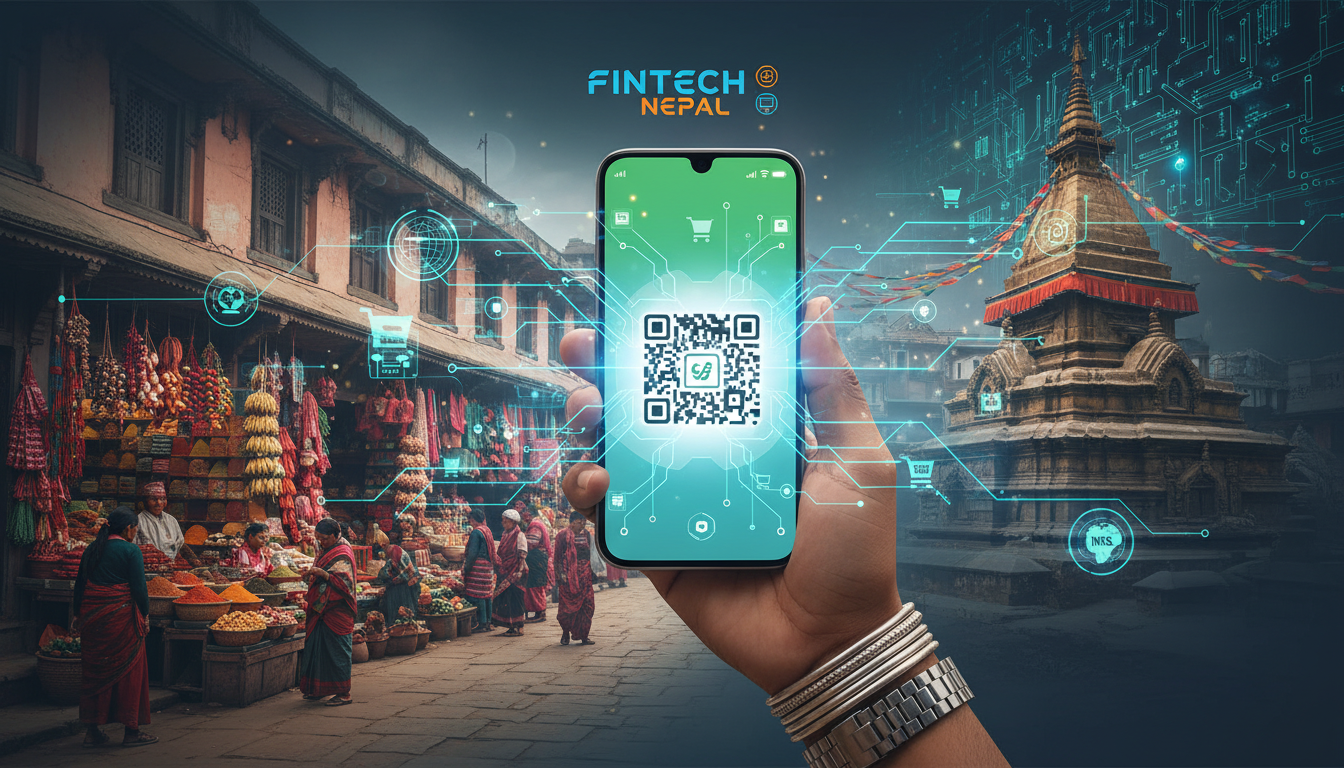
- The COVID-19 Pandemic: This was the definitive turning point. The necessity of social distancing forced a behavioral change among Nepalese consumers, pushing them towards contactless payments. QR code usage, in particular, saw exponential growth during this period, moving from high-end retail to vegetable markets and local tea shops.
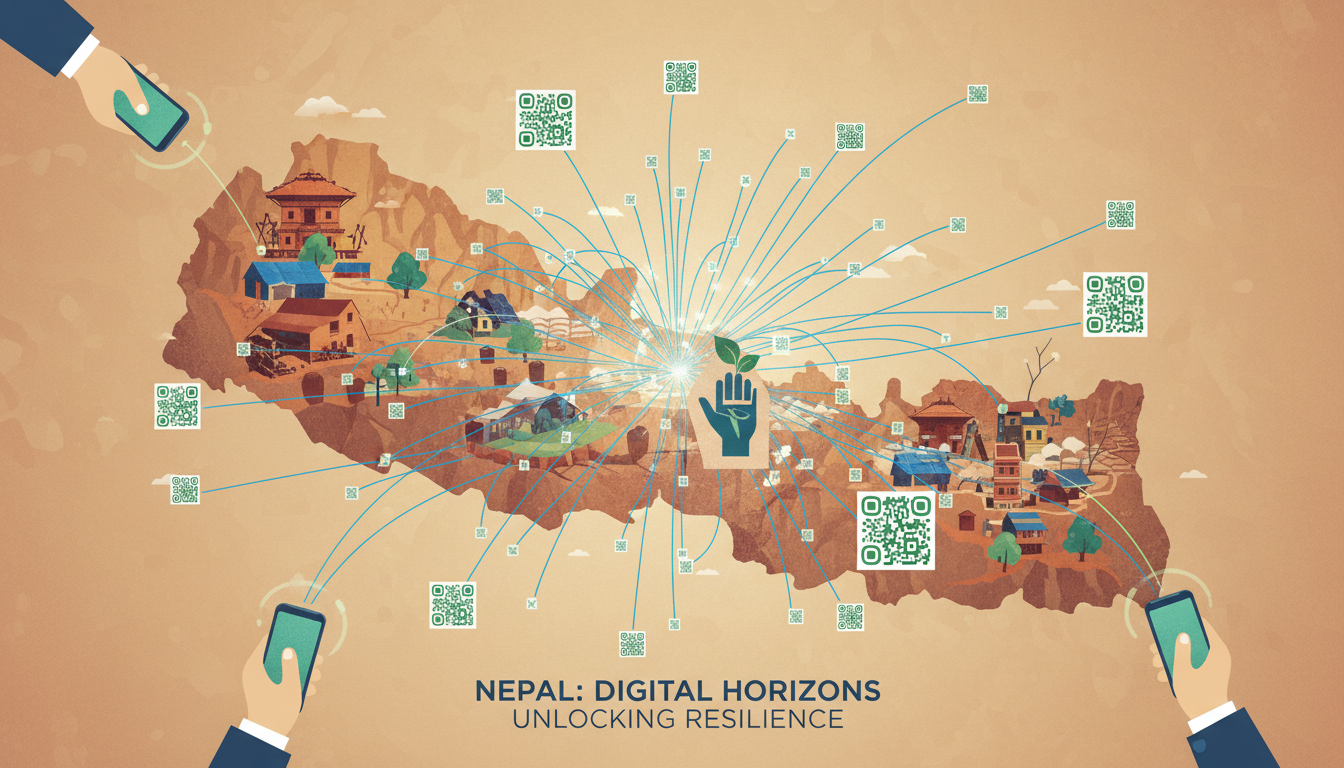
The regulatory environment, stewarded by Nepal Rastra Bank (NRB), has played a pivotal role. The introduction of the “Licensing Policy for Payment Related Institutions 2016” and subsequent directives formalized the sector, allowing non-bank institutions like Khalti to operate as licensed PSPs. This regulatory clarity, combined with the launch of the National Payment Switch (NPS), has created a fertile ground for fintech innovation. As of 2025, the market is characterized by intense competition between established giants like eSewa, aggressive challengers like Khalti (now merged with IME Pay), and banking-led mobile banking apps.
1.2 Types of E-commerce (B2C, B2B, C2C, C2B, etc.)
E-commerce is generally classified based on the nature of the participants in the transaction. Khalti’s ecosystem encompasses multiple models, making it a “Hybrid” platform.
- Business-to-Consumer (B2C):
This is the most visible aspect of Khalti. The platform (Business) provides services directly to individual users (Consumers).
Mechanism: A user logs into the Khalti app to pay their electricity bill, buy a movie ticket, or top up their mobile phone.
Value Proposition: Convenience for the consumer; transaction fees or commission revenue for Khalti.
- Business-to-Business (B2B):
Khalti serves other businesses by acting as a payment infrastructure provider.
Payment Gateway: E-commerce websites (e.g., online clothing stores) integrate Khalti’s API to accept payments from customers. Here, Khalti provides a service to another business.
Enterprise Solutions: “Khalti Enterprise” allows companies to manage bulk payouts, such as salary disbursements or vendor payments, streamlining their financial operations.
- Consumer-to-Consumer (C2C):
Peer-to-peer (P2P) transactions are fundamental to digital wallets.
Mechanism: User A scans User B’s personal QR code or enters their mobile number to send funds for a shared dinner bill or rent.
Significance: While often free for users, these transactions build network effects, encouraging more people to join the platform.
- Business-to-Government (B2G):
Khalti facilitates payments between citizens/businesses and the government.
Examples: Payment of traffic fines, Lok Sewa Aayog (Public Service Commission) application fees, and Inland Revenue taxes. This model improves government efficiency and transparency in revenue collection.
- Business-to-Business-to-Consumer (B2B2C):
This is the “Agent” or “Khalti Pasal” model.
Mechanism: Khalti recruits local shopkeepers (Business) who use the platform to perform transactions on behalf of walk-in customers (Consumers) who may not have a smartphone or digital literacy. The agent earns a commission, acting as an intermediary bridge.
1.3 Introduction to Group Members
(This section is a placeholder for the academic context of the report)
This case study is submitted by a group of BBA 6th Semester students specializing in E-commerce.
- Lead Researcher: Focused on primary data collection, platform testing, and regulatory analysis.
- Financial Analyst: Responsible for analyzing business models, revenue streams, and the economic implications of the merger.
- Technical Analyst: Tasked with evaluating the UI/UX, security protocols, and API infrastructure.
1.4 Objectives of the Case Study
The primary objective is to conduct a 360-degree analysis of Khalti as a representative case of e-commerce evolution in Nepal. Specific objectives include:
- To Analyze Business Models: To dissect the revenue generation mechanisms of Khalti, distinguishing between its B2C, B2B, and agent-led models.
- To Evaluate Strategic Maneuvers: To critically examine the 2025 merger between Khalti and IME Pay, understanding the drivers behind this consolidation and its impact on market share.
- To Assess Technical Infrastructure: To study the technology stack, security implementations (ISO 27001, Encryption), and the user experience (UI/UX) changes post-merger.
- To Understand Marketing Dynamics: To explore how Khalti uses digital marketing, gamification (Khalti Points), and partnerships (Voting) to acquire and retain users.
- To Review Regulatory Compliance: To audit Khalti’s adherence to the Electronic Transaction Act 2063, Data Privacy Act 2075, and NRB directives.
1.5 Scope and Limitations of the Study
Scope: The study is comprehensive, covering Khalti’s operations from its inception in 2017 to the post-merger landscape of early 2025. It includes an analysis of product features, marketing strategies, legal compliance, and technical architecture. The geographical scope is limited to Nepal, though cross-border remittance features are discussed as they pertain to the Nepalese economy.
Limitations:
- Financial Data Transparency: As a private limited company (prior to any public listing), Khalti does not publish full audited financial statements. Financial analysis relies on estimated market share data, press releases, and secondary reports.
- Merger Fluidity: The merger with IME Pay is a recent event (early 2025). Operational synergies and long-term cultural integration are still in the transitional phase, making some conclusions predictive rather than historical.
- Rapid Technological Change: The fintech sector evolves daily. Features or regulations cited may change shortly after the publication of this report.
1.6 Research Methodology
This report utilizes a robust mixed-method research design to ensure depth and accuracy.
- Secondary Data Collection:
- Literature Review: Analysis of textbooks (“E-commerce: Business, Technology, and Society” by Laudon & Traver) to establish theoretical frameworks.
- Official Documents: Review of Nepal Rastra Bank’s “Payment Systems Oversight Reports,” Khalti’s “Developer Documentation,” and API references.
- Media Analysis: Examination of news reports from reputable sources (MyRepublica, OnlineKhabar, TechLekh) to track historical milestones and the merger timeline.
Digital Ethnography & Platform Testing
- User Experience (UX) Audit: The research team actively used the Khalti app (Android & iOS) to test features like fund loading, KYC submission, Bluebook renewal, and voting.
- Social Listening: Analysis of user sentiment on social platforms (Reddit r/Nepal, Facebook Groups) to understand real-world customer satisfaction, particularly regarding the UI changes post-merger.
Case Study Analysis
- Comparative Approach: Khalti is constantly benchmarked against its primary competitor, eSewa, and global peers to provide context to its performance metrics.
Overview of the Selected E-commerce Platform
Company Profile
Name: Khalti Digital Wallet (Post-Merger Entity: Khalti by IME / IME Khalti)
Founded: January 26, 2017
Headquarters: Bakhundole, Lalitpur, Nepal
Tagline: “The Power of Digital Payment” (Evolving to “Together Forward” post-merger)
Founding History
Khalti was born out of the innovative spirit of Janaki Technology, a software company founded by four engineering students from Pulchowk Campus: Manish Modi, Amit Agrawal, Dhruva Adhikari, and Arbin Sah. Prior to Khalti, the team had already achieved success with Sparrow SMS, a bulk SMS provider, and Picovico, a video creation tool.
The genesis of Khalti lay in the founders’ realization that while they had digital products, the payment infrastructure in Nepal was fragmented and difficult to access. They faced challenges in collecting payments for their own services, which sparked the idea to build a consumer-facing digital wallet that prioritized User Experience (UX)—a significant pain point in existing solutions like eSewa at the time.
Evolution & Milestones
- 2017: Khalti launched at CAN Infotech. It immediately garnered attention for its clean, modern UI. Later that year, it won the Google Business Group Storytelling Contest, gaining international recognition.
- 2019: Introduction of “Smart Chhori,” a CSR campaign aimed at training 10,000 girls in digital literacy, reinforcing the brand’s social commitment.
- 2021: Secured significant investment from WorldLink, Nepal’s largest ISP. This strategic partnership provided Khalti with a massive user base and capital injection, valuing the company significantly higher.
- 2022: Achieved ISO 27001:2013 certification, becoming one of the few fintechs in Nepal to meet international information security standards.
- 2025 (The Merger): In a historic move, Khalti merged with IME Pay (operated by IME Digital Solution). This was the first-ever merger between two licensed Payment Service Providers (PSPs) in Nepal. The merger was driven by the need to meet NRB’s increased paid-up capital requirements and to consolidate market share against the dominant player, eSewa. The unified entity combines Khalti’s tech-savvy youth user base with IME’s unparalleled agent network and remittance infrastructure.
Key Features of the Platform
Khalti has evolved from a simple recharge app into a comprehensive “Super App.” Its features are designed to cover the entire lifecycle of a user’s daily financial needs.
Digital Wallet & Payments
The core feature is the stored-value wallet. Users can maintain a balance (up to NRB limits) and use it for instant payments. The platform supports Interoperable QR Payments, allowing Khalti users to scan Fonepay, NepalPay, or Smart QR codes at merchant outlets.
Remittance (Post-Merger Enhancement)
Leveraging IME Pay’s legacy, the new Khalti platform includes robust remittance features. Users can receive money sent from abroad (via IME Remit) directly into their wallet, bypassing the need to visit a physical agent. This “Virtual Remittance” capability is a game-changer for rural families dependent on foreign employment.
Voting Platform
Khalti has monetized “fandom” by becoming the exclusive voting partner for Nepal’s biggest reality shows (The Voice Kids, Nepal Idol, Miss Universe Nepal). This feature is not just a revenue stream but a massive user acquisition tool, drawing in demographics that might not otherwise use a digital wallet.
Bluebook Renewal Service
Understanding the bureaucratic pain of vehicle tax payment, Khalti introduced a “Bluebook Renewal” feature. It combines a tax calculator with a logistics service (Pick & Drop). Users can calculate their tax, pay via the app, and have a Khalti representative take their physical Bluebook to the transport office for renewal, stamping, and return.
Khalti Bazaar
An integrated marketplace where SMEs can list services and products. Unlike full-fledged e-commerce sites like Daraz, Khalti Bazaar focuses on digital services, event tickets, and niche products, enabling merchants to collect payments without needing their own website.
Products/Services Offered
The services offered by Khalti can be categorized into distinct verticals:
- Utility Payments: Electricity (NEA), Water (Khanepani), Landline, Mobile Top-up (NTC, Ncell, Smart Cell) – Households, Individuals
- Internet & TV: ISP Bill Payment (WorldLink, Vianet, Classic Tech), DTH Top-up (DishHome, NetTV, MeroTV) – Tech-savvy users, Families
- Travel & Mobility: Domestic Flight Booking (Buddha, Yeti, Shree), Bus Tickets, Ride-sharing (Indrive/Pathao top-up) – Travelers, Commuters
- Government (G2C): Traffic Fine Payment, Inland Revenue Tax, Lok Sewa Fees, Passport Fees, Social Security Fund (SSF) – Citizens, Taxpayers
- Entertainment: Movie Tickets (QFX, Big Movies), Event Tickets (Concerts, Workshops), Voting – Youth, Entertainment seekers
- Financial Services: Wallet-to-Bank Transfer, Credit Card Bill Payment, Insurance Premium Payment (Life/Non-Life), EMI Payment – Banked population
- Education: School and College Fee Payments (Integrated with hundreds of institutions) – Parents, Students
Buying and Selling Workflow
Customer Journey (Buying Process)
The customer journey on Khalti is designed to be frictionless, minimizing the number of taps required to complete a transaction.
Registration & KYC
- The user downloads the app and signs up using a mobile number. An OTP verifies the number.
- To unlock full transaction limits (e.g., transactions above Rs. 5000), the user must complete Electronic Know Your Customer (e-KYC). This involves uploading a photo of their citizenship/passport and a live selfie. Khalti’s backend team verifies this against government records (where possible) or manual verification standards.
Loading Funds (The “Buy” Pre-requisite)
- Linked Bank Account: Users can link their bank account (via ConnectIPS infrastructure) for one-tap loading.
- Mobile/Internet Banking: Users can log in to their bank app and “Load Wallet.”
- Cards: Visa/Mastercard and SCT debit cards are supported.
- Cash: Users can visit a “Khalti Pasal” agent and hand over cash to be loaded into their digital wallet.
Service Purchase (e.g., Flight Ticket)
- Search: User selects “Flight,” enters origin (Kathmandu) and destination (Pokhara), and date.
- Selection: The app aggregates flights from all airlines, displaying them by price/time.
- Booking: User selects a flight and enters passenger details.
- Payment: The user pays using the wallet balance. A Transaction PIN or Biometric Auth (Fingerprint) is required to authorize the debit.
- Fulfillment: The ticket is generated instantly within the app and sent via email/SMS. Loyalty points (“Khalti Points”) are credited.
Seller Onboarding (Selling Process)
For merchants, Khalti offers a streamlined path to becoming a digital seller.
Merchant Registration
- A business visits merchant.khalti.com and creates an account.
- Business KYC: They must upload firm registration, PAN/VAT certificates, tax clearance, and owner identification.
Integration Options
- API Integration: For businesses with existing websites, Khalti provides comprehensive API documentation. A developer can integrate the “Pay with Khalti” button using SDKs for PHP, Python, Android, or iOS.
- CMS Plugins: Khalti offers ready-made plugins for WordPress (WooCommerce), Magento, and Opencart, allowing non-coders to integrate payments easily.
- Khalti Bazaar: For merchants without a website, they can list products directly on Khalti’s in-app marketplace. They upload product images, descriptions, and prices via a merchant dashboard.
Transaction & Settlement
- When a customer pays, the funds are credited to the Merchant’s Khalti Wallet (after deducting the Merchant Discount Rate/MDR, typically 1-2%).
- Settlement: The merchant can withdraw these funds to their linked bank account. Post-merger, “Smart Settlement” features allow for automated daily settlements.
Business Model
B2C/B2B/Hybrid Analysis
Khalti operates a Hybrid Business Model that monetizes multiple sides of the transaction network.
Commission Model (B2C/B2B)
This is the primary revenue stream.
- From Service Providers: When a user pays an NTC bill, Khalti receives a commission from Nepal Telecom for acting as a collection agent. Similarly, for flight tickets, airlines pay a commission per ticket.
- From Merchants: For payment gateway usage (B2B), Khalti charges merchants a transaction fee (MDR) ranging from 1.5% to 3% depending on the payment method (Wallet vs. Card).
Float Monetization (Treasury Model)
Users keep money in their Khalti wallets. This aggregate balance (the “Float”) is deposited by Khalti in a settlement bank account. While regulations are strict, PSPs can earn interest on these escrowed funds, which forms a significant passive revenue stream. The post-merger “Super Wallet” feature explicitly offers interest to users, sharing this benefit to drive higher balances.
Subscription & Service Fees (B2C)
- Bluebook Renewal: Khalti charges a service fee (e.g., Rs. 350 – Rs. 500) over and above the tax amount for the pick-and-drop logistics service.
- Voting: While voting is often free for limited counts, “Premium Voting” (bulk votes) requires payment. Khalti shares this revenue with the show producers.
4. The Agent Model (B2B2C)
The “Khalti Pasal” network extends the business model to the offline world. Agents earn commissions on transactions they perform for others. This creates a B2B relationship between Khalti and the Agent, who then serves the Consumer (B2C).
2.6 Network Infrastructure & Technology Stack
Khalti’s ability to process millions of transactions relies on a sophisticated technology stack designed for high availability and concurrency.
- Cloud Infrastructure: Khalti utilizes scalable cloud computing (likely AWS or similar enterprise-grade cloud solutions) to handle traffic spikes, particularly during voting events (e.g., Voice Kids finale) or festivals like Dashain.
- API-First Architecture: The entire platform is built on RESTful APIs. This modularity allows the mobile app, the web portal, and third-party merchant sites to all communicate with the same backend core. The documentation highlights endpoints for payment initiation, verification, and refunds.
- Programming Languages: The backend is primarily powered by Python (Django framework), known for its security and rapid development capabilities. The frontend utilizes React for the web and native technologies (Kotlin/Swift) plus Flutter for the mobile apps.
- Clearing & Settlement: Khalti integrates with NCHL (National Clearing House Ltd) for inter-bank transfers. This connection via NPI (National Payment Interface) is the backbone that allows money to move between the wallet and the banking system.
2.7 Security Features and Policies
In the fintech domain, trust is the currency. Khalti employs a “Defense in Depth” strategy for security.
- ISO 27001:2013 Certification: Khalti is certified for Information Security Management Systems (ISMS). This is not just a technical badge but an organizational commitment to managing data risks, access controls, and incident response protocols.
- Encryption: All data in transit (between the app and server) is encrypted using SSL/TLS 1.2+ standards. Sensitive data at rest (like user PINs) is hashed using strong cryptographic algorithms (e.g., bcrypt).
- PCI-DSS Compliance: While Khalti may not store card data directly, it adheres to PCI (Payment Card Industry) standards by using tokenization. When a user saves a card, the actual card number is stored by the payment processor (like Cybersource or a bank’s gateway), and Khalti only holds a “Token”.
- Two-Factor Authentication (2FA) & OTP:
- Login: New device logins require an OTP sent to the registered mobile number.
- Transaction: Every transaction requires a 4-digit Transaction PIN or Biometric verification.
- Fraud Detection: Post-merger, the platform utilizes Machine Learning algorithms to detect anomalies. If a user suddenly makes 50 transactions in an hour or logs in from a foreign IP, the system triggers a “Velocity Check” and may block the account temporarily.
- Insider Threat Management: Following a notable incident in late 2024 where employees were found creating fake wallets, Khalti has tightened internal access controls. Access to customer data is now strictly logged and restricted based on the “Principle of Least Privilege,” ensuring that support staff can only see what is necessary for their job.
2.8 Payment Gateways and Systems Used
Khalti acts as a Payment Aggregator, integrating multiple upstream gateways to offer diverse loading options:
- SCT (Smart Choice Technologies): Integration allows users to load funds using any SCT-enabled debit card.
- ConnectIPS: The primary rail for direct bank linking. It enables real-time debit from the user’s bank account via APIs provided by NCHL.
- Visa/Mastercard (CyberSource/Himalayan Bank Gateway): For international and domestic credit card loads.
- E-Banking Portals: Direct integrations with the web banking portals of over 50+ Nepalese banks.
CHAPTER 3
Marketing and Customer Engagement
3.1 Digital Marketing Strategies
Khalti’s marketing DNA is distinctly digital. They do not rely heavily on traditional print media (newspapers) but dominate the digital attention economy of Nepal.
3.1.1 Social Media Integration
Khalti maintains an omnipresent strategy across Facebook, Instagram, TikTok, LinkedIn, and YouTube.
- Meme Marketing: Khalti was one of the first brands in Nepal to professionalize “Meme Marketing.” They use trending templates to create relatable content about financial struggles, saving money, or the joy of cashback. This humanizes the brand, making it feel like a friend rather than a bank.
- Edu-tainment on TikTok: Recognizing the short attention span of Gen Z, Khalti produces 30-second reels explaining features like “How to split bills” or “How to earn Khalti Points.” These videos often feature employees, adding a face to the brand.
3.1.2 SEO/SEM Approaches
Khalti invests heavily in inbound marketing.
- Blog Strategy: The domain is a content engine. They publish detailed articles on topics like “How to pay NEA bill online” or “Traffic fine payment process.” These articles rank high on Google for relevant search queries, driving organic traffic to the site.
- Paid Search (SEM): Khalti bids on keywords like “Online Recharge,” “Flight Booking,” and competitor terms to ensure visibility at the top of Search Engine Results Pages (SERPs).
3.1.3 Content & Influencer Marketing
- Influencer Partnerships: Khalti collaborates with diverse influencers, from tech reviewers (GadgetByte) to lifestyle vloggers (Paradigm TV) and gamers.
- CSR as Content: The “Smart Chhori” campaign was a masterclass in purpose-driven marketing. By sharing stories of girls learning coding and digital finance, Khalti built immense brand goodwill that transcended transactional utility.
3.2 Mobile and Location-Based Marketing Techniques
- Push Notifications: Khalti uses data-driven push notifications. Instead of spamming, they target users based on behavior.
- Example: A user who usually pays electricity bills on the 5th of the month gets a reminder on that day.
- Example: “Flash Sale: 10% Cashback on Top-up for the next 1 hour.”
- Geo-Fencing (Local Marketing): With the rollout of “Khalti QR” at local merchants, Khalti can target users with offers available in their specific city or locality, driving foot traffic to partner merchants.
3.3 Social Commerce and Online Communities
- The Voting Economy: Khalti has turned reality show voting into a form of social commerce. Viewers are emotionally invested in contestants. Khalti taps into this by offering “Voting Packs.” This strategy not only generates revenue but forces thousands of new users (the voters) to download the app and load funds, effectively lowering the Customer Acquisition Cost (CAC) to zero.
- Referral Virality: Khalti’s “Refer and Earn” program leverages the user’s own social network. When a user invites a friend who performs a transaction, both parties earn a bonus. This uses social trust to bypass skepticism about digital payments.
3.4 Advertising Campaigns and Communication Channels
- The “Cashback” Hook: In a price-sensitive market like Nepal, “Cashback” is the most powerful marketing word. Khalti’s campaigns often center on “highest cashback” offers (e.g., 3% on Top-up, Rs. 200 on Flights). This subsidizes user adoption, aiming to create a habit that persists even when subsidies are reduced.
- 360-Degree Campaigns: Major campaigns (like “Khalti Full Mood” or World Cup offers) are integrated across all channels: App banners, Social Media, YouTube pre-roll ads, and even physical activation events at malls.
3.5 Customer Retention and Loyalty Programs
Acquiring a user is easy; keeping them is hard. Khalti uses gamification for retention.
- Khalti Points: A loyalty currency. Every transaction earns points (e.g., Rs. 100 transaction = 100 points). These points accumulate and can be redeemed for tangible rewards (coupons, gift hampers, smartphones) or converted into wallet balance. This creates a “sunk cost” psychological effect—users don’t want to switch to eSewa because they would “waste” their accumulated points.
- Khalti Bank Direct: A strategic retention tool. Once a user goes through the effort of linking their bank account, the friction of payment drops to zero. Data shows that bank-linked users have significantly higher lifetime value (LTV) and lower churn rates compared to users who rely on loading cash via agents.
CHAPTER 4
Technical and Strategic Analysis
4.1 Website and App UI/UX Evaluation
Pre-Merger: Khalti was widely praised for its minimalistic, purple-themed design (Material Design principles). Navigation was bottom-heavy (easier for one-handed use), and icons were distinct.
Post-Merger : The integration of IME Pay led to a significant UI overhaul.
- Critique: Feedback from forums like Reddit indicates a mixed reception. While the new “Super App” interface offers more features, users have complained about “clutter.” The merging of two design languages (Khalti’s Purple and IME’s Red) has resulted in a dense interface that some users find overwhelming compared to the simplicity of the past.
- Performance: The app remains performant, utilizing lazy loading for images and caching for faster load times.
However, the migration of databases post-merger caused temporary instability and “transaction pending” errors, which affected user trust momentarily.

4.2 SWOT Analysis
Strengths
- Market Power: The merger with IME Pay creates a giant with combined capital and user base, challenging eSewa’s dominance.
- Product Diversity: Unique features like Bluebook renewal and Voting give it a competitive edge over generic wallets.
- Brand Love: Strong connection with the youth demographic through meme culture and CSR initiatives.
- Security Credibility: ISO 27001 certification provides a strong trust signal.
Weaknesses
- Tech Instability: Post-merger migration bugs (app crashes, failed loads) have frustrated users.
- Logistics Dependency: Khalti Bazaar relies on third-party vendors for delivery, leading to inconsistent customer experiences.
- Customer Support: User reviews cite slow response times on support tickets and difficulty reaching human agents.
- Data Privacy Trust: The recent insider fraud scandal has dented its reputation for data sanctity.
Opportunities
- Rural Expansion: Leveraging IME’s physical agent network to penetrate rural Nepal where digital literacy is low.
- Cross-Border Payments: Integration with India’s UPI (Unified Payments Interface) for seamless Nepal-India transactions.
- AI Personalization: Using data to offer personalized financial products (micro-loans, insurance).
Threats
- Regulatory Risk: NRB directives on transaction limits or MDR caps can directly impact revenue.
- Cybersecurity: Increasing sophistication of phishing attacks and deepfake fraud targeting users.
- Competitor Response: eSewa or Fonepay could launch aggressive counter-campaigns or lower fees to reclaim share.
4.3 Mobile Commerce and Cross-Platform Features
Khalti is a “Mobile First” but not “Mobile Only” platform.
- Responsive Web: The web portal (khalti.com) is fully responsive, allowing users to perform transactions from a desktop browser—a feature crucial for office workers paying bills during work hours.
- Cross-Platform Sync: A user can start a transaction on the web and finish it on mobile (e.g., scan a QR code displayed on the PC screen).
- Mobile Specifics: The app leverages hardware features:
- Biometrics: Fingerprint/FaceID for quick login.
- Camera: For QR scanning and KYC document capture.
- Contacts: Seamless integration to pick phone numbers for top-up.
4.4 Use of EDI or Integration Tools
Khalti operates in the API economy, which has largely superseded traditional EDI (Electronic Data Interchange) in B2C fintech.
- REST APIs: Khalti exposes RESTful endpoints for merchants. These APIs use JSON for data interchange, which is lightweight and universally supported.
- NPI (National Payment Interface): Khalti integrates with NCHL’s NPI for inter-bank settlements. This can be viewed as a modern, API-based evolution of financial EDI.
4.5 Reviews, Ratings, and Customer Feedback Loop
- App Store Metrics: Khalti generally maintains a 4.0+ rating. Positive reviews cite “ease of use” and “cashback.”
- Negative Feedback: Recent negative reviews (late 2024/2025) focus on “bugs after update” (merger impact) and “poor support.”
- Feedback Loop: Khalti actively monitors social media. They have a dedicated “Community” strategy where they reply to comments on Facebook. However, the volume of support tickets often overwhelms their capacity, leading to the “slow support” perception.
4.6 Innovation, Trends, and Future Technologies
- Artificial Intelligence (AI): Khalti is exploring AI for Chatbots (to automate Level 1 support) and Predictive Analytics (to detect fraud and recommend services). For instance, if a user buys flight tickets, the AI might suggest travel insurance.
- Interoperability: The future is “Wallet Interoperability” mandated by NRB. Khalti is preparing for a future where a Khalti user can send money to an eSewa wallet seamlessly, shifting competition from “walled gardens” to “service quality.”
- Blockchain: While crypto is banned in Nepal, the underlying blockchain tech is being explored for secure, immutable audit logs of transactions.
CHAPTER 5
Conclusion and Strategic Recommendations
5.1 Summary of Key Findings
This comprehensive case study of Khalti Digital Wallet illuminates the trajectory of fintech in Nepal.
- Market Position: Khalti has successfully transitioned from a startup challenger to a market leader, solidified by its strategic merger with IME Pay. It now forms one half of the dominant duopoly alongside eSewa.
- Business Model Resilience: Its hybrid model (Commission + Float + Service Fees) is robust. By diversifying into lifestyle services (Voting, Bluebook), it reduces reliance on commoditized utility payments.
- Marketing Mastery: Khalti’s “human-centric” marketing strategy—focusing on memes, influencers, and CSR—has built a brand that resonates emotionally with the youth, a critical differentiator in a functional market.
- Operational Challenges: Rapid growth and the merger have strained technical stability and customer support. The recent internal fraud incident highlights that security is as much about people/process as it is about technology.
5.2 Limitations of the Study
While extensive, this study is limited by the opacity of private financial data. We cannot definitively state the profitability of specific verticals (e.g., is Bluebook renewal profitable or a loss leader?). Furthermore, the post-merger integration is a dynamic process; the observations made in early 2025 may evolve as the “Khalti by IME” culture solidifies.
5.3 Strategic Suggestions and Recommendations
Based on the analysis, the following strategic roadmap is proposed for Khalti:
- Stabilize the Core (Post-Merger Hygiene): Before launching new features, Khalti must prioritize technical stability. A “Bug Bounty Program” could incentivize the community to find and report glitches. The UI should be refined to reduce clutter, possibly offering a “Lite Mode” for older devices.
- Revolutionize Customer Support with AI: To address the weakness in support, Khalti should deploy a sophisticated Generative AI Chatbot (fine-tuned on their own support logs). This bot could handle 80% of queries (e.g., “Where is my refund?”, “How to reset PIN?”), freeing human agents to handle complex disputes.
- Restore Trust through Radical Transparency: In the wake of the insider fraud incident, Khalti should commission an external security audit by a global firm (like Deloitte or KPMG) and publish a transparency report. They should implement “Zero Trust Architecture” internally, ensuring no single employee has unchecked access to user funds or data.
- Leverage the “Khalti Bazaar” Potential: Currently, Khalti Bazaar is a payment listing. To rival Daraz, Khalti should partner with logistics providers (e.g., Upaya, Nepal Can Move) to offer an end-to-end “Fulfillment by Khalti” service. This would empower thousands of Instagram sellers to professionalize their operations.
- Data-Driven Financial Inclusion: Khalti sits on a goldmine of data. They should develop a “Credit Score” model based on transaction history. This could allow them to offer “Micro-Loans” or “Buy Now Pay Later” (BNPL) services in partnership with banks, serving users who have no formal credit history.
5.4 Potential for Expansion or Innovation
- Cross-Border Remittance: With the Nepal-India remittance corridor opening up via UPI/NPI integration, Khalti is perfectly positioned (thanks to IME’s legacy) to dominate this flow. A seamless “India-to-Nepal” wallet transfer feature would be revolutionary.
- Tourism Fintech: Creating a “Tourist Wallet” for visitors to Nepal, allowing them to load foreign currency via card and pay via QR at local trekking lodges, tapping into the tourism economy.