

OnlineSaathi.com Case Study: Nepal E-commerce Analysis
Chapter 1: Introduction and Methodology
1.1 Background of the Study
The global economic landscape has undergone a seismic shift over the last two decades, driven by the relentless advancement of digital technologies. The emergence of the internet not merely as a communication tool but as a robust commercial infrastructure has given rise to the phenomenon of Electronic Commerce (e-commerce). No longer a peripheral activity, e-commerce has become central to the strategic operations of businesses worldwide, redefining supply chains, marketing methodologies, and customer relationship management. For developing economies, this digital transition offers a unique opportunity to leapfrog traditional infrastructural deficits, connecting remote consumer bases with global and local markets through digital intermediaries.
In the context of Nepal, a landlocked nation with distinct geographical challenges, the promise of e-commerce is particularly transformative. The traditional retail landscape, often fragmented and constrained by the rugged terrain of the Himalayas, faces inherent logistical inefficiencies. E-commerce platforms promise to bridge these gaps, offering a streamlined, virtual marketplace that transcends physical barriers. This case study focuses on Online Saathi, a prominent player in the Nepalese digital marketplace. By analyzing its operational mechanics, strategic market positioning, and technological infrastructure, this report aims to provide a nuanced understanding of how local e-commerce entities are navigating the complex socio-economic terrain of Nepal to build sustainable digital businesses.
1.1.1 Global and Local Trends in E-commerce
To evaluate the standing of Online Saathi, one must first situate it within the broader context of global digital commerce trends. Globally, the e-commerce sector is on a trajectory of exponential growth. Projections indicate that the number of digital buyers will swell to nearly 2.77 billion by 2025, a testament to the ubiquity of internet access and the normalization of online transactions. In 2023 alone, the global electronics industry—a key category for Online Saathi—recorded sales exceeding $837 billion, underscoring the dominance of consumer technology as a driver of online retail volume.
Several key trends are shaping this global landscape. First, there is a marked shift towards personalization. Modern consumers, empowered by choice, demand tailored shopping experiences. Research by Publicis Sapient suggests that 67% of consumers expect personalized interactions, and there is a growing reliance on Artificial Intelligence (AI) to curate these journeys, predicting needs before the consumer explicitly articulates them. Second, the rise of mobile commerce (m-commerce) is redefining the interface of retail. With smartphones becoming the primary access point for the internet, “mobile-first” design has shifted from a best practice to a critical necessity. Third, social commerce—the integration of shopping directly into social media platforms like Instagram and TikTok—is blurring the lines between content consumption and purchasing behavior, leveraging social signals to drive sales.
1.1.2 E-commerce in Nepal
While global trends provide a roadmap, the Nepalese context presents a unique set of variables. Nepal’s digital journey has been characterized by rapid acceleration from a low base. In 2019, internet penetration stood at roughly 39%, but the onset of the COVID-19 pandemic served as a potent catalyst for digital adoption. Strict lockdowns and social distancing measures dismantled the hesitation surrounding online transactions, forcing a behavioral shift among the urban and semi-urban population. “Resourceful spirits found solace in online platforms,” as noted in industry reports, leading to a surge in digital literacy born of necessity.
By 2022, internet access had expanded to cover 45% of the population, predominantly driven by mobile internet connectivity. This expansion has created a serviceable addressable market of approximately 16 million potential e-commerce users, a figure projected to grow to 25 million by 2025. The market size for e-commerce in Nepal is currently estimated at 100 million rupees, but with an annual growth rate exceeding 100%, the sector is on the cusp of becoming a billion-rupee industry.
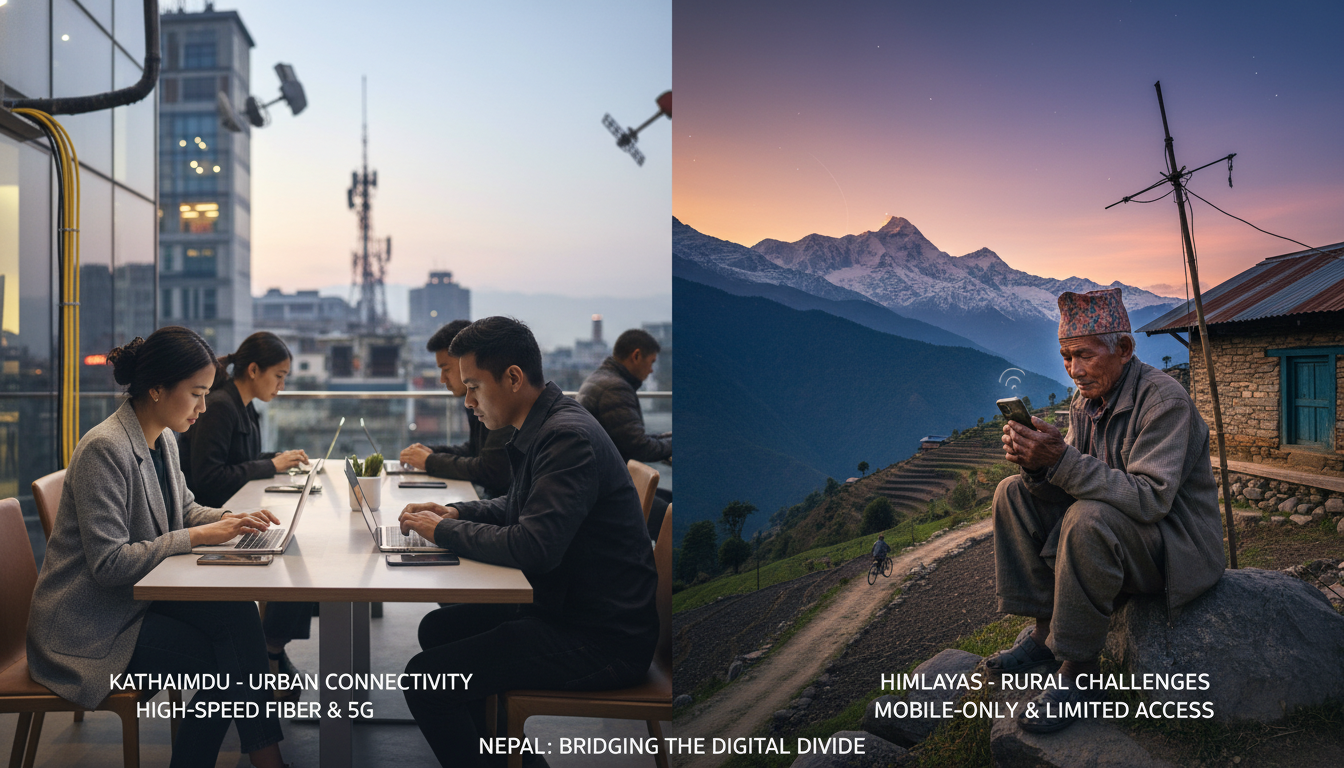
However, this growth is not without friction. The “digital divide” remains a reality, with rural areas lagging in high-speed connectivity. Furthermore, the ecosystem faces structural challenges such as the lack of a unified national addressing system, which complicates “last-mile” delivery, and a lingering trust deficit regarding digital payments. Despite these hurdles, domestic platforms like Online Saathi are carving out a significant niche, competing against and co-existing with international giants and other local startups by tailoring their value propositions to the specific needs of the Nepalese consumer—such as offering Equated Monthly Installments (EMI) and focusing on authentic electronics.
1.2 Types of E-commerce (B2C, B2B, C2C, C2B, etc.)
Understanding the specific business model of Online Saathi requires a theoretical framework of the prevailing e-commerce typologies. The industry is generally stratified into the following categories:
- Business-to-Consumer (B2C): This is the most visible form of e-commerce, where businesses sell products or services directly to individual consumers. It encompasses everything from massive retailers like Amazon to niche boutiques. Online Saathi primarily operates within this domain, aggregating inventory from various suppliers and retailing it to the end-user.
- Business-to-Business (B2B): This involves transactions between businesses, such as a manufacturer selling to a wholesaler, or a wholesaler to a retailer. In the context of Online Saathi, B2B elements are present in its supply chain procurement and its “Corporate Bid” services, where it supplies bulk electronics to offices and institutions.
- Consumer-to-Consumer (C2C): These platforms facilitate commerce between private individuals. In Nepal, platforms like Hamrobazar epitomize this model, functioning as digital classifieds.
- Consumer-to-Business (C2B): A model where individuals sell goods or services to businesses, such as a freelancer selling design work to a corporation.
- Online-to-Offline (O2O): This strategy draws potential customers from online channels to make purchases in physical stores. This is particularly relevant to Online Saathi due to its strategic relationship with Saathi Mart, a retail chain that leverages the digital platform to drive footfall and facilitate physical pickup of online orders.
Online Saathi can be best described as a Hybrid B2C Marketplace, incorporating strong O2O elements through its logistical partnerships. It acts as an intermediary (marketplace) for various vendors while also managing its own inventory for high-demand electronics, ensuring quality control—a critical differentiator in a market flooded with counterfeits.
1.3 Introduction to Group Members
This case study is the collaborative effort of a dedicated research team from the BBA 6th Semester cohort. The division of labor was structured to leverage individual strengths:
- – Lead Analyst: Responsible for the overall structural integrity of the report, the analysis of business models, and the synthesis of strategic recommendations.
- – Technical Researcher: Focused on the technological infrastructure, payment gateway integration analysis, and security protocol evaluation.
- – Market Analyst: Conducted the deep dive into marketing strategies, consumer behavior analysis, and the competitive SWOT assessment.
1.4 Objectives of the Case Study
The primary objective of this report is to conduct a rigorous, academic examination of Online Saathi as a microcosm of the broader Nepalese e-commerce industry. This involves moving beyond a superficial description of the website to an analytical deconstruction of its business logic. Specific objectives include:
- Operational Deconstruction: To dissect the operational workflow of Online Saathi, from vendor onboarding and inventory management to the final “last-mile” delivery to the consumer.
- Strategic Analysis: To identify the platform’s core value propositions—specifically its focus on EMI financing and authenticity—and evaluate their effectiveness as competitive moats against rivals like Daraz or Sastodeal.
- Technological Assessment: To evaluate the robustness of the platform’s technology stack, including its mobile responsiveness, security measures (SSL, Data Privacy), and integration with Nepal’s unique payment ecosystem (eSewa, Khalti, Banking APIs).
- Marketing Evaluation: To critique the digital marketing mix employed by the company, assessing the synergy between its social media presence, SEO strategies, and offline brand building.
- Future Forecasting: To offer data-backed recommendations for the platform’s future growth, identifying emerging technologies (AI, Chatbots) and market expansions that could sustain its upward trajectory.
1.5 Scope and Limitations of the Study
Scope:
This study is strictly confined to the analysis of the commercial entity operating at. It encompasses the strategic management, marketing, technological, and legal aspects of this specific business. The analysis covers the period from the company’s inception in 2020 through late 2024/early 2025, capturing its evolution from a startup to a multi-regional player.
Limitations:
Data Availability: As a private entity, Online Saathi does not publish detailed financial statements (Balance Sheets, P&L accounts).
Consequently, financial analysis is based on estimated metrics (e.g., customer volume, query volume) rather than verified revenue figures.
- Secondary Data Reliance: The research primarily utilizes secondary data sources, including digital news portals (TechLekh, ICT Frame), public interviews with the founders, and the platform’s own public disclosures.
- Brand Ambiguity: There exists an Indian government application also named “Online Saathi” (or Sanchar Saathi) and an NGO initiative. This report has applied rigorous filtering to exclude data related to these entities, focusing solely on the Nepalese e-commerce firm. However, public sentiment analysis may occasionally be clouded by this name collision.
1.6 Research Methodology
To ensure the reliability and depth of this report, a multi-faceted research methodology was employed:
- Descriptive Research: We utilized a descriptive approach to detail the features, products, and services of the platform. This involved a comprehensive “site walk-through,” simulating the user journey to document UI/UX elements.
- Secondary Data Synthesis: A systematic review of existing literature was conducted. This included:
- Course Textbooks: E-commerce: Business, Technology, and Society (Laudon & Traver) provided the theoretical lens.
- Industry Reports: Reports on digital trends in Nepal from agencies like Makura Creations and Publicis Sapient.
- News Archives: Interviews with CEO Bipin Adhikari and coverage of the Saathi Mart launch were analyzed to reconstruct the company’s timeline.
- Comparative Analysis: The platform’s offerings were benchmarked against competitors (Daraz, Sastodeal) and industry standards to identify unique selling points (USPs) and gaps.
- Regulatory Review: We examined relevant legal frameworks, including the Electronic Transactions Act 2063 and the Consumer Protection Act 2018, to assess compliance and regulatory risks.
CHAPTER 2: Overview of the Selected E-commerce Platform
2.1 Company Profile
Online Saathi (OS) was formally established in June 2020, a timing that coincided with one of the most tumultuous periods in modern history—the COVID-19 pandemic. Founded by Bipin Adhikari (Chief Executive Officer) and Yubraj Aryal (Chief Operating Officer), the company began as a humble startup operating out of a single room in Kathmandu.
The founders recognized a glaring gap in the Nepalese market: while e-commerce existed, it was largely Kathmandu-centric and often plagued by trust issues regarding product authenticity. Their vision was to democratize access to genuine, high-quality electronics and lifestyle products for consumers across the entire nation, not just the capital’s elites. This vision was encapsulated in their mission to build a “reliable online shopping ecosystem” that could guarantee authenticity and provide financial accessibility through innovative payment solutions.
The company’s initial 2.5 years were marked by the “struggle and hard work” typical of bootstrapping a logistics-heavy business during a global lockdown. However, the pandemic proved to be a tailwind. As physical markets shuttered, Online Saathi became a lifeline for consumers needing electronics for remote work and education. By 2022, the platform had achieved significant scale, serving over 250,000 customers and handling more than 1 million customer queries. This growth necessitated expansion beyond the Kathmandu Valley, leading to the establishment of operations in key commercial hubs including Pokhara, Chitwan, Janakpur, Birgunj, Rajbiraj, and Biratnagar.
2.2 Key Features of the Platform
Online Saathi has engineered its platform to address specific friction points in the Nepalese consumer journey. Its feature set goes beyond standard listing and cart functionality to include:
- EMI Service (The Strategic Anchor): Perhaps the most significant differentiator for Online Saathi is its comprehensive EMI (Equated Monthly Installment) facility. In a developing economy where disposable income can be limited, the ability to purchase high-ticket items like laptops and smartphones via installments is a game-changer. Unlike many competitors who act merely as a pass-through for bank EMI, Online Saathi has integrated deep partnerships with over a dozen banks. They offer “No Cost EMI” (0% interest) and, crucially, “Debit Card EMI” for eligible customers, significantly lowering the barrier to entry for credit.
- Authenticity Guarantee: Counterfeit electronics are a pervasive issue in Nepal’s grey market. Online Saathi combats this by sourcing strictly from authorized distributors and offering a “100% Authentic” guarantee. This builds the “institutional trust” necessary for high-value online transactions.
- Express Delivery Network: Leveraging its connection with regional hubs and the Saathi Mart network, the platform offers “Express Delivery” services. This is not just about speed but about reach—ensuring that a customer in Biratnagar gets the same service level as one in Kathmandu.
- Easy Return Policy: To mitigate the “touch-and-feel” deficit of online shopping, the platform offers a transparent 3-day return window. If a product is damaged or incorrect, the return process is described as “hassle-free,” which is critical for reducing the perceived risk of the purchase.
2.3 Products/Services Offered
The platform has evolved from a niche electronics retailer into a general merchandise marketplace with a “long tail” inventory strategy. The catalog currently boasts over 20,000 products, categorized to capture a broad share of the consumer wallet.
| Category | Key Products & Brands | Strategic Insight |
|---|---|---|
| Electronic Devices | Smartphones (Apple, Samsung, Xiaomi), Gaming Laptops (Asus, Acer), DSLR Cameras, Consoles | This is the “anchor” category. High average order value (AOV) drives revenue, while EMI options make these accessible. |
| Home Appliances | Smart TVs (Sony, LG), Washing Machines, Refrigerators, ACs | Targets the growing middle-class household. Heavy logistics requirement creates a barrier to entry for smaller competitors. |
| Fashion & Apparel | Men’s & Women’s Clothing, Traditional Wear (Sarees, Kurtas), Shoes | High-margin, high-frequency purchase category. Helps in customer retention and increasing visit frequency. |
| Health & Beauty | Skincare, Makeup, Supplements, Personal Care | Targets the female demographic, broadening the user base beyond the male-dominated tech segment. |
| Babies & Toys | Diapers, Strollers, Educational Toys, Action Figures | Capture the “parent” demographic who value the convenience of home delivery for bulky items like diapers. |
| Home & Lifestyle | Furniture, Bedding, Kitchenware, Decor | Completes the “lifestyle” offering, positioning the site as a one-stop-shop similar to Amazon. |
| Groceries & Pets | Beverages, Snacks, Pet Food | High-frequency consumables that drive repeat traffic and habit formation. |
2.4 Buying and Selling Workflow
The operational success of an e-commerce platform hinges on the seamless execution of its buying and selling workflows.
2.4.1 Customer Journey (Buying Process)
The customer journey on Online Saathi is designed to move the user through the classic “AIDA” funnel (Attention, Interest, Desire, Action) with minimal friction:
- Discovery (Attention): The user lands on the site via organic search (SEO), social media ads, or direct navigation. The homepage features dynamic banners highlighting current sales (e.g., “New Year Offer”) and “Trending Products” to capture attention immediately.
- Evaluation (Interest & Desire): The user navigates via the mega-menu or search bar. Product pages are content-rich, featuring high-resolution images, detailed technical specifications, and—crucially—the breakdown of EMI monthly costs. This financial transparency is a key conversion driver.
- Purchase (Action): The user adds the item to the cart. At checkout, they are prompted to login or register. This step is vital for data capture.
- Payment & Financing: The user selects a payment method. If they choose EMI, they download a quotation to submit to their bank or apply digitally if the integration allows. For regular purchases, they might choose Digital Wallets (eSewa/Khalti) or Cash on Delivery (COD).
- Fulfillment & Post-Purchase: The order is confirmed via SMS/Email. The logistics team picks, packs, and dispatches the item. The user can track the shipment. After delivery, the 3-day return window opens, offering peace of mind.
2.4.2 Seller Onboarding (Selling Process)
Transitioning to a Multivendor Marketplace model in 2022 was a strategic pivot to scale inventory without capital-intensive stock holding.
- Registration: Prospective sellers access the “Become a Seller” portal.
- Vetting: Given the strict “Authenticity Guarantee,” the vetting process is likely rigorous, requiring proof of authorized distributorship or business registration (PAN/VAT).
- Catalog Management: Sellers access a backend dashboard to upload products, manage pricing, and view orders.
- Commission Model: Online Saathi likely retains a percentage commission on every sale (typically 5-15% depending on the category), which constitutes its primary revenue stream from third-party sales.
2.5 Business Model
2.5.1 B2C/B2B/Hybrid Analysis
Online Saathi’s business structure is sophisticated, blending multiple models to maximize market penetration:
- Primary Model: B2C Marketplace: The core engine of the business is Business-to-Consumer retail. It aggregates demand from individual Nepalese consumers and services it through a mix of own-inventory and third-party sellers.
- Strategic Evolution: B2B Supply: The platform engages in B2B commerce through its “Corporate Bid” section.
By leveraging its supply chain relationships with importers (often direct from China), it supplies electronics in bulk to offices, schools, and other institutions. This provides a high-volume revenue stream that balances the lower-volume individual consumer sales.
- The O2O Differentiator: The connection with Saathi Mart introduces an Online-to-Offline (O2O) dynamic. Saathi Mart outlets can serve as pickup points, return centers, and trust-building physical touchpoints. This “Click and Mortar” approach is highly effective in Nepal, where physical presence equates to reliability in the consumer’s mind.
2.6 Network Infrastructure & Technology Stack
While specific proprietary details are guarded, the functional requirements of a platform serving 250,000+ customers imply a robust technology stack:
- Frontend: The interface is likely built using responsive web technologies (HTML5, CSS3, React or Vue.js) to ensure seamless performance across desktop and mobile devices.
- Backend: To manage 20,000 SKUs and complex multivendor logic, the platform likely utilizes an enterprise-grade e-commerce framework such as Magento (Adobe Commerce) or a custom Laravel-based solution.
- Database: High-concurrency databases (MySQL or PostgreSQL) are required to handle real-time inventory updates and transaction logging.
- Mobile App: The platform has invested in native mobile apps (Android/iOS), which are crucial for push notifications and capturing location data for logistics optimization.
2.7 Security Features and Policies
In the digital domain, security is the foundation of trust.
- SSL Encryption: The entire site operates under HTTPS, ensuring that all data in transit—passwords, personal details, credit card numbers—is encrypted via Secure Sockets Layer (SSL) protocols.
- Regulatory Compliance: The platform must adhere to the Electronic Transactions Act 2063, which governs the legal validity of digital records and signatures. Furthermore, strict adherence to the Consumer Protection Act 2018 regarding data privacy means user data cannot be sold or misused.
- Transaction Security: For card payments, the platform utilizes PCI-DSS compliant gateways. It does not store raw credit card numbers; instead, it uses tokenization systems provided by banking partners.
2.8 Payment Gateways and Systems Used
The payment ecosystem in Nepal is fragmented, and Online Saathi’s integration strategy reflects this diversity:
- EMI (Equated Monthly Installment):
- Partners: The platform has integrated with a vast network of banks including Global Bank, Siddhartha Bank, Nabil Bank, Sunrise Bank, Century Bank, Sanima Bank, NIC Asia, and Nepal Investment Bank.
- Mechanism: This system allows users to convert purchases into 3, 6, 9, 12, or 18-month installments. The “No Cost EMI” feature (0% interest) effectively subsidizes the interest cost (paid by the merchant or brand) to lower the acquisition cost for the user.
- Digital Wallets: Integration with eSewa and Khalti is standard. These wallets are ubiquitous in Nepal for small-ticket payments.
- ConnectIPS: For direct bank-to-bank transfers, enabling higher value transactions without the limits often imposed on wallets.
- Cash on Delivery (COD): Despite the digital push, COD remains a vital option for reaching unbanked customers or those who prefer to inspect goods before payment.
CHAPTER 3: Marketing and Customer Engagement
3.1 Digital Marketing Strategies
In the fiercely competitive attention economy, Online Saathi employs a diverse digital marketing mix to attract, convert, and retain customers.
3.1.1 Social Media Integration
Social media is not just a marketing channel in Nepal; it is the internet for many users.
- Facebook Dominance: With nearly universal adoption among internet users in Nepal, Facebook is the primary engine for traffic. Online Saathi utilizes Facebook for brand awareness campaigns, community engagement, and direct customer service via Messenger.
- Instagram Visuals: For lifestyle categories (Fashion, Beauty), the platform leverages Instagram’s visual format. High-quality product photography and “Shoppable Tags” allow users to move from inspiration to purchase instantly.
- TikTok Virality: Recognizing the explosive growth of short-form video, the brand likely engages in TikTok marketing, using influencers to showcase unboxing videos or styling tips, tapping into the younger demographic.
3.1.2 SEO/SEM Approaches
- Search Engine Optimization (SEO): The platform invests in on-page SEO to rank for high-volume keywords like “iPhone price in Nepal,” “Gaming Laptop Nepal,” and “Online Shopping.” The structure of the catalog, with clear hierarchies and descriptive URLs, supports this organic visibility.
- Search Engine Marketing (SEM): To capture high-intent buyers, the company likely runs Google Ads (PPC) campaigns. Bidding on specific product model names ensures they appear at the very top of search results when a user is ready to buy.
3.1.3 Content & Influencer Marketing
- Educational Content: Blogs and buying guides (e.g., “Top 5 Laptops for Students,” “How EMI Works”) serve a dual purpose: they educate the user, reducing purchase anxiety, and they act as “link bait” for SEO.
- Influencer Partnerships: Collaborating with tech reviewers (like Gadgetbyte Nepal or TechLekh) provides third-party validation. A positive review from a trusted tech influencer can significantly boost sales of a new smartphone model.
3.2 Mobile and Location-Based Marketing Techniques
With the majority of Nepalese users accessing the internet via mobile, a “Mobile-First” marketing strategy is essential.
- App Marketing: Push notifications are used to alert users to “Flash Sales” or order updates, keeping the brand top-of-mind.
- Geo-Targeting: As the platform expands to cities like Biratnagar and Pokhara, it can use geo-fenced ads. A user in Pokhara might see an ad for “Next Day Delivery in Pokhara,” making the offer more relevant and compelling than a generic national ad.
3.3 Social Commerce and Online Communities
Social commerce represents the convergence of social interaction and transaction. Online Saathi likely leverages Facebook Marketplace listings to reach users who are browsing specifically for deals. Furthermore, by fostering a community around their brand—encouraging users to share photos of their purchases—they generate User Generated Content (UGC), which acts as powerful social proof.
3.4 Advertising Campaigns and Communication Channels
- Seasonal Campaigns: In Nepal, major sales volume is driven by festivals like Dashain and Tihar. Online Saathi executes massive, multi-channel campaigns during these periods, offering heavy discounts and special “Festival EMI” schemes.
- Direct Communication: The platform utilizes SMS marketing and Email newsletters to retain customers. Abandoned cart emails—reminding users of items left in their basket—are a standard but highly effective tactic to recover lost revenue.
3.5 Customer Retention and Loyalty Programs
Acquiring a customer is expensive; retaining them is profitable.
- Service as Retention: The “Authenticity Guarantee” is a retention tool. Once a user buys a genuine product and has a good experience, they are less likely to risk buying from a grey-market vendor next time.
- EMI Lock-in: The EMI ecosystem creates sticky behavior. A customer who successfully pays off a phone on EMI establishes a credit history with the platform/bank partnership, making them highly likely to return for their next big purchase (e.g., a laptop) because the process is familiar and proven.
CHAPTER 4: Technical and Strategic Analysis
4.1 Website and App UI/UX Evaluation
A heuristic evaluation of reveals a design philosophy centered on usability and trust.
- Visual Hierarchy: The homepage is dominated by a carousel of high-impact offers, guiding user attention to priority campaigns.
- Navigation: The Mega Menu is essential for managing the complexity of 20,000 SKUs. It allows a user to drill down from “Electronics” to “Laptops” to “Gaming Laptops” in seconds.
- Search Functionality: A prominent, predictive search bar is crucial.
Users often search for specific model numbers (e.g., “iPhone 15 Pro”), and the search engine must handle these precise queries effectively.
- Trust Signals: Badges like “100% Authentic,” “Secure Payment,” and banking partner logos are placed strategically near the “Buy” button to reduce anxiety at the moment of commitment.
4.2 SWOT Analysis
To understand the strategic position of Online Saathi, a SWOT (Strengths, Weaknesses, Opportunities, Threats) analysis is presented:
Strengths (Internal)
- EMI Leadership: Deep integration with 12+ banks provides a unique financial product that competitors struggle to match in breadth.
- O2O Synergy: The link with Saathi Mart provides a physical logistics and trust backbone.
- Regional Reach: Established logistics in Tier-2 cities (Biratnagar, Rajbiraj) where competitors may be weaker.
- Authenticity Brand: Strong reputation for selling genuine goods.
Weaknesses (Internal)
- Brand Confusion: Name similarity with the Indian government app creates SEO and brand recall friction.
- Capital Constraints: Compared to Alibaba-backed Daraz, Online Saathi likely has fewer resources for massive discounting wars.
- Tech Dependency: High reliance on third-party banking systems for EMI approvals (3-10 days) introduces friction.
Opportunities (External)
- Market Expansion: 9 million new internet users expected by 2025.
- B2B Growth: Formalizing the corporate supply arm to capture institutional budgets.
- Hyperlocal Delivery: Leveraging Saathi Marts as “Dark Stores” for 2-hour delivery in specific neighborhoods.
- FinTech: Launching proprietary credit scoring to speed up EMI approvals.
Threats (External)
- Competition: Daraz remains the 800lb gorilla; Sastodeal and Hamrobazar are aggressive.
- Regulatory Risk: New e-commerce bills could increase liability for marketplaces regarding seller quality.
- Logistics Costs: Rising fuel prices and poor road infrastructure squeeze margins.
4.3 Mobile Commerce and Cross-Platform Features
The future of Nepalese e-commerce is mobile. Online Saathi’s strategy involves a “Cross-Platform” approach. A user might browse laptops on their phone during a commute (m-commerce) but finalize the EMI paperwork on a desktop at home. The platform must ensure Cart Synchronization—where items added on mobile appear instantly on desktop—to support this non-linear journey. The mobile app also opens up the possibility of using device features like the camera for visual search or scanning barcodes in Saathi Mart stores.
4.4 Use of EDI or Integration Tools
While traditional EDI (Electronic Data Interchange) is an older standard, modern e-commerce relies on APIs (Application Programming Interfaces).
- Banking APIs: Crucial for the EMI engine. Real-time API calls likely check basic eligibility or submit loan applications directly to the bank’s system.
- Logistics APIs: Integration with courier partners allows for the automated generation of shipping labels and real-time tracking updates for the user.
- Inventory Sync: For the multivendor marketplace, APIs allow large sellers to sync their own inventory systems with Online Saathi, preventing the “Out of Stock” scenario which is a major driver of customer dissatisfaction.
4.5 Reviews, Ratings, and Customer Feedback Loop
Feedback mechanisms are vital for maintaining the “Authenticity” promise.
- Product Reviews: Verified purchase reviews build social proof. A product with 50 positive reviews will vastly outsell one with none.
- Operational Feedback: The metric of “1 million queries handled” suggests a massive volume of customer interaction. This data is a goldmine. Analyzing these queries can reveal systemic issues (e.g., “Why is delivery to Pokhara delayed?”) allowing management to fix root causes.
4.6 Innovation, Trends, and Future Technologies
- Artificial Intelligence (AI): To handle 1 million queries efficiently, the adoption of AI Chatbots is inevitable. These can handle Tier-1 queries (Order Status, Price Checks) instantly, freeing up human agents for complex issues.
- Big Data Analytics: Online Saathi sits on a mountain of data: what people search for, what they buy, and how they pay. Analyzing this can help in Demand Forecasting—predicting that AC sales will spike in Birgunj in May—allowing them to pre-stock inventory at the regional hub.
CHAPTER 5: Conclusion and Strategic Recommendations
5.1 Summary of Key Findings
This comprehensive analysis of Online Saathi reveals a company that has successfully navigated the chaotic early stages of Nepal’s e-commerce evolution. By anchoring its value proposition on Trust (Authenticity) and Affordability (EMI), it has differentiated itself from the clutter of generic marketplaces. The strategic pivot to a Multivendor model, combined with the O2O synergy of Saathi Mart, positions it as a robust hybrid player capable of bridging the digital and physical worlds.
The company has effectively leveraged the COVID-19 digital acceleration, expanding its footprint from a single room to a multi-regional operation serving over a quarter-million customers. However, it operates in a high-friction environment characterized by intense competition from well-funded rivals (Daraz), logistical bottlenecks, and an evolving, sometimes ambiguous, regulatory landscape.
5.2 Limitations of the Study
While this study offers deep insights, it is limited by the lack of internal financial data. The true profitability of the EMI model and the customer acquisition costs (CAC) remain opaque. Additionally, the potential brand confusion with the Indian entity of the same name complicates pure sentiment analysis. Future research would benefit from primary interviews with company management to validate the strategic intent behind the O2O integration.
5.3 Strategic Suggestions and Recommendations
To sustain its growth trajectory and defend its market share, Online Saathi should consider the following strategic imperatives:
- Digitize the EMI Process: The current 3-10 day processing time for non-credit card EMI is a friction point. Online Saathi should work with banking partners to implement algorithmic credit scoring for instant approvals, similar to “Buy Now, Pay Later” (BNPL) models globally.
- Hyper-Localization: Leverage the Saathi Mart network to offer “Click and Collect” services. Allow users to order online and pick up at a local store within hours, saving on delivery costs and time.
- Invest in Content: Become the “Consumer Reports” of Nepal. Producing high-quality video reviews of products can capture users at the “Research” phase of the buying journey, keeping them on the platform.
- Loyalty Program: Introduce a “Saathi Coins” or similar loyalty scheme where users earn points for purchases and reviews. This increases switching costs and improves customer lifetime value.
- B2B Formalization: Aggressively expand the B2B arm. Create a dedicated portal for corporate clients with bulk pricing and GST invoicing, securing high-volume recurring revenue.
5.4 Potential for Expansion or Innovation
- Cross-Border Commerce: Explore partnerships to allow the global Nepali diaspora to send gifts to family in Nepal easily, tapping into the massive remittance economy.
- Private Label Brands: Use sales data to identify high-demand categories (e.g., cables, phone cases) and launch “Online Saathi Basics” brands to improve margins.
- AI Personalization: Implement AI engines to deliver a unique homepage to every user based on their past behavior, increasing conversion rates.
In conclusion, Online Saathi stands at a pivotal juncture. It has built the infrastructure and the brand trust. The next phase of growth will depend on its ability to use technology to remove friction, deepen its moat through O2O integration, and continue to financially empower the Nepalese consumer.
(Note: This report has been compiled for academic purposes under the IT 204: E-Commerce course requirements.)