

Designing STRs for Guest Personas: Maximize Rental Revenue
The Persona-Centric Paradigm in Short-Term Rental Design: A Comprehensive Strategic Analysis
The global short-term rental (STR) industry has undergone a fundamental transformation, moving away from a generalized “spare room” model toward a sophisticated hospitality ecosystem characterized by hyper-specialization and data-driven spatial design. As the market enters 2025, the proliferation of supply and the maturation of guest expectations have necessitated a rigorous approach to property development—one that prioritizes the “guest persona” over aesthetic trends. The following report provides a detailed examination of the relationship between traveler intent, behavioral patterns, and physical design requirements. It argues that the financial viability of modern short-term rentals is contingent upon the host’s ability to decode the specific needs of distinct traveler types—ranging from the high-stress airport layover guest to the long-dwell digital nomad—before the first furniture selection is made.
The Macro-Economic Landscape and the Necessity of Niche Targeting
In the current economic climate, the U.S. vacation rental market exhibits a significant divergence between demand and supply trajectories. Between 2024 and early 2025, booking demand grew by approximately 7.0%, while supply increased by only 4.7%. This tightening of the market has driven Revenue Per Available Rental (RevPAR) to record levels, with April 2025 witnessing a 12.7% year-over-year increase, reaching an average of $161.93. However, this growth is not uniformly distributed. Urban markets are staging a robust comeback, and smaller units (one- and two-bedroom properties) are leading the industry in occupancy rates, primarily because they align more effectively with the requirements of solo travelers, couples, and remote workers.
The competitive landscape is increasingly saturated, with 76% of operators reporting heightened competition and 55% citing market saturation as a primary operational hurdle. In this context, “designing for everyone” has become a strategic liability. The evidence suggests that properties utilizing “avatar research”—the process of identifying and tailoring design to a specific ideal guest profile—achieve significantly higher returns. For instance, professionally designed rentals that target a defined demographic can realize up to a 40% increase in revenue. This financial premium is the result of higher nightly rates, better guest quality, and the increased longevity of furnishings.
Market Performance Metrics 2024-2025
| Metric | 2024 Performance | 2025 Projection/Actual | Growth Rate (%) |
|---|---|---|---|
| U.S. Booking Demand | 100 (Base) | 107.0 | +7.0% |
| U.S. Rental Supply | 100 (Base) | 104.7 | +4.7% |
| National RevPAR (April) | $143.68 | $161.93 | +12.7% |
| Global Vacation Rental Users | 780 Million | 860 Million | +10.2% |
| RevPAR Growth (Global) | $100.19 | $102.78 | +2.58% |
The Taxonomy of Modern Guest Personas
To design an effective space, it is necessary to move beyond broad demographic categories and analyze the “travel intent” that drives specific booking behaviors. The distinction between a solo traveler, a digital nomad, and a romantic couple is not merely one of headcount; it is a distinction of psychological state, daily routine, and spatial utility.
The Solo Traveler and the Digital Nomad Continuum
The rise of solo travel is intrinsically linked to the expansion of the digital nomad market. These travelers often blend work and leisure, a trend frequently termed “bleisure”. Solo travelers exhibit unique advantages for hosts: they offer increased scheduling flexibility, cause reduced wear and tear on properties, and are significantly more likely to book during off-peak seasons.
The digital nomad persona is defined by a high dependence on technological infrastructure. Research indicates that 52% of digital nomads cite finding reliable Wi-Fi as their primary challenge. Consequently, the unit design must treat connectivity as a core utility rather than a secondary amenity. Digital nomads typically remain in a location longer than duo travelers or families, with average stays of 17 days compared to 9 days for couples. This longer length of stay shifts the design requirement from “hospitality” (transient comfort) to “habitability” (long-term function).
Couples and the Special Occasion Niche
Couples represent a segment that is often driven by emotional milestones. A significant percentage of guests booking one-bedroom “luxury” cabins or urban lofts are celebrating anniversaries or birthdays. When a property is positioned as an “upscale, luxurious escape” specifically for adventurous couples celebrating special occasions, revenue has been observed to increase by approximately 18% compared to generic listings in the same market.
For this persona, the design must prioritize “sensory delight”—including mood lighting, high-quality textiles (velvet, linen, boucle), and “Instagrammable moments” such as feature walls or designer reading nooks. These guests are less sensitive to price and more sensitive to the “story” the property tells. They seek features that facilitate intimacy and connection, such as private hot tubs, outdoor hammocks, or open fireplaces.
The Transit Archetype: Airport Layover vs. Slow Traveler
The design requirements for an airport layover guest are fundamentally different from those of a “slow traveler.” The layover guest is navigating a high-stress, time-sensitive journey. Their experience is defined by the “passenger journey”—a series of stressful touchpoints (security, customs, baggage) that culminate in a need for immediate, friction-free decompression.
Conversely, the “slow traveler” seeks local immersion and authenticity. They are drawn to properties that offer a “home-away-from-home” environment and provide a deep connection to local culture and neighborhoods. While the layover guest wants to know they can check in via a smart lock in 30 seconds and find complete silence, the slow traveler wants a curated guide to hidden local gems and a kitchen equipped for elaborate meals.
Spatial Design for High-Functioning Personas
The physical layout of a short-term rental should be viewed as a tool for managing guest behavior and satisfaction. Every design decision—from the placement of a bedside shelf to the choice of upholstery—has a direct correlation with the guest’s perceived value of the stay.
Productivity Infrastructure for Remote Workers
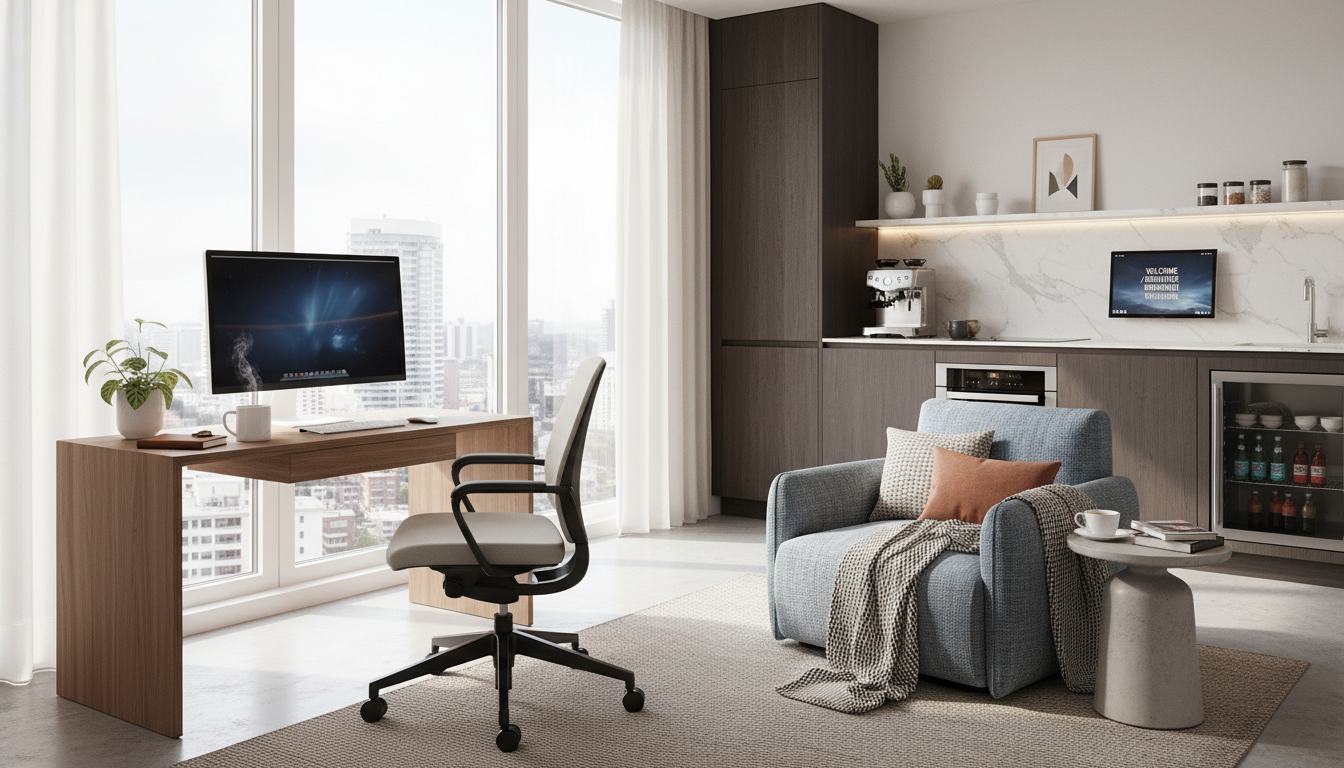
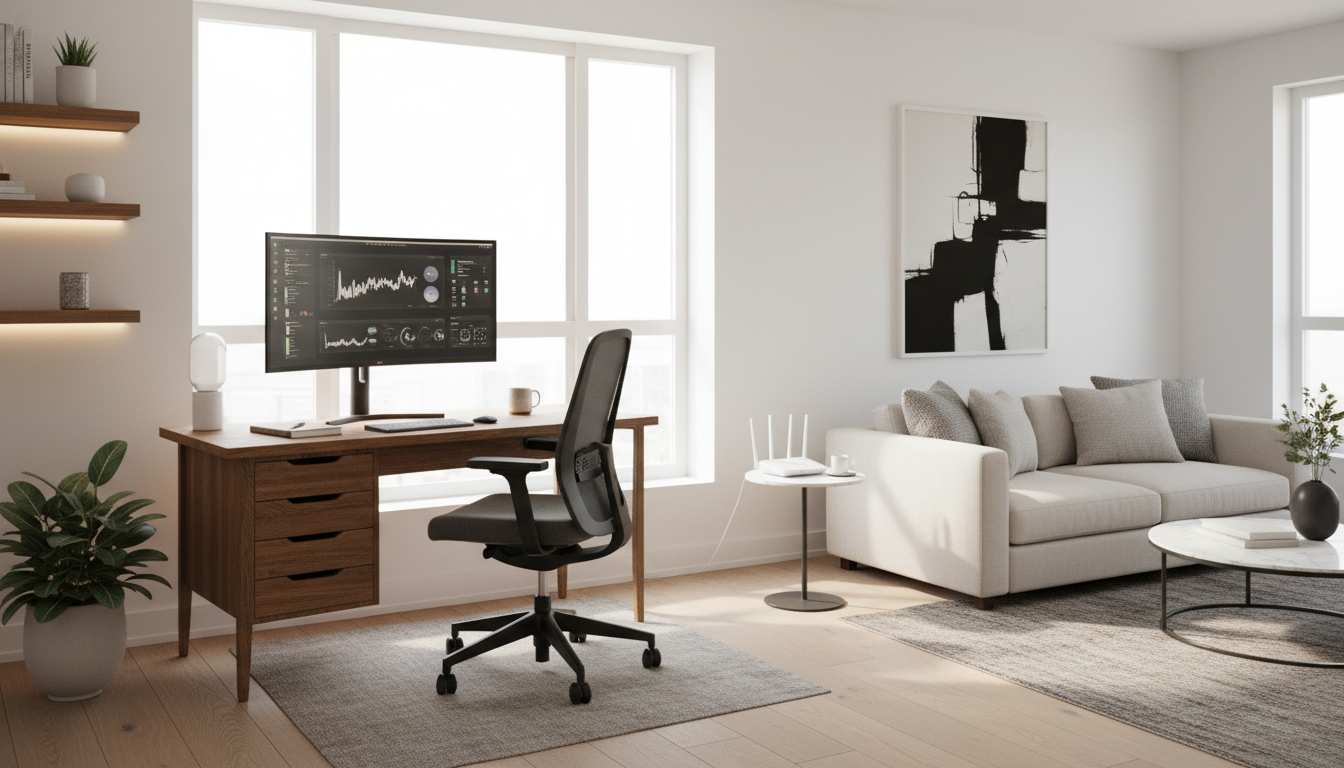
For the digital nomad, the “home office” is the most critical zone in the property. Data shows that listings with dedicated, well-designed workspaces command 15-25% higher rates and see increased midweek occupancy.
- Ergonomics over Aesthetics: A common failure in STR design is the use of decorative dining chairs for work. Function must take precedence; a proper ergonomic chair and a desk with a minimum of 120 cm of surface width are essential.
- Technological Redundancy: Reliable high-speed Wi-Fi (minimum 100 Mbps) is mandatory. High-performing hosts often prominently feature a verified speed test in their listing photos to build trust.
- Lighting and Power: The workspace requires layered lighting (natural light plus a dedicated desk lamp) and a power strip with integrated USB-C ports to accommodate modern hardware.
Restorative Design for Transit and Stress-Prone Travelers
Airport-adjacent properties must focus on “stress-free” environments. Designers are increasingly borrowing from “Quiet Airport” initiatives, which use sound-dampening features and biophilic elements to create a sense of calm.
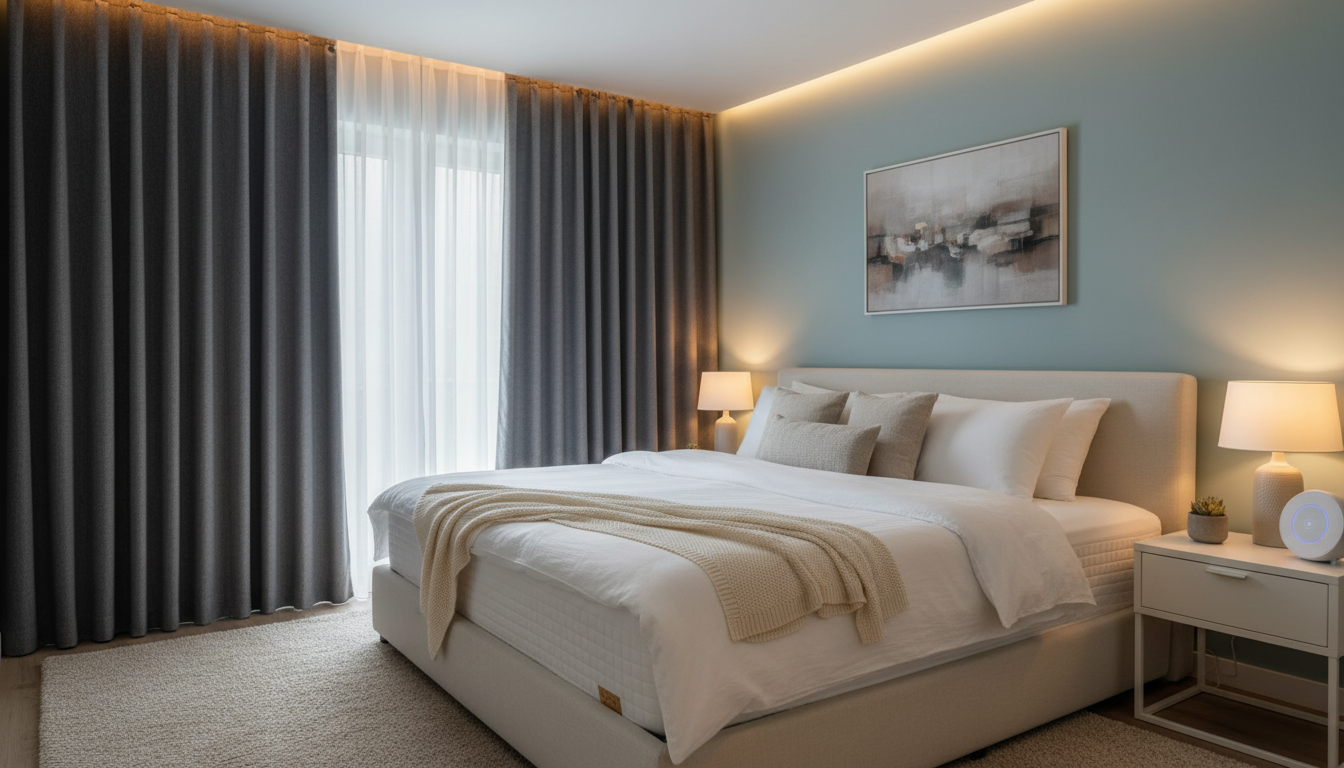
- Acoustic Insulation: Noise disturbances from street traffic or neighbors are a top guest complaint. Effective design solutions include noise-blocking curtains, sealing strips on doors and windows, and the provision of white noise machines or earplugs as a “gesture of care”.
- Luggage Management: Layover guests often travel with heavy baggage. The layout must provide a clear path from the entry to the sleeping area, avoiding cluttered corners or narrow walkways that “quietly stress people out”. The inclusion of a dedicated luggage rack in even the smallest bedrooms is critical.
- Circadian Lighting: For travelers crossing time zones, lighting should be adaptable. Dimmable lighting and warm-toned lamps in “cozy corners” help guests regulate their sleep cycles.
Design Requirements by Traveler Persona
| Design Element | Digital Nomad | Romantic Couple | Airport Layover | Slow Traveler |
|---|---|---|---|---|
| Workspace | High priority; ergonomic chair/desk | Not required; may use for vanity | Basic desk for emails | Optional; flexible use |
| Acoustics | Sound machines for focus | Privacy from neighbors | Extreme insulation/Quiet zone | General neighborhood feel |
| Connectivity | 100+ Mbps; mesh network | Basic Wi-Fi for streaming | Essential for checking flights | Authentic, low-tech options |
| Kitchen | Well-stocked; coffee is key | Special features (wine cooler) | Basic; takeout proximity | Pro-grade; local spices |
| Bath/Spa | Functional/Fast turnover | Rainfall shower/Hot tub | Restorative/Deep soak | Locally sourced soaps |
Analyzing Guest Complaints: The Review-Driven Design Feedback Loop
Guest reviews serve as a repository of behavioral data that reveals where physical design fails to meet persona expectations.
By studying what guests complain about most, designers can pre-emptively solve issues that lead to negative ratings.
The Cleanliness and Maintenance Imperative
Cleanliness remains the “number one deal-breaker” across all hospitality sectors. However, from a design perspective, cleanliness can be facilitated through material selection.
- Performance Fabrics: The use of “hard-wearing” fabrics like leather, PVC, or performance textiles (e.g., Crypton or Sunbrella) allows for easy wipe-downs and resists the stains that frequently trigger guest complaints.
- Flooring: Luxury vinyl plank (LVP) is increasingly preferred over carpet or natural wood because it is non-porous, durable, and significantly easier to deep-clean between stays.
- Visibility: Using white linens and towels signals “hotel-level hygiene” to the guest, as it demonstrates that the items can be bleached and are transparently clean.
The Physicality of Comfort: Bedding and Furniture
Uncomfortable beds and low-quality furniture are among the most frequent targets of negative reviews.
- Mattress Quality: Guests do not expect a five-star hotel experience, but they will not tolerate a “thin, uneven mattress“. The investment in a medium-firm, high-quality mattress is the most effective way to ensure 5-star reviews.
- Functional Lighting: A common complaint involves the lack of bedside lighting. For the “short stay” guest, it is critical to have a light on both sides of the bed, along with a nightstand or shelf for a phone, book, and water.
Managing Noise and Expectations
Noise disturbances—whether from neighbors, street traffic, or loud air conditioning units—are cited as “unexpected deal-breakers“. While a host cannot always eliminate noise, the physical design can mitigate it.
- Soft Goods as Insulation: Thick rugs and heavy curtains serve dual purposes as aesthetic anchors and sound absorbers.
- Transparency as Design: Listing “quirks” like nearby construction or road noise is a form of behavioral design. Honesty in the listing description manages expectations, transforming a potential complaint into an accepted reality.
Niche Markets and the Return on Experience (ROE)
The most successful properties in 2025 are those that tap into specific “macro-niches” such as pet-friendly, eco-friendly, or luxury rentals. These niches allow hosts to charge premium rates by solving specific problems for their target audience.
The Pet-Friendly Micro-Niche
Pet-friendly rentals are a growing macro-niche. However, the most profitable properties are those that target “micro-niches,” such as owners with multiple large pets. These guests are often underserved and are willing to pay higher nightly rates (even without a pet fee) because the property provides specialized amenities like fenced yards, outdoor wash stations, and durable, pet-proof flooring.
The Accessibility Advantage
With Airbnb’s introduction of 21 accessibility filters, the “disabled traveler” niche has become a significant driver of bookings.
- Step-Free Access: The presence of a flat path to the entrance and step-free access to bedrooms and bathrooms is a primary search filter.
- Visual and Tactile Clarity: Wide hallways and fixed grab bars in showers are high-value additions that attract a loyal, long-stay demographic.
The Performance of Thematic Design: Case Studies
nhow Hotels: Niche Target – Musicians, Specialized Design/Amenity – Professional music studios; guitar room service, Financial/Guest Impact – “Europe’s first music hotel”; high professional appeal
Georgian House: Niche Target – “Wizard” Fans, Specialized Design/Amenity – Enchanting “Wizard Chambers”; potion-making classes, Financial/Guest Impact – Highly “Instagrammable”; global fandom draw
45 Park Lane: Niche Target – Art Lovers, Specialized Design/Amenity – Quarterly rotating gallery interiors, Financial/Guest Impact – Validates status of high-end artistic travelers
East Ruston: Niche Target – Pet Owners, Specialized Design/Amenity – Specialized for multiple pets; no pet fee, Financial/Guest Impact – Commands premium rates through micro-niche focus
The Role of Technology in Personalization and Security
In 2025, technology is no longer a separate component of the STR experience; it is woven into the design and operational strategy. AI adoption has surged to 84%, with operators using it for everything from dynamic pricing to sentiment analysis of reviews.
Advanced Guest Screening and Safety
Security concerns, such as unauthorized parties or property damage, are significant host pain points. Advanced technology is reshaping the “check-in sequence” to mitigate these risks.
- AI-Powered Background Checks: Platforms like Authenticate now offer instant access to criminal records and risk scores, eliminating human bias in guest selection.
- Biometric Identity Verification: Facial recognition and “liveness detection” confirm the guest’s identity at the point of booking, preventing fraudulent reservations and identity theft.
- Global Watchlist Checks: Standard practice now includes screening guests against global databases for politically exposed persons (PEPs) or sanctioned individuals to ensure compliance with regional laws.
Smart Home Integration and Personalization
The “modern traveler” expects a high degree of control over their environment.
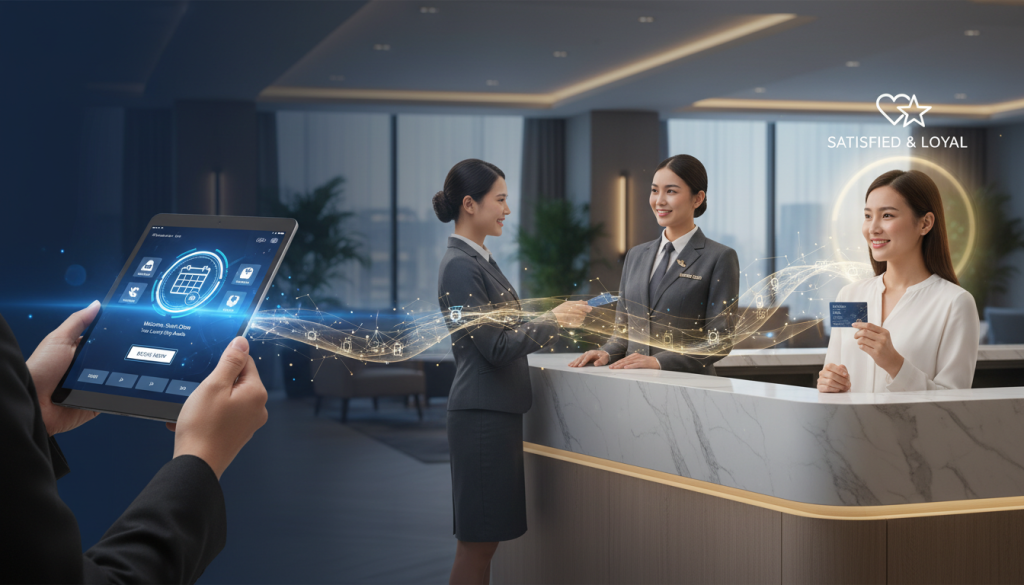
- IoT Integration: Tablet-based room controls, such as those used by The Peninsula Hotels or citizenM’s “MoodPads,” allow guests to adjust lighting, temperature, and entertainment with a single interface.
- Personalized Touches: AI can remember a guest’s preference for lactose-free milk or their favorite room temperature, allowing for a level of personalization that fosters long-term loyalty.
Behavioral Economics: Budget Sensitivity and Perceived Value
Understanding a guest’s budget behavior is critical for aligning the design with their price sensitivity. Price sensitivity is not a fixed trait; it is a response to how well the property communicates its value.
Heterogeneity in Price Sensitivity
Research confirms that travelers exhibit significant heterogeneity in price sensitivity.
- Information Search: Price-sensitive travelers focus on clear differences in price and seek travel information that reduces their search effort. For these guests, the design should emphasize “utility and convenience“.
- Value Perception: Middle-aged travelers, who often represent the primary financial source for a household, are heavily influenced by price factors in their purchase decisions. However, their satisfaction is driven by “professionalism“—the sense that the property and the host are expertly managed.
The ROI of Professional Design
Investing in professional design is a strategic move to decouple the property from “price wars.” When a unit offers a unique “experience,” it moves from being a commodity to being a destination.
- The 40% Premium: Professionally designed rentals achieve up to a 40% increase in revenue by commanding higher nightly rates and attracting “better” renters who treat the property with more respect.
- Staging for the Subconscious: High-quality visuals that emphasize “warm neutrals and bright hues” (e.g., the Miami-inspired Dock 79 project) tap into the subconscious drivers of the guest, increasing the likelihood of a booking even if the price is higher than the market average.
Strategic Implementation: A Step-by-Step Design Framework
For the operator, translating these insights into a physical space requires a structured approach to development.
Phase 1: Avatar Research and Market Analysis
Before any furniture is purchased, the host must analyze the “geographical setting.” Is the property near a beach, a ski resort, or a transit hub? This determines the “macro-niche.” The next step involves reviewing competitor feedback. What do guests complain about in nearby rentals? If local reviews consistently mention noise, the competitive advantage lies in superior soundproofing.
Phase 2: Functional Zoning and Flow
The layout must be mapped out to ensure intuitive flow. The operator should sketch the main zones—sleeping, lounging, and working—and ensure there are clear walkways. In small spaces, “multi-use” pieces, such as ottomans with storage or desks that double as vanities, are essential for maintaining a sense of openness.
Phase 3: Material and Furniture Selection
Durability is the foundation of STR profitability. Splurging on “high-touch” items like mattresses and couches is recommended, while soft furnishings should be replaceable or made from hard-wearing materials. The use of “timeless” designs and neutral color palettes ensures that the property does not look dated within a few years, reducing the frequency of expensive updates.
Phase 4: Sensory and Emotional Layering
The final layer involves the “personal touches” that turn a stay into a memory. This includes “aromatherapy kits,” “bespoke coasters,” and “personalized message cards“. These elements build an emotional connection with the guest, signaling that they are valued individuals rather than just “membership numbers“.
Conclusion: The Future of Persona-Driven Design
As we look toward 2026, the short-term rental market will continue to reward properties that offer a “profound understanding” of guest desires. The era of the generic rental is over; the era of the “specialized sanctuary” has arrived.
Whether catering to the digital nomad’s need for high-speed connectivity, the layover guest’s need for restorative silence, or the couple’s need for aesthetic intimacy, the most successful hosts will be those who design their spaces for a specific inhabitant.
The integration of advanced AI and biometric security will further streamline the transactional aspects of hospitality, allowing the “human touch”—delivered through thoughtful spatial design and personalized amenities—to remain the primary driver of guest loyalty and financial performance. By prioritizing the guest persona before the physical space, operators can build resilient, high-yield businesses that thrive despite economic volatility or market saturation. The goal is simple but profound: to create an environment where the guest feels not just accommodated, but understood.