

Nepal Premier League: Strategic Analysis & Future of NPL Cricket
Introduction: The Geopolitical and Sporting Significance of the NPL
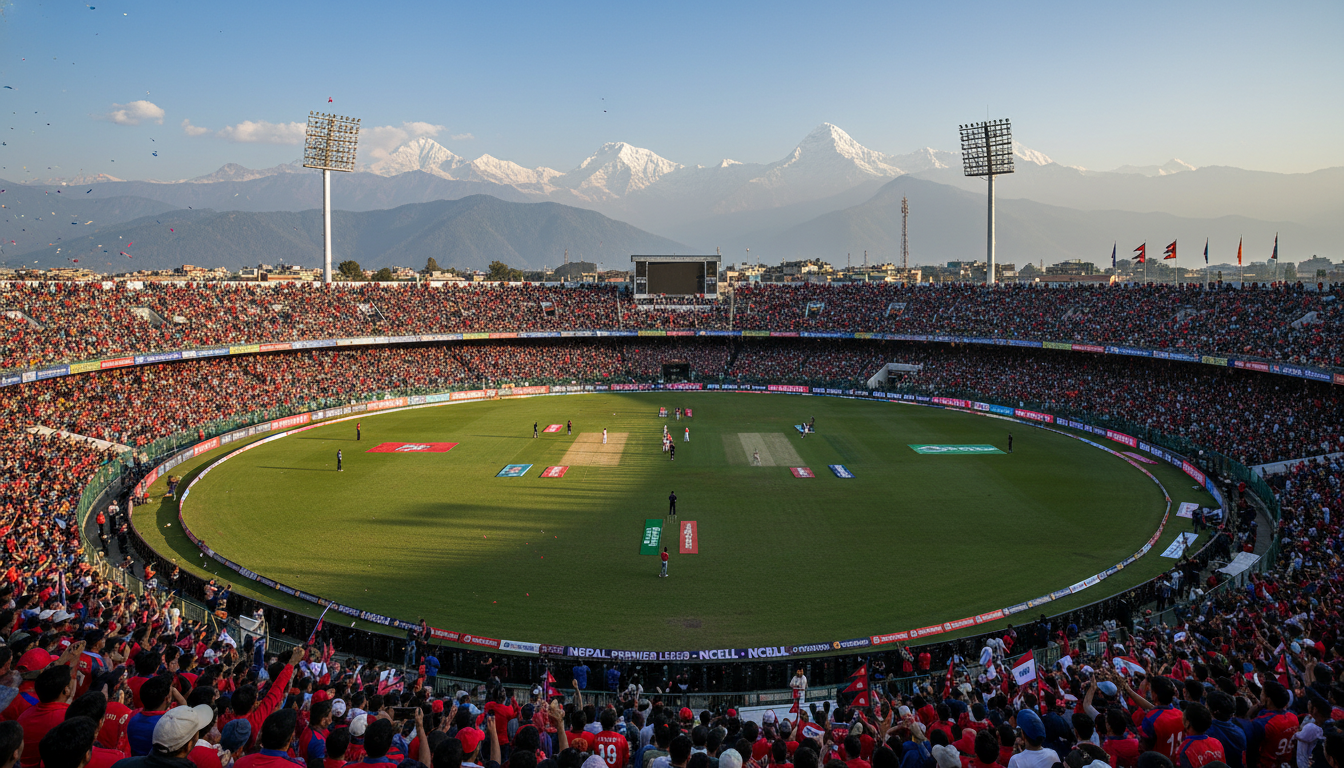
The Nepal Premier League (NPL), formally designated as the Siddhartha Bank Nepal Premier League for commercial sponsorship reasons, stands as the preeminent professional Twenty20 cricket league within the Federal Democratic Republic of Nepal. Organized and administered by the Cricket Association of Nepal (CAN), the league represents more than a mere sporting tournament; it is a manifestation of Nepal’s evolving identity in the global sporting arena, a mechanism for economic stimulation, and a strategic asset in the nation’s soft power diplomacy. Established in 2024, the league operates on a city-based franchise model that integrates the commercial vitality of the private sector with the regulatory oversight of the national governing body.
In the broader context of South Asian cricket, the NPL occupies a unique strategic niche. While the Indian Premier League (IPL) dominates the global ecosystem as a financial behemoth, the NPL has positioned itself as the “Festival of the Himalayas,” leveraging Nepal’s intense, organically grown cricket culture to create a product that appeals to both the domestic populace and the global cricketing diaspora. The league’s formation marks a definitive departure from the fragmented and often controversial history of domestic leagues in Nepal, signaling a new era of professionalization, governance reform, and international integration.
This report offers an exhaustive analysis of the NPL, tracing its historical lineage from the aristocratic origins of Nepali cricket to the sophisticated commercial operations of the 2025 season. It dissects the league’s governance structures, evaluates the economic impact of its franchise model, provides a granular statistical review of its seasons, and forecasts its trajectory amidst the challenges of infrastructure and global competition. By synthesizing data on player auctions, match outcomes, broadcasting rights, and socio-economic indicators, this document serves as a comprehensive record of the NPL’s status as of December 2025.
Historical Context: From Aristocracy to Association
To understand the structural and cultural foundations of the Nepal Premier League, one must navigate the complex history of cricket’s introduction and diffusion within Nepal. The sport’s journey mirrors the nation’s political transition from an isolated feudal state to a vibrant, albeit volatile, federal republic.
The Rana Dynasty and the aristocratic Origins (1920s–1950)
Cricket was introduced to Nepal in the 1920s, imported not by colonial imposition—as was the case in India or the West Indies—but by the Anglophile Rana aristocracy. Members of the ruling Rana dynasty, educated in the elite institutions of England and British India, brought the game back to Kathmandu as a symbol of modernity and status. During this period, cricket was an exclusionary practice, confined to the high walls of Rana palaces. It was a pastime for the ruling elite, devoid of public participation or grassroots development.
The formalization of the sport began in 1946 with the establishment of the Cricket Association of Nepal (CAN). However, even this institution was initially created to promote cricket solely amongst the aristocracy, maintaining the sport’s elitist veneer. The sport remained insulated from the general populace, serving as a social lubricant for the ruling class rather than a competitive athletic endeavor.
Democratization and the National Sports Council (1951–1990)
The political seismic shift of 1951, which saw King Tribhuvan overthrow the Rana regime, catalyzed the democratization of cricket. The fall of the Ranas broke the socio-political barriers surrounding the sport, allowing it to trickle down to the emerging middle class. In 1961, a critical institutional development occurred when the CAN was integrated into the National Sports Council under the Ministry of Sports. This integration signaled the state’s recognition of cricket as a vehicle for national development, although efforts were largely restricted to the Kathmandu Valley for the next two decades.
The 1980s marked a period of infrastructural awakening. The construction of the Tribhuvan University (TU) Cricket Ground—which would later become the spiritual home and primary venue of the NPL—provided the first ICC-standard facility in the country. This development coincided with Nepal’s admission as an Affiliate Member of the International Cricket Council in 1988, integrating the Himalayan nation into the global cricketing fraternity.
The Rise of the “Golden Generation” and Institutional Turbulence (1996–2023)
Nepal achieved Associate Membership in 1996, a milestone that unlocked development funding and international playing opportunities. The subsequent decades witnessed the rise of a “Golden Generation” of players, culminating in Nepal’s qualification for the 2014 ICC World Twenty20 in Bangladesh, an achievement that ignited a nationwide cricket fever.
However, this on-field success was juxtaposed with severe administrative dysfunction. Between 2016 and 2019, the ICC suspended CAN due to government interference and lack of free and fair elections, freezing funding and stunting domestic development. During this governance vacuum, private entities stepped in to fill the void. Leagues like the Everest Premier League (EPL) and the Pokhara Premier League (PPL) emerged, operating independently of the national board. While these leagues succeeded in bringing international stars like Chris Gayle and Kevin O’Brien to Nepal, they operated in a regulatory grey area, leading to friction with the reinstated CAN.
The Nepal T20 Fiasco: A Catalyst for Reform
The immediate precursor to the NPL was the ill-fated Nepal T20 League, launched in 2022. CAN partnered with an Indian company, Seven3Sports, to organize the league. This venture proved catastrophic. The tournament was marred by allegations of match-fixing, spot-fixing, and financial impropriety. Reports emerged of players not being paid, and the commercial partners fleeing the country, leading to an investigation by the Central Investigation Bureau (CIB) of the Nepal Police.
The “fiasco” of the Nepal T20 League was a watershed moment. It exposed the dangers of outsourcing commercial rights to unvetted third parties and highlighted the vulnerabilities in Nepal’s anti-corruption mechanisms. The collapse of this league necessitated a complete strategic reset. It became evident that for a professional league to succeed in Nepal, it required the direct ownership, oversight, and accountability of the Cricket Association of Nepal. This realization was the foundational logic behind the creation of the Nepal Premier League in 2024.
League Architecture: Governance, Franchise Model, and Regulations
The Nepal Premier League represents a structural evolution from its predecessors. Unlike the privately owned EPL or the outsourced Nepal T20, the NPL is a property fully owned and regulated by CAN, which retains control over central revenue pools, anti-corruption protocols, and scheduling.
The Franchise Ownership Ecosystem
The NPL comprises eight franchise teams, each representing a distinct city and province, thereby ensuring a pan-national footprint. The ownership rights were auctioned in a transparent bidding process that attracted significant corporate interest, reflecting the growing commercial value of Nepali cricket. The winning bids varied significantly, driven by the perceived market size and brand value of the respective regions.
The ownership landscape reveals a diverse mix of business conglomerates, medical institutions, and specialized sports investment firms:
| Team | Representative City/Region | Ownership Entity | Auction Valuation (NPR) |
|---|---|---|---|
| Pokhara Avengers | Pokhara, Gandaki Province | Nepal T20 Pvt. Ltd. | 3.57 Crore |
| Kathmandu Gorkhas | Kathmandu, Bagmati Province | Kathmandu Sports Development Venture | 3.33 Crore |
| Janakpur Bolts | Janakpur, Madhesh Province | Dream Sports | 2.05 Crore |
| Lumbini Lions | Siddharthanagar, Lumbini Province | Fortuna Health Care | 1.86 Crore |
| Chitwan Rhinos | Bharatpur, Bagmati Province | Chitwan Medical College | 1.76 Crore |
| Sudurpaschim Royals | Dhangadhi, Sudurpashchim Province | Empire Sports | 1.68 Crore |
| Biratnagar Kings | Biratnagar, Koshi Province | M.A.D. Dream Sports | 1.51 Crore |
| Karnali Yaks | Birendranagar, Karnali Province | Himalayan Builders | 1.11 Crore |
Analysis of Ownership valuations:
- The Tourism Premium: The Pokhara Avengers commanded the highest bid (Rs 3.57 Crore), likely due to Pokhara’s status as Nepal’s tourism capital and its potential for high brand visibility and lifestyle marketing.
- The Capital Effect: Kathmandu Gorkhas followed closely (Rs 3.33 Crore), leveraging the dense population and economic centralization of the capital city. The ownership group includes high-profile business figures like Upendra Mahato and the Sirohiya family (Kantipur Publications), indicating deep corporate backing.
- Regional Development: Teams like Karnali Yaks (Rs 1.11 Crore) and Sudurpaschim Royals (Rs 1.68 Crore) represent historically underserved regions. Their ownership by construction and sports management firms suggests a long-term investment play, betting on the developmental trajectory of cricket in these provinces.
Squad Composition and Foreign Player Regulations
The NPL employs a “Marquee Player” system combined with an open auction for domestic players and direct signings for international talent.”
This hybrid model is designed to ensure competitive balance while allowing franchises to build brand identity around specific stars.
Foreign Player Quotas
To elevate the standard of play while safeguarding opportunities for local talent, the NPL enforces strict foreign player regulations.
- Squad Limit: Each franchise is permitted to sign a maximum of four foreign players.
- The Associate Mandate: A critical regulation requires that at least one of the four foreign players must be from an ICC Associate Nation. This rule aligns the NPL with the broader developmental goals of the ICC, creating opportunities for players from nations like the Netherlands, Scotland, and the USA.
- Full Member Constraints: Due to the league’s initial status and ICC sanctioning specifics regarding List A classification, there have been caps on the number of active international players from Full Member nations (Test-playing nations) allowed in the playing XI, although high-profile retirees or T20 specialists from these nations are heavily recruited.
The Auction Mechanism and Salary Caps
The player acquisition process for domestic talent is conducted via an auction. The 2025 auction, held in August, showcased the league’s maturing financial structure.
- Categorization: Players are divided into categories (A, B, C) with set base prices. Category A players, representing the national team core, have a maximum price cap of Rs 15 Lakh.
- The “Lucky Draw” System: To prevent runaway inflation and ensure fairness, the auction employs a “lucky draw” mechanism. If multiple teams bid the maximum cap amount for a player, a lottery determines the winner. This was notably observed in the case of Mohammad Aadil Alam, who attracted maximum bids from all eight franchises, with Kathmandu Gorkhas winning the draw. This mechanism indicates a high demand for premium local all-rounders.
Integrity and Anti-Corruption Measures
Given the shadow of the Nepal T20 scandal, the NPL has prioritized integrity. The Cricket Association of Nepal collaborates with the Kathmandu Valley Crime Investigation Office and the CIB to monitor the league.
- Surveillance: The league employs digital forensics and physical surveillance to detect suspicious activities.
- Official Clearance: Investigations into the NPL have explicitly cleared the league of any match-fixing or illegal betting activities, a certification that has been crucial for retaining corporate sponsors and public trust.
The Inaugural Season : A Structural Breakthrough
The inaugural season of the Nepal Premier League, held in late 2024 (November 30 – December 21), was a landmark event that validated the CAN’s new operational model. It featured 32 matches played exclusively at the TU International Cricket Ground.
League Stage Narrative
The 2024 season was defined by the dominance of the Sudurpaschim Royals in the group stages. Under the guidance of coach Jagat Tamata, one of Nepal’s most respected domestic coaches, the Royals played a brand of aggressive cricket that saw them top the table with 12 points (6 wins, 1 loss). Their Net Run Rate (NRR) of 2.087 was vastly superior to the rest of the field, marking them as the clear favorites.
Conversely, the Janakpur Bolts, despite a slow start, found momentum at the right time. They finished second with 10 points (5 wins, 2 losses), securing the second qualifier spot. The Chitwan Rhinos and Karnali Yaks rounded out the top four, eliminating high-profile teams like the Kathmandu Gorkhas and the heavily marketed Pokhara Avengers.
2024 League Standings Summary:
| Pos | Team | Matches | Won | Lost | Points | NRR | Qualification |
|---|---|---|---|---|---|---|---|
| 1 | Sudurpaschim Royals | 7 | 6 | 1 | 12 | 2.087 | Qualifier 1 |
| 2 | Janakpur Bolts | 7 | 5 | 2 | 10 | 0.164 | Qualifier 1 |
| 3 | Chitwan Rhinos | 7 | 4 | 3 | 8 | 0.634 | Eliminator |
| 4 | Karnali Yaks | 7 | 4 | 3 | 8 | -0.184 | Eliminator |
| 5 | Kathmandu Gorkhas | 7 | 4 | 3 | 8 | -0.321 | Eliminated |
| 6 | Biratnagar Kings | 7 | 2 | 5 | 4 | -0.703 | Eliminated |
| 7 | Pokhara Avengers | 7 | 2 | 5 | 4 | -1.332 | Eliminated |
| 8 | Lumbini Lions | 7 | 1 | 6 | 2 | -0.498 | Eliminated |
The Playoffs: Drama and Resilience
The playoff phase introduced the high-stakes pressure characteristic of franchise T20 cricket.
- Qualifier 1: The Sudurpaschim Royals continued their dominance, defeating Janakpur Bolts to book a direct ticket to the final. Sudurpaschim posted 184/9, while Janakpur faltered to 139/9.
- Eliminator: The Karnali Yaks ended the Chitwan Rhinos’ campaign. Karnali posted a competitive 175/6 and restricted Chitwan to 154/9, showcasing their bowling depth.
- Qualifier 2: In a match of redemption, the Janakpur Bolts faced the Karnali Yaks. Janakpur’s batting lineup clicked when it mattered most, chasing down targets and setting up a rematch with Sudurpaschim in the final.
The Final: Janakpur’s Triumph
The final, held on December 21, 2024, at the TU Ground, was a classic encounter that defied the league stage form guide.
- The Matchup: Sudurpaschim Royals (League Toppers) vs. Janakpur Bolts (Qualifier 2 Winners).
- First Innings: Sudurpaschim Royals batted first and posted a formidable total of 184/9 in their 20 overs. The innings was anchored by Saif Zaib, who scored 69 off 43 balls.
- The Chase: Janakpur Bolts, who had lost to Sudurpaschim twice previously (in the league stage and Qualifier 1), staged a remarkable turnaround. Led by Lahiru Milantha, who scored a match-winning 87 off 49 balls, Janakpur chased down the target, reaching 185/5 in 19.2 overs to win by 5 wickets.
- Significance: This victory secured Janakpur Bolts the inaugural title and a cash prize of Rs 1.1 Crore. It was a victory for resilience, overturning a psychological disadvantage against a team that had beaten them comprehensively throughout the tournament.
Statistical Leaders and Awards
The inaugural season highlighted the impact of international recruits alongside domestic consistency.
- Player of the Series: Saif Zaib (Sudurpaschim Royals) – His all-round performance was central to Sudurpaschim’s dominance.
- Orange Cap (Most Runs): Lahiru Milantha (Janakpur Bolts) – 293 runs. His contribution in the final was the defining performance of the season.
- Purple Cap (Most Wickets): Shared by Scott Kuggeleijn (Sudurpaschim Royals) and Lalit Rajbanshi (Janakpur Bolts) with 17 wickets each. Rajbanshi’s performance as a local spinner highlighted the quality of Nepal’s bowling stocks.
- Highest Individual Score: Andries Gous (Pokhara Avengers) – 104 off 55 balls. This was the only century of the season, underscoring the high skill level of the USA international.
- Emerging Player: Bipin Prasad Sharma (Karnali Yaks) – Recognized for his potential, he received a scholarship worth Rs 10 Lakh, emphasizing the league’s developmental mandate.
The 2025 Season: Commercial Expansion and Global Stars
The 2025 season (commencing November 2025) represented a quantum leap in the league’s stature. If 2024 was about establishment, 2025 was about expansion, characterized by aggressive marketing, higher-profile signings, and sophisticated broadcast deals.
The “Star Sports” Broadcasting Deal
A pivotal moment for the NPL’s commercial viability was the partnership with Star Sports. For the 2025 season, CAN secured a deal to broadcast matches on Star Sports in India.
- Strategic Implication: This move transcended simple viewership numbers; it validated the NPL as a product worthy of the massive Indian market. It provided a platform for Nepali players to be scouted by IPL franchises and offered sponsors exposure to a South Asian audience of over a billion people.
- Digital Rights: Simultaneously, digital streaming rights (OTT) for regions excluding India were sold to DishHome GO for Rs 53 million. The shift from free YouTube streaming to a paid/subscription model marked the league’s transition to a mature commercial entity.
The 2025 Player Auction and Recruitment
The August 2025 auction saw the “lucky draw” system tested to its limits due to intense demand for marquee talent.
- Record Buys: Players like Anil Sah, Gulshan Jha, Arjun Saud, and Dev Khanal were sold for the maximum cap of Rs 15 Lakh.
- The Return of Aadil Alam: The auction narrative was dominated by the return of Mohammad Aadil Alam. After being acquitted of spot-fixing charges from the 2022 Nepal T20 League, Alam attracted maximum bids from all eight franchises.
His eventual acquisition by Kathmandu Gorkhas via lottery was a dramatic moment of redemption and a testament to his undiminished value as an all-rounder.
International Star Power: The “Faf Effect”
The 2025 season saw an influx of world-class international talent, elevating the on-field competition.
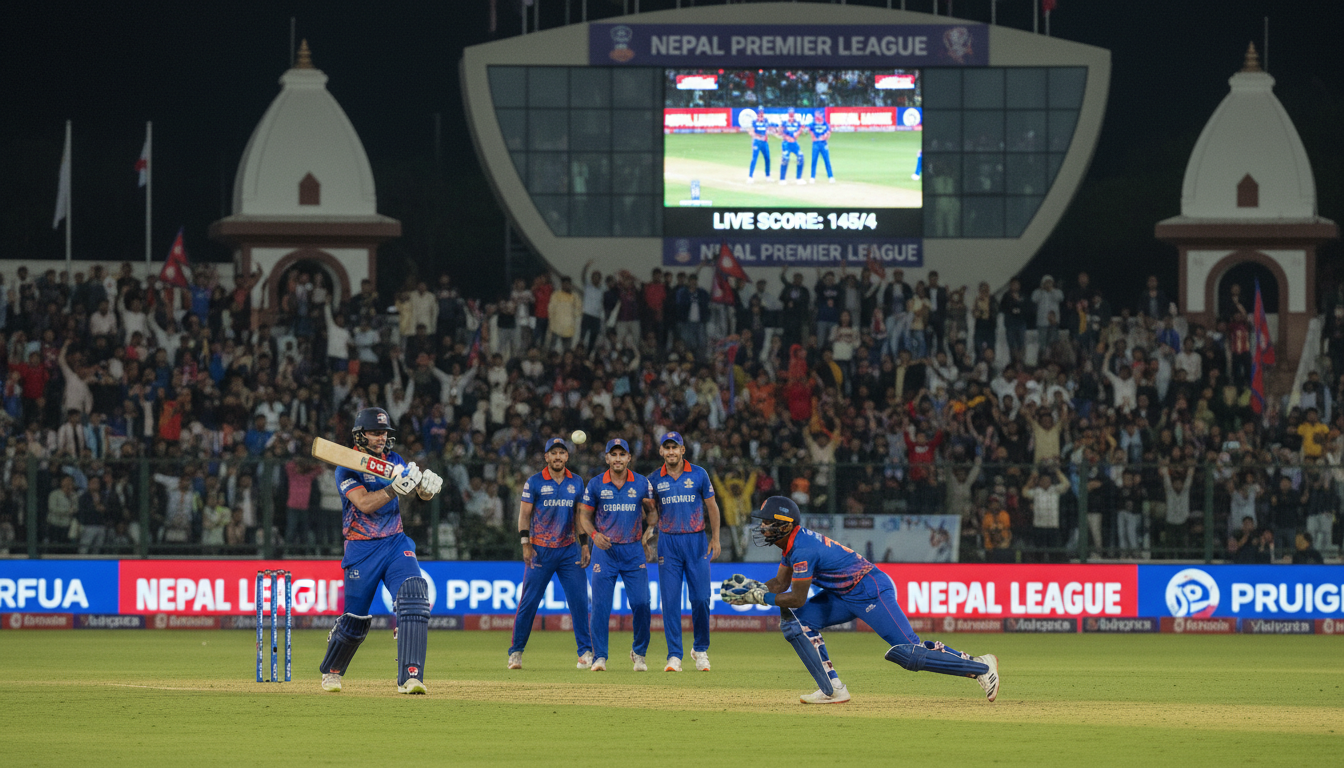
- Biratnagar Kings: Made the biggest splash by signing Faf du Plessis (South Africa), Martin Guptill (New Zealand), and George Munsey (Scotland). Du Plessis’s arrival was a major marketing coup, drawing global attention to the league.
- Sudurpaschim Royals: Bolstered their squad with Chris Lynn (Australia), known for his explosive T20 batting, and retained the services of Scott Kuggeleijn.
- Chitwan Rhinos: Signed England’s Dawid Malan, a former world number one T20 batter, adding technical class to their top order.
- Karnali Yaks: Recruited Shikhar Dhawan (India) and Ben Cutting (Australia), adding immense experience and IPL pedigree to the squad.
2025 Season Narrative: The Rise of Lumbini and Sudurpaschim
As the league stage concluded in December 2025, the competitive hierarchy shifted significantly from the previous year.
2025 League Standings:
| Pos | Team | Matches | Won | Lost | Points | NRR | Status |
|---|---|---|---|---|---|---|---|
| 1 | Sudurpaschim Royals | 7 | 6 | 1 | 12 | +0.832 | Qualifier 1 |
| 2 | Biratnagar Kings | 7 | 5 | 2 | 10 | +0.680 | Qualifier 1 |
| 3 | Kathmandu Gorkhas | 7 | 5 | 2 | 10 | +0.537 | Eliminator |
| 4 | Lumbini Lions | 7 | 4 | 3 | 8 | -0.394 | Eliminator |
