

Magic Light AI: Reviewing Generative Narrative & Illumination Tech
Introduction: The Semantic Divergence of “Magic Light” in Artificial Intelligence
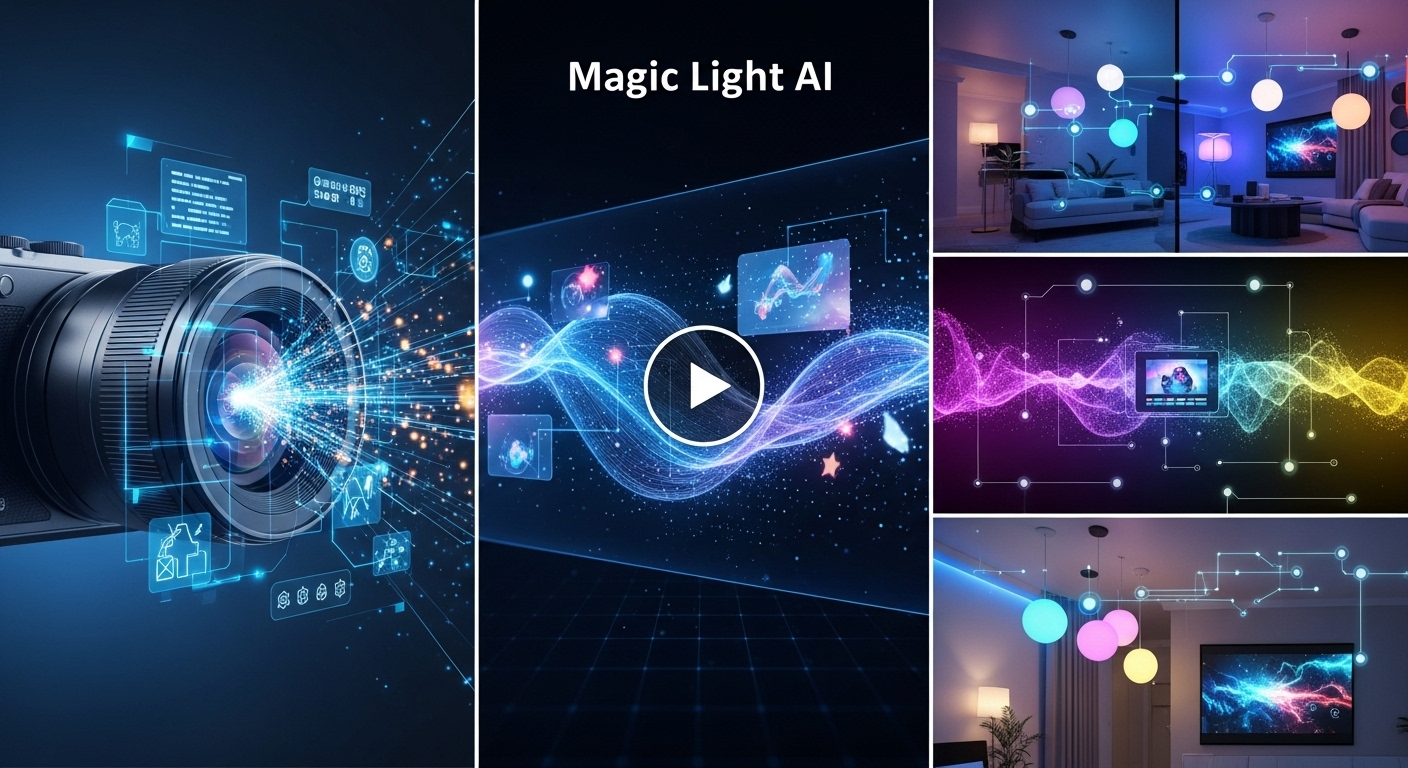
In the contemporary landscape of artificial intelligence, nomenclature often overlaps, leading to semantic ambiguity where a single phrase creates a nexus for disparate technologies. The query “Magic Light AI” sits at precisely such an intersection, representing a triad of technological advancements that, while functionally distinct, share a common philosophical lineage: the democratization of complex creative and environmental control through algorithmic intervention.
This comprehensive research report dissects the three distinct entities currently operating under or associated with the “Magic Light” moniker. First, and most prominent in the burgeoning generative media sector, is MagicLight.ai, a platform dedicated to the synthesis of narrative video content via text-to-video models. This tool represents the “Director” archetype, allowing users to conjure entire visual stories from textual prompts, fundamentally disrupting the economics of animation and video production.
Second is the Magic Light AI Extension for Luminar Neo, a computational photography tool developed by Skylum. This software represents the “Editor” archetype, utilizing neural networks to identify, manipulate, and synthesize light sources within static imagery. It stands at the forefront of the debate between optical authenticity and algorithmic enhancement, offering photographers the ability to bypass physical diffraction limits through post-processing inference.
Third, often conflated but technically distinct, is the application of AI in MagicLight Smart Bulbs and Architectural Design, which represents the “Environmentalist” archetype. Here, machine learning is applied to the physical optimization of lighting in built environments, utilizing AI to manage energy efficiency, circadian rhythms, and spatial aesthetics.
This report will systematically analyze each domain, exploring their technical underpinnings, user workflows, market economics, and the broader implications of their adoption. By treating these three verticals with exhaustive detail, we gain a holistic view of how “Magic Light”—as a concept—is being reshaped from a physical phenomenon into a controllable, synthesis-ready data type.
Part I: Generative Narrative Synthesis — MagicLight.ai
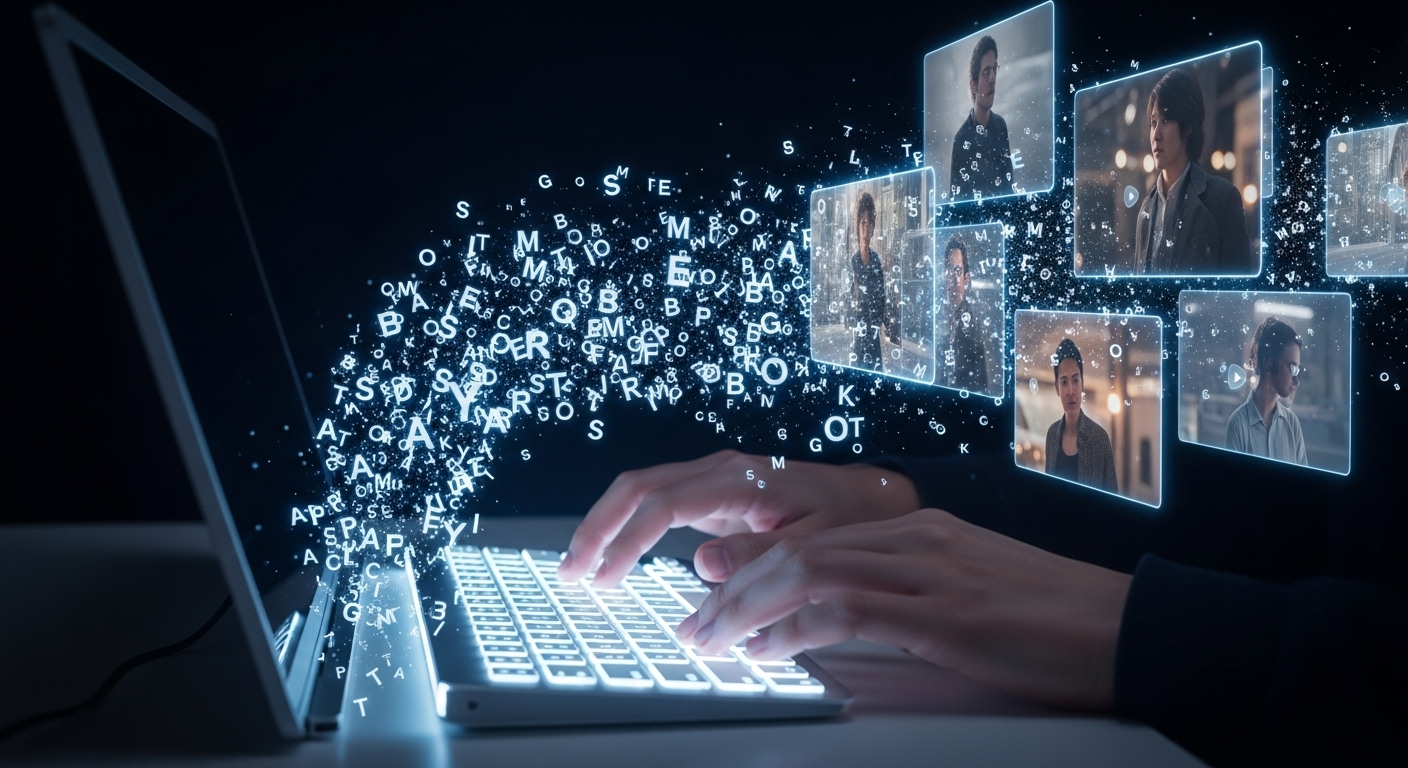
The transition from manual content creation to AI-assisted generation has reached a mature phase with platforms like MagicLight.ai. Positioned as the “World’s first AI story video generator,” the platform addresses the most significant bottleneck in the creator economy: the high latency and cost of video production. By integrating scripting, visual generation, and motion synthesis into a unified pipeline, MagicLight.ai attempts to solve the fragmentation that has historically plagued the generative video workflow.
Core Architecture and Generative Models
The technical efficacy of MagicLight.ai rests on its hybrid infrastructure. While early generative video tools relied on single-shot generation—creating short, disconnected clips—MagicLight.ai is architected for narrative coherence.
The Model Aggregation Strategy
The platform does not rely solely on a single monolithic model. Instead, pricing and feature tiers reveal an aggregation strategy that leverages some of the most advanced third-party foundation models available. Specifically, the integration of Hailuo, Kling, and Seedance models suggests that MagicLight.ai functions as an orchestration layer.
- Orchestration Logic: By routing specific prompt requirements to the optimal underlying model, the platform mitigates the weaknesses of individual architectures. For instance, one model may excel at photorealistic texture (Kling), while another offers superior motion fluidity (Hailuo).
- Proprietary Fine-Tuning: Beyond aggregation, the platform employs proprietary “MagicLight image generation and image-to-video models”. This implies a layer of fine-tuning specifically designed for storyboard adherence, ensuring that the transition from a static keyframe to a moving video clip does not result in the “hallucinations” common in raw diffusion models.
Solving the Consistency Problem
The “Holy Grail” of long-form generative video is temporal and character consistency. In standard diffusion processes, a character generated in Scene 1 often looks entirely different in Scene 2 due to the randomization of the noise seed. MagicLight.ai addresses this via a dedicated Character Consistency module.
- Mechanism: The system likely utilizes embedding retention, where the mathematical definition of a character’s features (face shape, clothing, style) is locked and passed as a conditioning token to subsequent generation steps.
- Impact: This allows for the creation of videos up to 30 minutes in length, a duration that is commercially viable for YouTube documentaries, educational series, and children’s entertainment, distinct from the fleeting 4-second memes common on other platforms.
The Creator Workflow: From Prompt to Production
The user experience of MagicLight.ai is designed to abstract away the complexities of prompt engineering and video editing. The workflow follows a linear, four-step progression that mimics a traditional studio pipeline but accelerates it through automation.
Step 1: Narrative Ingestion and Smart Scripting
The process begins with the Smart Script feature. Users are not required to have a finished screenplay; a simple concept or topic is sufficient.
- LLM Integration: The platform utilizes Large Language Models to expand these concepts into full scripts with structured plot points.
- Capacity: The system supports prompts of up to 12,000 characters. This high token limit is crucial for complex storytelling, allowing users to input detailed lore, historical facts, or educational curricula that the AI must adhere to.
- Genre Versatility: The models are tuned for diverse genres including “Magical kids stories,” “History,” “Science,” and “Religious/Spiritual” content. This categorization suggests the underlying models have been trained on genre-specific datasets to understand the tropes and pacing required for each.
Step 2: Visual Casting and Storyboarding
Before video rendering occurs, the platform generates a storyboard. This is a critical quality control checkpoint.
- Style Transfer: Users select from over 20 artistic styles. This enforces a unified aesthetic across the video, preventing the jarring visual shifts that occur when mixing disparate generative clips.
- Character Generation: The user defines the protagonists (e.g., “Vlad the Vampire”). The AI generates reference sheets for these characters. Reviews highlight this as a strength, noting the interface allows for the creation of consistent actors that can be placed in various emotional states and environments.
Step 3: Motion Synthesis and Voice Cloning
Once the static assets are approved, the Image-to-Video (I2V) models animate the scenes.
- Voice Cloning: The platform includes AI voice synthesis, with higher-tier plans offering “Voice Cloning” capabilities. This allows creators to clone their own voice or a consistent narrator’s voice, adding a layer of personal branding that robotic text-to-speech often lacks.
- Resolution: Output is standardized at 1080p HD, meeting the baseline requirement for monetization on platforms like YouTube and TikTok.
Economic Analysis: The “Faceless Channel” Business Model
MagicLight.ai is heavily adopted by the “YouTube Automation” or “Faceless Channel” sector. This market segment consists of creators who produce high volumes of narrative content without appearing on camera, relying on ad revenue (AdSense) and affiliate marketing.
Cost-Benefit Analysis for Creators
The traditional cost of producing a 30-minute animated episode can range from $10,000 to $500,000 depending on quality. MagicLight.ai fundamentally breaks this cost structure.
- Production cost: A Pro user paying $30/month can generate approximately 40 minutes of video. This results in a cost-per-minute of roughly $0.75.
- ROI Potential: Testimonials indicate that users have grown channels from 5,000 to 50,000 subscribers in months, generating monthly revenues ($1,200+) that far exceed the subscription cost.
Market Saturation Risks
While the tool empowers creators, it also lowers the barrier to entry to near zero. The snippet evidence points to massive adoption (“10 Million Creators” mentioned in marketing materials, likely an aggregate or aspirational figure). This creates a risk of content saturation.
As millions of users utilize the same “Magical Kids Story” templates, the value of such content may depreciate, forcing creators to compete strictly on script quality and voice uniqueness.
Pricing Strategy and Tiered Access
MagicLight.ai employs a credit-based SaaS model, reflecting the high computational cost of video inference (GPU hours).
| Feature | Standard Plan | Plus Plan | Pro Plan |
|---|---|---|---|
| Monthly Cost | $8.00 | $16.00 | $24.00 |
| Annual Cost | $96.00 | $192.00 | $288.00 |
| Monthly Credits | 5,000 | 15,000 | 30,000 |
| Annual Plan Bonus | 6,500 credits/mo | 20,000 credits/mo | 40,000 credits/mo |
| Generation Capacity | ~1,000 images/day | ~3,000 images/day | Unlimited Fast Track |
| Model Access | Standard | Standard | 20% off Kling/Hailuo |
| Video Length Cap | 50 Minutes | 50 Minutes | 50 Minutes |
| Key Features | Watermark Free, Commercial License | Priority Queue | Master Access, Voice Cloning Discounts |
Strategic Insights on Pricing:
- The “Pro” Value Proposition: The Pro plan is strategically priced at $24/month to capture serious creators. The key differentiator is the “20% off” incentive for premium models (Kling, Hailuo). This suggests that heavy users burn through credits quickly and the platform monetizes the overage or the high-fidelity model usage, acting as a reseller of compute.
- The Free Tier: The free trial offers 3 generations. This is a strict “try before you buy” mechanism, acknowledging that video generation is too expensive to give away freely in bulk.
User Sentiment and Technical Limitations
Despite the marketing hype, user feedback highlights the nascent nature of this technology.
- Technological Ceilings: Users on forums like Reddit note “bumping up against technological limitations,” likely referring to the struggle with precise control over complex motions or specific character interactions.
- Wishlists: Reviewers specifically request “emotions & more voices,” indicating that while the visual consistency is improving, the acting capability of AI characters still lacks the nuance of human performance.
- Scam Concerns: In the volatile AI market, skepticism is high. Some search queries associate terms like “scam” with new AI tools. However, the presence of detailed reviews, tutorials, and active user bases suggests MagicLight.ai is a functional product, though users should be wary of “over-promising” marketing regarding instant virality.
Part II: Computational Photography — Luminar Neo’s Magic Light AI
While MagicLight.ai synthesizes new realities, Skylum’s Magic Light AI is dedicated to the enhancement of captured ones. As an extension for the Luminar Neo image editing software, it represents a significant leap in “semantic rendering,” where the software understands the content of the image (lights) and allows the photographer to manipulate the physics of that content post-capture.
Technical Mechanism: The Neural Starburst
Traditionally, creating a “starburst” effect (diffraction spikes around a light source) required one of two physical methods:
- Narrow Aperture: Stopping a lens down to f/16 or f/22 causes light to diffract around the aperture blades. This creates natural starbursts but introduces “diffraction limitation” (softening the image) and highlights sensor dust spots.
- Star Filters: Screwing a physical glass filter etched with a grid onto the lens. This creates strong effects but lowers contrast and creates halos around every highlight, often ruining the image quality.
Magic Light AI bypasses these optics entirely through a neural network approach.
Semantic Light Detection
The core technology is a machine learning model trained to recognize “points emitting light”. This is a non-trivial computer vision task. The AI must distinguish between a street lamp (which should glow) and a white shirt or a reflection (which should not).
- Context Awareness: The neural network analyzes the scene to determine which highlights are actual light sources. It is particularly tuned for “artificial light sources” such as incandescent bulbs, Edison LEDs, street lights, and decorative fairy lights.
- Pre-requisites: The detection is dependent on the dynamic range of the source image. Skylum advises users to adjust exposure and highlights before running the tool so the AI can “see” the distinct light points against the background.
Parametric Synthesis
Once identified, the software does not merely brighten the pixels; it synthesizes a mathematical representation of light beams. The user is given control over the physics of this simulation via a comprehensive set of sliders:
- Intensity & Size: Controls the luminance and reach of the beams.
- Beam Width: Simulates the difference between a wide-open aperture (bloomy) and a stopped-down aperture (sharp spikes).
- Glow: Adds a localized contrast reduction to simulate atmospheric scattering (fog/mist) around the light.
- Clearness: Adjusts the edge definition of the beams.
- Rotation: Allows the user to orient the starburst, mimicking the rotation of a physical filter.
Workflow Integration and User Experience
Luminar Neo is marketed as an AI-driven alternative to Adobe Lightroom, targeting users who want professional results without the steep learning curve of manual masking. Magic Light AI integrates into this “Extension” ecosystem.
The “Extras” Ecosystem
Magic Light AI is not always included in the base capability of Luminar Neo. It is often sold as a paid “Extension,” accessible via the “Extras” tab.
Selective Application and Masking
A critical feature for professional application is the Masking Brush. While the AI is “smart,” it is not infallible. It might mistake a distant window for a street lamp.
- Brush Control: Users can paint in or out the effect. The “Add Brush” forces the AI to treat a specific area as a light source, while the “Erase Brush” protects areas from the effect.
- Layering: The non-destructive nature of the tool allows users to apply the effect on a separate layer, blending it with the original image for subtlety.
Market Reception: The “Fake” vs. “Artistic” Debate
The introduction of Magic Light AI has polarized the photographic community, highlighting a fundamental rift in the definition of photography.
The Proponent’s View: Creative Rescue
For wedding, event, and street photographers, the tool is a productivity savior.
- Scenario: A wedding reception is dimly lit with boring fairy lights. Using a physical star filter would ruin the sharpness of the bride’s face.
- Solution: Shoot with a sharp, wide aperture lens, then apply Magic Light AI in post-production to add the festive “sparkle” only to the lights. Reviewers cite this as adding “drama” and “enchantment” to holiday photos and nightscapes.
The Detractor’s View: Computational Kitsch
Purists and technical critics argue that the results often look “unrealistic” or “fake”.
- Artifacts: Because the light beams are pasted on top of the image rather than interacting with the scene’s geometry, they can sometimes appear disconnected or “stuck on.”
- Over-Processing: The default settings of such AI tools tend to be heavy-handed. Critics on Reddit note that the processing feels “overdone” and that the software pushes users toward “AI enhanced fakery“.
- Performance Issues: There are reports of the software being “sluggish” or “buggy,” particularly when previewing these intensive generative effects, even on high-end hardware (Ryzen 9, 32GB RAM).
System Requirements and Performance
Running generative light synthesis requires significant local compute power. Unlike MagicLight.ai (which renders in the cloud), Luminar Neo renders locally.
| Component | Windows Requirements | macOS Requirements |
|---|---|---|
| Processor | Intel Core i5 (8th Gen+) or AMD Ryzen 5+ | Intel Core i5+ or Apple Silicon (M1/M2/M3/M4) |
| RAM | 8 GB (16 GB+ Recommended) | 8 GB (16 GB+ Recommended) |
| OS | Windows 10 (1909+) or Windows 11 (64-bit) | macOS 12.0 (Monterey) or higher |
| Graphics | OpenGL 3.3 compatible GPU | Metal compatible |
| Storage | 10 GB SSD | 10 GB SSD |
Performance Note: Users on M1 MacBook Airs report smooth operation for general tasks but note that large RAW files combined with multiple AI extensions (like Magic Light AI + Supersharp AI) can impact responsiveness.
Pricing Models and Consumer Friction
Skylum’s monetization strategy for Luminar Neo and Magic Light AI is complex and has been a source of consumer friction.
- Perpetual License: A one-time purchase (e.g., $119 for desktop) provides the software forever, but often excludes the “Generative” features or future extensions after one year.
- Subscription (Pro/Max): A recurring model (approx. $99-$159/year) guarantees access to all extensions, including Magic Light AI.
- The “Extension” Controversy: Magic Light AI was initially marketed as a paid add-on ($49) for perpetual license holders. This led to accusations of “bait and switch,” where users felt their “lifetime” license was being devalued by stripping out key new features.
- Discounts: The market is heavy with affiliate discounts (e.g., codes like “KIERAN10”, “LETSIMAGE”) offering 10-20% off, indicating a high-margin, high-marketing-spend business model.
Part III: Architectural and IoT Intelligence — MagicLight Smart Bulbs
A third, less publicized but equally relevant interpretation of “Magic Light AI” exists in the domain of Internet of Things (IoT) and Architectural Design.
4.1 AI in Illumination Hardware
Companies like MagicLight (the smart bulb manufacturer) are integrating AI to move beyond simple “remote control” lighting into “adaptive” lighting.
- Behavioral Learning: Unlike basic timers, AI-enhanced lighting systems analyze user behavior patterns. They learn when a user typically wakes up, sleeps, or requires focus time, and adjust the color temperature (Kelvin) and brightness accordingly without manual input.
- Circadian Rhythm Support: The AI mimics the solar cycle, shifting from cool, energizing blue light in the morning to warm, melatonin-friendly amber light in the evening. This is a biological application of “Magic Light” technology.
4.2 AI for Architectural Visualization
Snippet 4 reveals a tool specifically for architects and designers also called “MagicLight.”
- Function: This tool uses AI to visualize how specific lighting fixtures will look in a 3D architectural plan.
- Optimization: It provides “Energy Efficiency Analytics,” using AI to calculate the projected power consumption and cost of a lighting setup before it is installed.
- Team Collaboration: It functions as a planning platform where teams can collaborate on lighting blueprints.
This distinction is vital: while the media tools (Part I and II) create illusions of light, the IoT/Architectural tools (Part III) optimize the reality of light.
5. Part IV: Comparative Analysis and Competitive Landscape
To fully understand the position of “Magic Light” technologies, they must be contextualized against their direct competitors.
5.1 Video Generation Landscape: MagicLight.ai vs. The Giants
| Feature | MagicLight.ai | Runway (Gen-2/Gen-3) | Pika Labs | Sora (OpenAI) |
|---|---|---|---|---|
| Primary Focus | Long-form Narrative & Storytelling | Cinematic Clips & VFX | Animation & Lip Sync | Photorealism (Unreleased/Limited) |
| Video Duration | Up to 30 Minutes (stitched) | ~4-18 Seconds per clip | ~3-6 Seconds per clip | ~60 Seconds |
| Consistency | High (Character Consistency Module) | Moderate (Requires intense prompting) | Moderate | High |
| Workflow | All-in-one (Script to Video) | Clip-based generation | Discord/Web generation | Prompt to Video |
| Pricing Model | Credit/Subscription ($8-$24/mo) | Credit/Subscription ($12-$95/mo) | Credit/Subscription | N/A |
| Target User | YouTubers, Educators, Storytellers | Filmmakers, Designers | Social Media Creators | Researchers/High-end |
Analysis: MagicLight.ai carves a niche by focusing on story structure rather than just raw pixel quality. While Runway might produce a more photorealistic 4-second explosion, MagicLight.ai allows a user to tell a 10-minute story about that explosion with a consistent protagonist.
5.2 Photo Editing Landscape: Luminar Neo vs. The Industry Standard
| Feature | Luminar Neo (Magic Light AI) | Adobe Photoshop | Topaz Photo AI |
|---|---|---|---|
| Core Philosophy | “Result-oriented” (Sliders) | “Process-oriented” (Layers/Pixels) | “Restoration-oriented” (Denoise/Sharpen) |
| Star Effect | Magic Light AI Extension (One-click) | Manual drawing or third-party plugins | N/A (Focus is on quality) |
| Learning Curve | Low | High | Low |
| Pricing | Perpetual + Sub options (~$100-$150) | Subscription only ($10-$20/mo) | Perpetual (~$199) |
| AI Features | Creative (Sky Swap, Relight, Magic Light) | Generative Fill (In-painting) | Enhancement (Upscaling, Denoising) |
| Prof. Usage | Enthusiast / Semi-Pro | Industry Standard | Specialist Tool |
Analysis: Luminar Neo wins on speed and creativity for the non-expert. Magic Light AI allows an enthusiast to achieve in seconds what would take a Photoshop expert 20 minutes of layer masking. However, for pixel-perfect control required in high-end commercial retouching, Photoshop remains the undisputed king.
6. Strategic Implications and Future Outlook
The comprehensive analysis of “Magic Light” technologies reveals three major trajectories for the future of digital media and lighting.
6.1 The Commoditization of Narrative
MagicLight.ai represents the final step in the commoditization of storytelling. Just as word processors democratized writing and camera phones democratized photography, AI video generators are democratizing filmmaking.
- Implication: We are entering an era of “Hyper-Personalized Media.” Parents can generate bedtime stories featuring their own children as the protagonists. Educators can generate history lessons tailored to their specific curriculum.
- Risk: The “Generic Flood.” As the cost of production approaches zero, the volume of content will explode, potentially drowning out high-quality, human-crafted narratives in a sea of algorithmic mediocrity.
6.2 The “Reality Gap” in Photography
Luminar’s Magic Light AI accelerates the divergence between “Photography” (recording light) and “Imaging” (creating art).
- Implication: We will likely see a bifurcation in the market. “Authentic” photography (verified by C2PA standards) will hold premium value for journalism and history, while “AI-Enhanced” imagery will dominate advertising and social media, where aesthetic impact outweighs truth.
- Trend: Expect future cameras to integrate these tools in-body. We may soon see cameras that apply “Magic Light” effects to the RAW file at the moment of capture, blurring the line between optical reality and neural synthesis before the image even leaves the device.
6.3 The Intelligent Environment
The IoT application of MagicLight hints at a future where our environments are responsive.
- Implication: Lighting will no longer be a static utility but a dynamic service optimized by AI for health and energy. The “Smart Home” will evolve into the “Empathetic Home,” adjusting its atmosphere based on the occupants’ stress levels and biological needs.
7. Conclusion
The term “Magic Light AI” serves as a perfect encapsulation of the current technological zeitgeist. Whether it is the MagicLight.ai platform conjuring worlds from text, the Skylum Magic Light extension bending the physics of captured photons, or Smart Bulbs predicting our biological needs, the common thread is control.
These technologies transfer the power of illumination—narrative, visual, and physical—from the domain of chance and specialized skill into the domain of data and intent. For the professional, they offer unprecedented efficiency. For the amateur, they offer unprecedented capability. However, they also demand a new literacy: the ability to discern between the captured, the generated, and the enhanced. As these tools mature, the “magic” will become mundane, and the ability to wield “Magic Light” will become a fundamental requirement for participation in the digital economy.