

Google Antigravity: Agentic IDE, Gemini 3 & AI Development
Executive Summary

On November 18, 2025, the landscape of software engineering underwent a seismic shift with Google’s dual announcement of Gemini 3, its most advanced frontier model to date, and Google Antigravity, an “agent-first” Integrated Development Environment (IDE). This report offers an exhaustive, expert-level dissection of these releases, positioning them not merely as incremental product updates but as the harbingers of a new epoch in computer science: the transition from “Chat-Assisted” development to “Agentic” software generation.
For the past three years, the industry standard—typified by GitHub Copilot and early iterations of ChatGPT—has been the “Sidecar” model. In this paradigm, the AI is a passive passenger, offering autocomplete suggestions or answering discrete questions upon request. Antigravity fundamentally rejects this model in favor of an “Architect-Worker” relationship. Powered by the reasoning capabilities of Gemini 3 Pro, Antigravity introduces autonomous agents that act as digital coworkers. These agents possess the agency to plan complex implementation strategies, execute terminal commands, manipulate file systems, and—crucially—control a headless browser to verify their own work visually.
The implications of this shift are profound. By providing agents with “Mission Control” capabilities to orchestrate parallel work streams, Google is attempting to redefine the role of the human developer from a writer of syntax to an orchestrator of intelligence. This report analyzes the technical architecture of the platform (a heavily modified fork of VS Code), the benchmarking dominance of Gemini 3 (outperforming GPT-5.1 and Claude Sonnet 4.5 on key reasoning metrics), and the emerging phenomenon of “Vibe Coding“—a declarative coding style where natural language prompts replace granular logic construction.
Furthermore, this document provides a critical assessment of the platform’s launch state. While the promise is transformative, the reality of the public preview has been marred by significant infrastructure challenges, including widespread “Model Provider Overload” errors, authentication loops for enterprise users, and aggressive rate limiting. We also explore the competitive dynamics, comparing Antigravity’s feature set against market incumbents like Cursor and Windsurf, and analyze the strategic importance of the Model Context Protocol (MCP) in building a localized agentic ecosystem.
Introduction: The Inflection Point of Agentic Code
To understand the significance of Google Antigravity, one must first contextualize the rapid evolution of AI-assisted development. The trajectory of this technology has moved through three distinct phases, with Antigravity representing the dawn of the third.
Phase I: Autocomplete and Prediction (2021–2023)
The first phase was defined by probabilistic text completion. Tools like the original GitHub Copilot utilized models trained on vast repositories of code to predict the next few tokens in a sequence. While productivity-enhancing, these tools lacked context awareness beyond the immediate file and possessed zero agency. They were “stateless” predictors, unable to understand the broader architecture of an application or execute code to verify their suggestions.
Phase II: Chat and RAG (2023–2025)
The second phase, dominated by GPT-4 class models and IDEs like Cursor, introduced the “Chat” interface. Developers could highlight code and ask questions (“Explain this function,” “Refactor this class”). Retrieval-Augmented Generation (RAG) allowed these tools to index local codebases, providing a semblance of project-wide awareness. However, the workflow remained synchronous and human-driven: the developer asked a question, waited for a text block, copied it, pasted it, and then manually tested it. The AI remained a text generator, not a tool user.
Phase III: The Agentic Era (Late 2025–Present)
Antigravity marks the industrialization of the third phase: Agentic AI. In this paradigm, the AI is granted actuation privileges. It does not just suggest code; it modifies the file system. It does not just explain a command; it opens the terminal and runs it. It does not just hallucinate a UI fix; it opens a browser, renders the page, and uses computer vision to confirm the fix works.
The launch of Antigravity is Google’s declaration that the future of programming is asynchronous. The platform is designed around the premise that a single human architect should be able to manage multiple AI agents working in parallel—one refactoring a database, another updating documentation, and a third building a frontend component. This shift from “typing code” to “managing agents” is the central theme of this report.
The Engine: Gemini 3 Technical Specifications and Capabilities
Antigravity is, at its core, a specialized interface for interacting with Gemini 3, Google’s newest frontier model. The capabilities of the tool are inextricably linked to the capabilities of the model. A thorough analysis of Gemini 3 reveals why Google felt confident enough to launch an agent-first IDE.
Architecture and Training Infrastructure
Gemini 3 is not a monolithic model but a family of models trained on Google’s proprietary Tensor Processing Units (TPUs). While specific parameter counts remain undisclosed, the architecture utilizes a “Sparse Mixture-of-Experts” (MoE) design. This allows the model to achieve state-of-the-art performance while managing inference costs—a critical factor for an application like Antigravity that may generate thousands of tokens for a single user request.
The model features a 1 million-token context window, a specification that is vital for agentic workflows. In a “Vibe Coding” scenario, an agent may need to ingest documentation for obscure libraries, the entire current codebase, and the user’s conversational history to make a coherent decision. A 1M context window allows Antigravity to “read” an entire mid-sized repository into working memory, reducing the reliance on imperfect RAG retrieval techniques.
Benchmarking Dominance
The claim that Gemini 3 is the “most intelligent model” is supported by a suite of benchmarks that specifically target reasoning and coding capabilities. These metrics are not abstract; they directly correlate to the agent’s reliability in an IDE setting.
| Benchmark | Gemini 3 Pro | Claude Sonnet 4.5 | GPT-5.1 | Operational Implication for Antigravity |
|---|---|---|---|---|
| Humanity’s Last Exam | 37.5% | 13.7% | 26.5% | Measures ability to solve novel problems not present in training data. High score implies Gemini 3 is better at debugging unique, custom business logic rather than just regurgitating boilerplate. |
| SWE-bench Verified | 76.2% | 77.2% | N/A | The gold standard for autonomous software engineering (solving real GitHub issues). Gemini 3’s near-parity with the market leader (Claude) validates its use for unsupervised refactoring tasks. |
| MathArena Apex | 23.4% | 1.6% | 1.0% | Indicates superior performance in algorithmic complexity, crucial for tasks involving data science, cryptography, or complex backend optimization. |
| Terminal-Bench 2.0 | 54.2% | N/A | N/A | Tests the ability to use a command-line interface. A score of 54.2% suggests a high reliability in executing shell commands without causing system instability, a prerequisite for Antigravity’s terminal agents. |
| WebDev Arena | 1487 Elo | Lower | Lower | Ranked #1 globally. This benchmark specifically measures proficiency in web technologies (HTML/CSS/JS), underpinning the “Vibe Coding” frontend capabilities. |
“Deep Think”: The Reasoning Engine
A critical innovation in Gemini 3 is the introduction of Deep Think mode. This feature addresses a common failure mode in LLMs: the tendency to “rush” to an answer based on surface-level pattern matching.
Deep Think allows the model to engage in “inference-time compute,” essentially “thinking” for seconds or minutes before generating a line of code. During this process, the model generates Thought Signatures—a verifiable chain of reasoning. In the context of Antigravity, this means that when a user asks for a complex architectural change, the agent does not immediately start overwriting files. It first generates a plan, critiques that plan, checks for edge cases (e.g., “Will this database migration lock the table for too long?”), and only then executes.
Although Deep Think is currently rolling out slowly and may be restricted to high-tier subscribers or specific preview waves, its integration into Antigravity suggests a future where the IDE acts as a partner in architectural design, not just implementation.
Multimodality as a Coding Interface
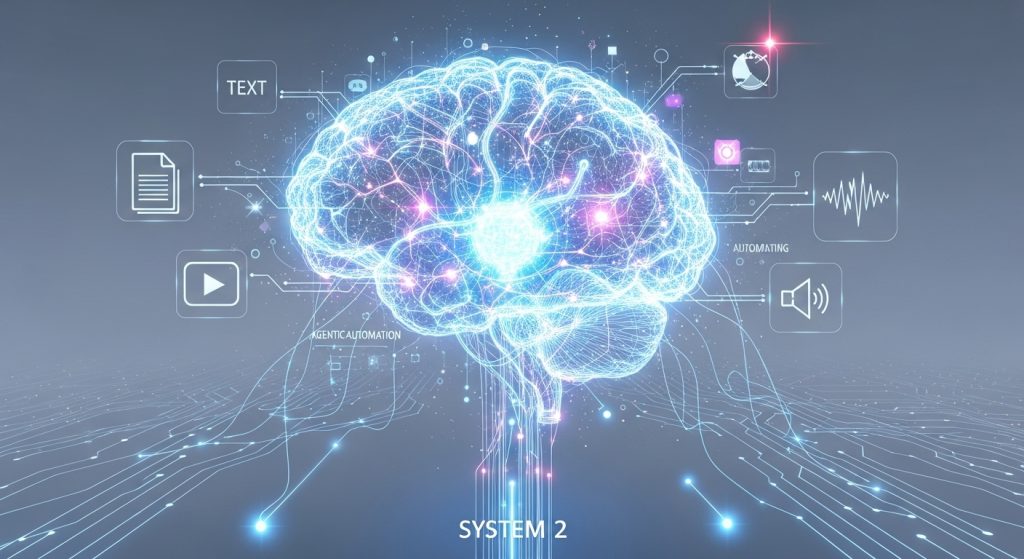
Gemini 3 is natively multimodal, capable of understanding text, images, video, and audio simultaneously. This capability is not a gimmick; it is the foundation of Antigravity’s Browser Agent.
- Visual Debugging: The agent can “look” at a screenshot of a web application to identify alignment issues, broken images, or incorrect colors.
- Video-to-Code: The model can process video inputs, allowing a developer to screen-record a user flow that is broken and upload it to the agent. The agent can correlate the visual events in the video with the code execution path to diagnose the bug.
Antigravity Platform Architecture

While Gemini 3 provides the intelligence, Antigravity provides the body. It is the physical manifestation of the agentic concept.
Analysis of the installation files and user interface reveals that Antigravity is a fork of Visual Studio Code (VS Code). This strategic choice by Google ensures immediate familiarity for the vast majority of the world’s developers, who already use VS Code as their daily driver. It also ensures compatibility with the massive ecosystem of existing VS Code extensions.
However, Antigravity is significantly more than a “skin” on VS Code. It introduces a novel “Mission Control” architecture comprised of three distinct but synchronized surfaces.
3.1 The Agent Manager (Mission Control)
The default view upon launching Antigravity is not a file explorer, but the Agent Manager. This dashboard represents a paradigm shift in IDE design. It is designed for high-level orchestration rather than low-level text editing.
- The Architect Persona: In this view, the user acts as an architect. They define high-level objectives (e.g., “Update the authentication flow to support OAuth 2.0”) rather than writing specific functions.
- Parallel Agent Spawning: The Manager allows the user to spawn multiple agents simultaneously. Each agent operates in its own context, effectively multi-threading the developer’s productivity. One agent can be assigned to fix linting errors, another to write unit tests, and a third to research a new library.
- Swimlane Visualization: The UI visualizes these parallel tasks as cards or “swimlanes,” showing the real-time status of each agent (Planning, Executing, Verifying, Awaiting Approval).
3.2 The Editor Surface
The Editor Surface retains the core functionality of VS Code but is augmented with Agent Awareness.
- Contextual Side Panel: Unlike a standard chat window, the agent in the side panel has deep awareness of the user’s cursor position, open tabs, and active terminal sessions. It monitors the user’s actions in real-time.
- Inline “Vibe” Commands: Users can highlight a block of code and issue natural language commands (e.g., “Make this more readable” or “Add error handling”). The agent modifies the code in-place, leveraging the “Vibe Coding” capability to infer intent from terse instructions.
3.3 The Browser Surface
This is the most radical departure from traditional IDEs. Antigravity integrates a fully controllable, instrumented version of Google Chrome directly into the workflow.
- The Browser Subagent: When a task requires web interaction, the main agent spawns a “Browser Subagent.” This specialized agent uses a vision-optimized model (likely Gemini 2.5 Computer Use) to interact with the web page.
- Visual Feedback Loop: This surface closes the loop on development. In a traditional workflow, the developer writes code, alt-tabs to the browser, refreshes, and checks the result. In Antigravity, the agent writes the code, the agent refreshes the browser, and the agent verifies the result visually.
3.4 The Artifacts System: Solving the Trust Gap
A major barrier to adopting AI agents is trust. If an agent changes 50 files in the background, how does the developer know it didn’t break the application? Antigravity addresses this with Artifacts.
Artifacts are structured, verifiable outputs generated by the agent throughout its lifecycle. They serve as an audit trail.
- Plan Artifacts: Before writing a single line of code, the agent generates a Markdown plan outlining its strategy. The user can review and edit this plan.
- Diff Artifacts: Simplified, high-level summaries of code changes, allowing for quick review of logic rather than syntax.
- Visual Artifacts: This is the killer feature. The agent captures screenshots and records videos of its testing session in the Browser Surface. It presents these visual proofs to the user.
Example: If asked to “Center the login button,” the agent will produce a “Walkthrough Artifact”—a video showing the button before the fix, the code change being applied, the browser refreshing, and the button appearing centered. The user can trust the fix without even looking at the CSS, simply by verifying the visual outcome.
4. The Agentic Workflow: A Narrative Analysis
To fully appreciate the capabilities of Antigravity, it is useful to examine a hypothetical workflow that demonstrates the interaction between these surfaces and the Gemini 3 model.
4.1 Scenario: The “Vibe Coder”
Persona: A frontend developer building a React application from scratch.
Objective: Build a “Flight Tracker” dashboard.
- Initiation (Manager View): The developer opens the Agent Manager and types a high-level prompt: “Build a Flight Tracker app using React and Tailwind. It should have a map view, a list of active flights, and a dark mode toggle.”
- Planning (Agent 1): The primary agent analyzes the request. It utilizes Gemini 3’s training data to scaffold the project structure. It generates a Plan Artifact listing the necessary components (MapComponent, FlightList, ThemeToggle) and dependencies (leaflet, tailwindcss).
- Execution (Terminal Agent): The agent requests permission (in “Agent-Assisted” mode) to run shell commands. It executes npx create-react-app, installs the libraries, and configures Tailwind. The developer approves these actions via a single click in the Manager.
- Vibe Coding (Editor View): The agent begins writing the component code. It uses “Vibe Coding” to generate the UI code based on the “dark mode” requirement, inferring the color palette and styling without explicit hex codes from the user.
- Verification (Browser Agent): The agent starts the localhost server (npm start). It spawns a Browser Subagent. This subagent opens the localhost URL. It “sees” that the map is not rendering because the API key is missing.
- Self-Correction: The agent reads the browser console logs, identifies the error, and creates a .env file (prompting the user for a key). It restarts the server.
- Visual Confirmation: The subagent clicks the “Dark Mode” toggle. It captures a screenshot of the screen turning dark. It compiles this into a Walkthrough Artifact.
- Review: The developer receives a notification. They watch the 10-second video artifact. They see the map loads and the dark mode works. They click “Approve,” and the task is marked complete.
This workflow demonstrates the “Human-on-the-Loop” model. The human set the goal and verified the outcome, but the agent handled the implementation, debugging, and testing loops autonomously.
4.2 Scenario: The Enterprise Architect
Persona: A senior engineer managing a legacy monolith.
Objective: Upgrade the Python backend to a new API version.
- Delegation: The architect spawns three agents in the Manager View.
- Agent A: “Audit the codebase for deprecated API calls.”
- Agent B: “Research the migration guide for API v2.0.”
- Agent C: “Write a script to back up the database.”
- Parallel Execution: The architect watches the swimlanes. Agent B finishes first, producing a Research Artifact summarizing the breaking changes. Agent A uses this research (shared context) to identify 50 files that need changes.
- Deep Think: Agent A encounters a complex dependency injection issue. It enters “Deep Think” mode. The Manager shows its Thought Signature: “Analyzing circular dependency in auth.py… modeling impact of refactor… proposed solution: extract interface.”
- Verification: The architect reviews the deep reasoning, agrees with the proposed interface extraction, and authorizes the refactor.
5. Feature Spotlight: The Browser Agent & Visual Verification
The integration of the browser is arguably the most disruptive feature of Antigravity. In previous AI coding tools, the “world model” of the AI was limited to text files. It had no concept of how the code looked or behaved when rendered.
5.1 The Mechanics of the Browser Subagent
When an agent requires browser access, Antigravity launches a sandboxed Chrome instance. The interaction is governed by the Model Context Protocol (MCP) or similar internal APIs that expose the browser’s state to the model.
- Vision-Based Navigation: Unlike Selenium scripts that rely on fragile DOM selectors (IDs, XPaths), the Antigravity agent likely uses a Vision-Language Model to navigate. It “sees” the text “Submit” on a button and clicks it, mimicking human interaction. This makes the testing more robust to code changes that might alter class names but leave the visual UI intact.
- Console & Network Monitoring: The agent has direct access to the Chrome DevTools Protocol (CDP). It can monitor network requests to verify API calls are firing correctly and read console errors to diagnose JavaScript crashes.
5.2 Testing Localhost
Crucially, this browser agent works on localhost. Because the agent runs locally on the user’s machine (or in a secure cloud container tunneled to the machine), it can test applications that are not yet deployed to the public web. This enables “Test-Driven Development” (TDD) where the “Test” is an actual user journey performed by an AI.
- Implication: This feature could render traditional E2E testing suites (like Cypress or Playwright) partially obsolete for rapid prototyping. Instead of writing a flakey test script, the developer simply tells the agent: “Verify that the checkout flow works for a guest user,” and the agent performs the test ad-hoc.
“Vibe Coding”: The Democratization of Engineering
The term “Vibe Coding” appears repeatedly in Google’s marketing for Antigravity and Gemini 3.5 Coined by AI researcher Andrej Karpathy, it refers to a higher level of abstraction in programming.
6.1 Defining the “Vibe”
Traditional coding is imperative: “Create a variable x, set it to 0, loop until 10.”
Vibe coding is declarative and intent-based: “Give me a dashboard that feels modern, uses a blue color scheme, and tracks stock prices.”
In Antigravity, Gemini 3’s “Vibe Coding” mode is optimized to interpret these “vibes” (loose, non-technical requirements) and translate them into strict technical implementation.
- Prompt Engineering for Code: The model is fine-tuned to infer boilerplate, directory structures, and best practices from minimal input. It fills in the gaps that the user left out.
- Iterative Refinement: The workflow is designed to be conversational. If the “vibe” isn’t right (e.g., “It looks too corporate”), the user simply states that, and the model adjusts the CSS/styling accordingly.
6.2 Implications for Skill Requirements
This lowers the barrier to entry for software creation. A product manager or designer with limited coding knowledge can now “vibe code” a functional prototype by describing the desired outcome and letting Antigravity handle the syntax. However, it also introduces new risks. “Vibe Coding” can lead to unmaintainable code if the user does not understand what the AI has generated. This highlights the importance of Antigravity’s Deep Think and Artifact features—mechanisms to bring engineering rigor back into the vibe-based workflow.
7. Installation, Configuration, and Ecosystem Integration
While Antigravity aims to be an all-in-one platform, it must integrate with the existing developer toolchain to be viable.
7.1 Installation and Authentication Challenges
The public preview launch revealed several friction points.
- Authentication: Users must sign in with a Google Account. Reports indicate that Google Workspace (business) accounts are currently blocked or buggy, forcing users to use personal Gmail accounts.
- Infinite Loops: A common bug on Windows involves the installer getting stuck on “Setting up your account.” Community fixes suggest that setting Chrome as the default browser (rather than Edge) resolves the OAuth handshake failure.
7.2 Configuration via settings.json
Power users can configure Antigravity using the standard settings.json file found in VS Code distributions. This file is critical for setting up MCP Servers.
Model Context Protocol (MCP):
MCP is an open standard (advocated by Anthropic and now supported by Google) that allows AI models to connect to external data and tools.
- Firebase Integration: To allow an agent to deploy to Firebase, a user would add the following to their configuration:
{ "mcpServers": { "firebase-mcp-server": { "command": "npx", "args": ["-y", "firebase-tools@14.20.0", "mcp"] } } }This gives the agent the “skill” to interface with Firebase projects directly.
- Remote Tools: Users can also configure remote MCP servers (e.g., for connecting to a Redis instance via Upstash Context) by defining the server URL and API keys in the JSON config.
7.3 Deployment Pipelines
Antigravity supports deployment to modern cloud platforms.
- Vercel: Through the AI SDK, developers can deploy apps generated in Antigravity directly to Vercel.
- Google Cloud/Firebase: The platform has native “skills” for Google’s ecosystem. An agent can be instructed to “Deploy this to Cloud Run,” and it will handle the containerization (Dockerfile creation) and gcloud CLI commands required to push the service live.
8. Comparative Analysis: The “Big Three” of AI IDEs
The release of Antigravity places it in direct competition with Cursor and Windsurf. A comparative analysis reveals distinct philosophical differences.
| Feature | Google Antigravity | Cursor (Anysphere) | Windsurf (Codeium) |
|---|---|---|---|
| Core Philosophy | Agent-First / Mission Control: Manage multiple async agents. | Editor-First: Supercharged autocomplete and inline chat. | Flow-First: Deep context awareness and “Cascade” flows. |
| Primary Model | Gemini 3 Pro / Deep Think: | Claude 3.5 Sonnet / GPT-4o: Agnostic model choice. | Cascade (Proprietary): Specialized agentic model. |
| Browser Integration | Native: Built-in headless Chrome with visual verification. | None: Relies on user to open browser manually. | None: Relies on user to open browser manually. |
| Multi-Agent | Yes: Parallel execution in Manager View. | No: Single-threaded chat interaction. | Limited: Context-aware but largely linear. |
| Verification | Artifacts: Videos, Screenshots, Plans. | Code Execution: Runs terminal commands. | Context: Deep indexing of codebase. |
| Pricing | Free Preview: (Generous limits, currently). | Subscription: $20/month. | Subscription: Tiered pricing. |
| Stability | Low: “Preview” status, frequent overload errors. | High: Production-ready, mature product. | Medium/High: Stable enterprise product. |
Verdict:
- Antigravity is the most ambitious, attempting to solve the “verification loop” via the Browser Agent. It is the best choice for “Vibe Coding” new projects or tasks requiring visual feedback.
- Cursor remains the king of “Autocomplete” and fast, synchronous editing. For a developer who wants to write their own code but faster, Cursor is currently more stable and responsive.
- Windsurf occupies a middle ground, focusing on deep context understanding for complex enterprise codebases.
9. Operational Challenges and the Reality of the Preview
While the vision is compelling, the operational reality of Antigravity’s launch has been rocky. This is typical for “Preview” software but highlights the immense computational costs of agentic AI.
9.1 The “Provider Overload” Bottleneck
The most cited issue by early users is the Agent execution terminated due to model provider overload error.
- Cause: Agentic workflows are extremely token-expensive. A simple request like “Fix the button” might trigger an agent to: 1) Read the file (input tokens), 2) Think (inference compute), 3) Write code (output tokens), 4) Read the error log (input tokens), 5) Retry. A 5-minute task can consume tens of thousands of tokens.
- Scale: Google’s infrastructure, even with TPUs, struggled to handle the global influx of users launching parallel agents on Day 1.
- Mitigation: Users have found that switching the model setting from “Gemini 3 Pro (High)” to “Gemini 3 Flash (Low)” significantly improves stability, as the smaller model is less resource-intensive.
9.2 The “Agent Terminated” Frustration
Agents in Antigravity are autonomous processes. If they encounter an unrecoverable error (e.g., a network timeout or a recursive logic loop), they may terminate abruptly. The UI currently lacks robust recovery tools for these “zombie” agents, often requiring a restart of the IDE.
10. Future Outlook: The Road to Autonomous Engineering
Google Antigravity is more than a tool; it is a signal of where the industry is heading.
10.1 The commoditization of Implementation
As tools like Antigravity mature, the value of “knowing how to write a React component” will approach zero. The agent can do it faster, better, and with fewer syntax errors. The value will shift entirely to System Design, Architecture, and Problem Decomposition. The “Senior Engineer” of the future will be defined by their ability to manage a team of AI agents effectively.
10.2 The End of Localhost?
Antigravity’s heavy reliance on cloud-based models and potentially cloud-tunneled browsers suggests a move away from local development environments. In the future, the “IDE” may just be a thin client streaming a video feed of a development environment hosted entirely in Google Cloud, where agents live directly next to the data centers powering them.
10.3 AGI and the Self-Improving Codebase
The “Self-Improvement” tenet of Antigravity 3—where agents learn from user feedback and contribute to a knowledge base—points toward a future where codebases are self-maintaining. An agent could be assigned to “watch” a repository forever, automatically updating dependencies, fixing security vulnerabilities, and refactoring legacy code as new patterns emerge, with humans only approving the final Artifacts.
11. Conclusion
Google Antigravity represents a bold, if currently imperfect, leap into the future of software development. By coupling the massive reasoning capabilities of Gemini with an IDE designed for agentic orchestration, visual verification, and parallel execution, Google has created a platform that fundamentally challenges the “Chat-based” status quo.
For the engineering leader, the takeaway is clear: The era of the “AI Assistant” is ending; the era of the “AI Coworker” has begun. While Antigravity in its current preview state serves primarily as a powerful experiment and a glimpse of what is possible, the paradigms it introduces—Artifacts, Browser Agents, and Mission Control—will likely define the standard for all development tools in the coming decade. The bottleneck of software production is shifting from the speed of typing to the speed of thought.