

Pedagogy, Philosophy & Technology Integration in Education
Introduction: The Epistemological Foundations of Educational Technology
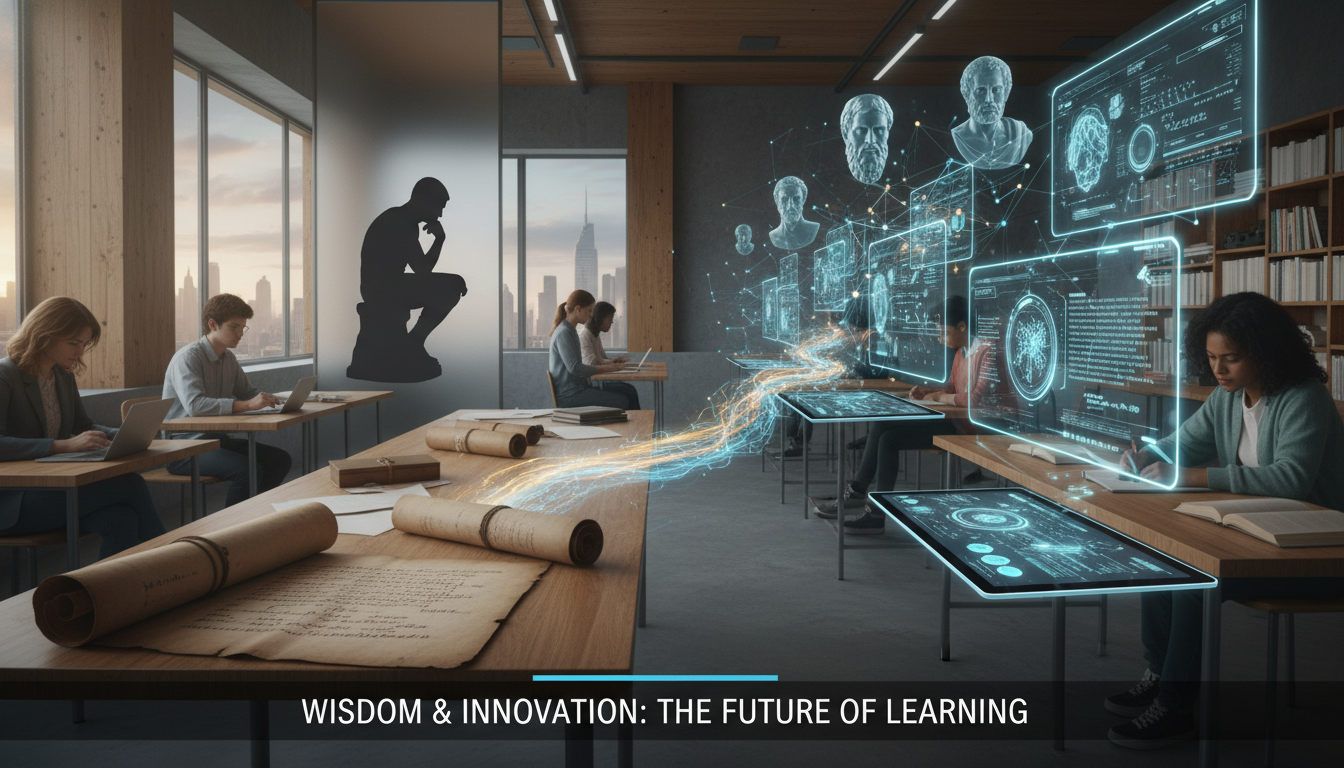
The integration of technology into the modern educational landscape is not merely a logistical challenge of hardware acquisition or a technical challenge of software implementation; it is, fundamentally, a complex epistemological negotiation. As educational institutions increasingly invest in digital infrastructures, a critical disconnect often emerges between the tools provided and the pedagogical realities of the classroom. This report provides an exhaustive analysis of the relationship between pedagogical knowledge, teaching philosophy, and technological adoption. By examining the dichotomy between teacher-centered and learner-centered approaches, the theoretical underpinnings of behaviorism and constructivism, and the emerging frameworks of Technological Pedagogical Content Knowledge (TPACK) and Artificial Intelligence (AI) integration, this analysis argues that technology is rarely a neutral agent. Instead, it acts as an amplifier of existing pedagogical beliefs, and its successful adoption is contingent upon a profound alignment with the educator’s core philosophy of teaching.
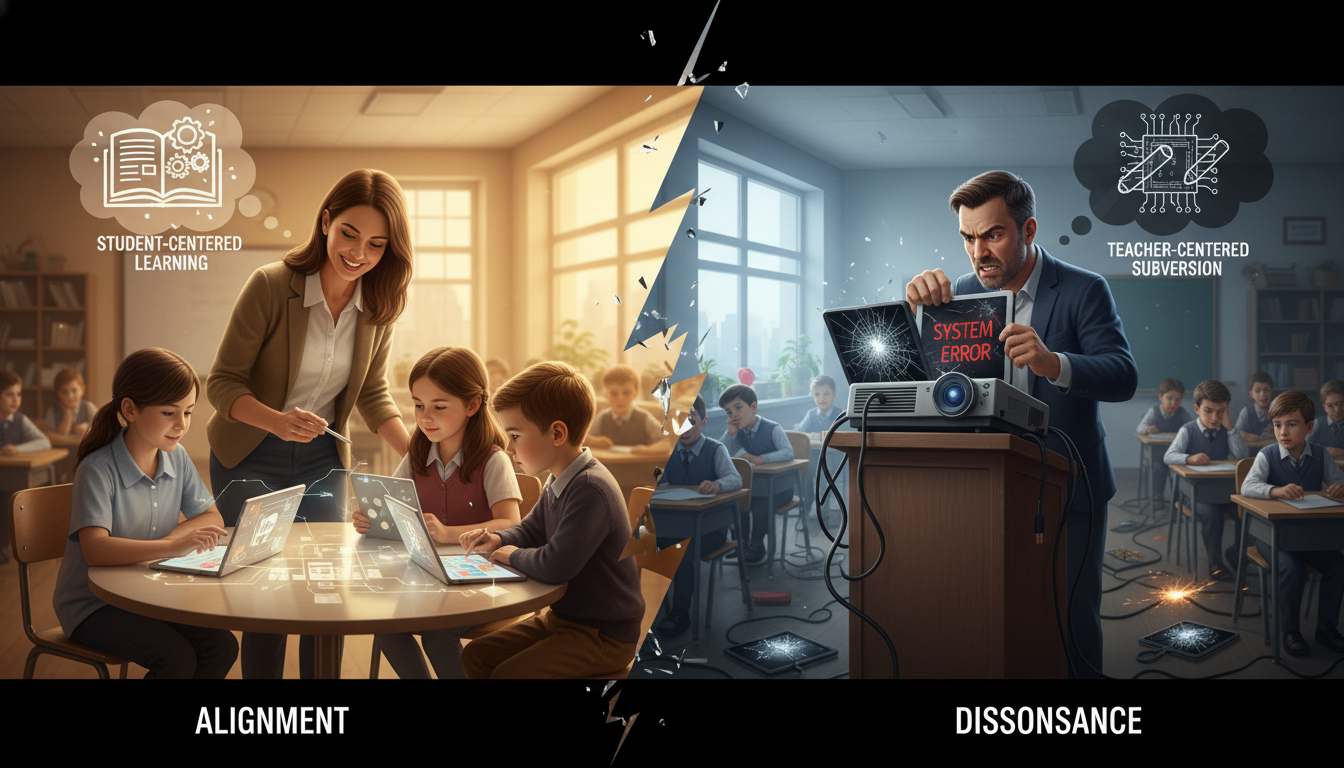
The necessity of this study arises from the observation that teachers do not adopt technology in a vacuum; they adopt tools that fit their existing conceptions of how learning occurs. When a mismatch occurs—when a constructivist teacher is provided with behaviorist drill-software, or a transmission-oriented teacher is handed an open-ended inquiry platform—the result is often the abandonment of the tool or its subversion into a less effective modality. Understanding this alignment is Why it matters: it is the predictor of return on investment for educational technology and the determinant of student learning outcomes.
The Architecture of Teaching Philosophy
A teaching philosophy statement is frequently viewed as a bureaucratic requirement for academic employment, yet it serves a far more critical function as the north star of instructional design. It is a narrative that includes a conception of teaching and learning, a description of methods, and a justification for why those methods are employed. This statement demonstrates that an instructor has been reflective and purposeful, communicating goals that transcend mere content delivery to include engaged citizenry, individual fulfillment, and critical thinking.
Without a robust philosophical framework, educational practice risks becoming what some scholars term a word salad—a collection of buzzwords and activities that sound impressive but lack connection to practical outcomes or a coherent theory of mind. The literature identifies four major educational philosophies that continue to shape the grammar of schooling, each dictating a different relationship with technology:
- Perennialism
Core Belief: Education should focus on enduring truths and the great ideas of Western civilization.
Focus of Curriculum: Great Books, laws of science, unchanging principles.
Implications for Technology: Technology used to access classic texts; focus on reading and lecture; skepticism of “flashy” tools.
- Essentialism
Core Belief: There is a common core of knowledge that must be transmitted systematically and with discipline.
Focus of Curriculum: Essential skills, academic rigor, moral standards.
Implications for Technology: Drill-and-practice software; Learning Management Systems (LMS) for efficient content delivery; focus on testing.
- Progressivism
Core Belief: Education should focus on the whole child, active experimentation, and student interests.
Focus of Curriculum: Experiential learning, problem-solving, democracy.
Implications for Technology: Simulation tools, coding platforms, creative suites, open-ended inquiry spaces.
- Reconstructionism
Core Belief: Schools should take the lead in reconstructing society and addressing social problems.
Focus of Curriculum: Social justice, critical pedagogy, community action.
Implications for Technology: Global collaboration tools, social media for activism, data analysis for social issues.
These philosophies are not mutually exclusive in practice, but they represent distinct centers of gravity. An educator aligned with Essentialism will naturally gravitate toward technologies that measure and track the acquisition of discrete facts, viewing the computer as a highly efficient tutor. Conversely, a Progressivist will view the computer as a workshop or a laboratory, prioritizing tools that allow for creation and expression over consumption.
Defining Pedagogical Knowledge
Pedagogical knowledge encompasses the art and science of teaching. It distinguishes the subject matter expert from the professional educator. While a historian knows history, a history teacher possesses the specialized knowledge of how to make history comprehensible to a novice. This domain includes an understanding of learning types, digital learning environments, teaching methods, and learning cycles.
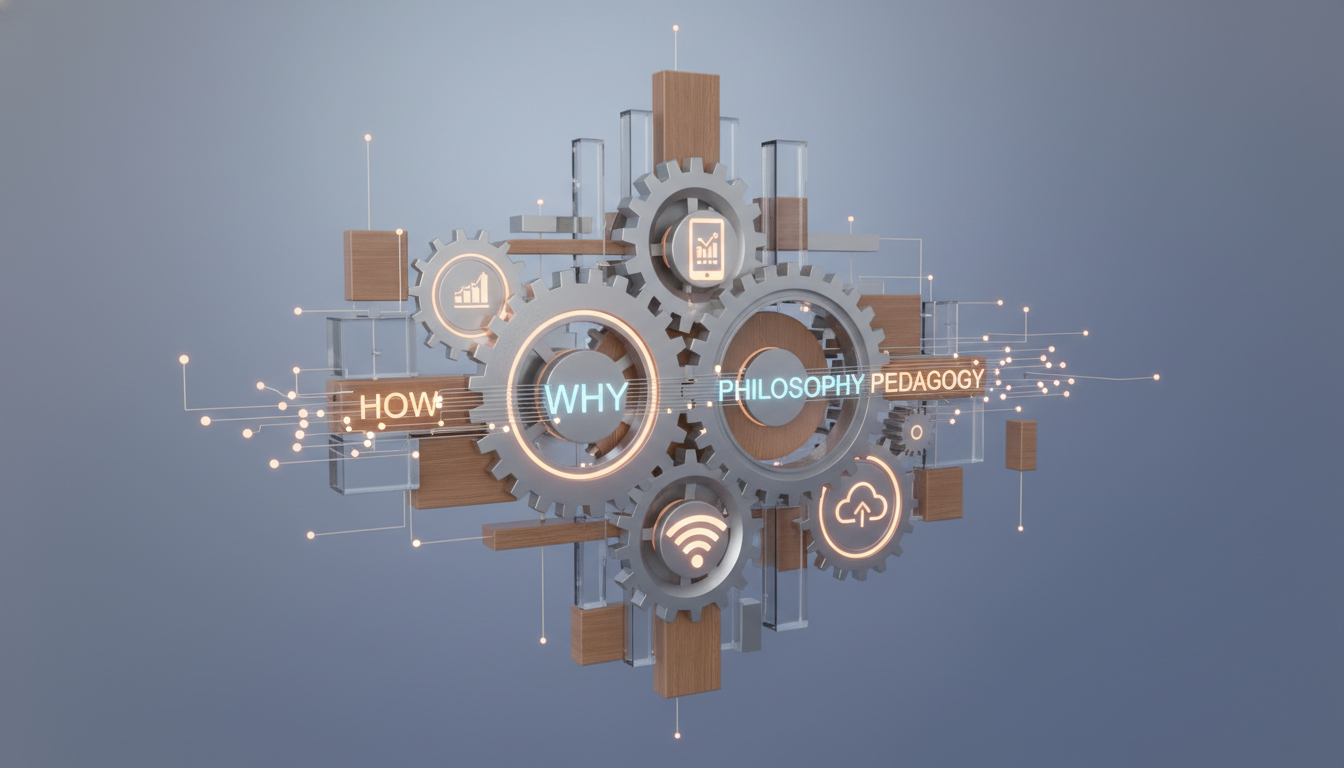
The relationship between philosophy and pedagogy is interacting and interdependent. Philosophy provides the why—the justified belief in a specific educational purpose—while pedagogy provides the how—the management of educational activities and curriculum decisions. When technology is introduced, it must be filtered through this pedagogical knowledge. A teacher with deep pedagogical knowledge understands that a specific digital tool is not valuable because it is new, but because it solves a specific instructional problem or enhances a specific cognitive process.
The Dichotomy of Instruction: Teacher-Centered vs. Learner-Centered Models
The most significant fault line in educational theory and practice lies between teacher-centered (transmissional) and learner-centered (constructivist) approaches. This dichotomy influences every aspect of the classroom ecosystem, from authority dynamics to the selection of digital tools, and serves as the primary predictor of how technology will be utilized.
The Teacher-Centered Paradigm (Transmissional)
In the teacher-centered model, often rooted in behavioral theories and Essentialism, the instructor functions as the primary authority and knowledge dispenser. The classroom dynamic is characterized by the passive reception of information by students, a model that has dominated education for centuries due to its efficiency in scaling education.
- Focus: The focus is primarily on the instructor and what the instructor knows. The teacher chooses topics, and the flow of information is unidirectional—from teacher to student.
- Interaction: The teacher talks; students listen. The classroom is typically quiet, with the instructor monitoring and correcting student work as needed.
- Assessment: The teacher is the sole evaluator of performance, relying heavily on summative assessments (tests) to measure the retention of transmitted knowledge.
- Technology Use: In this environment, technology is often used to replicate the lecture format digitally. PowerPoint presentations, clickers for quick knowledge checks, and Learning Management Systems (LMS) that unlock content sequentially are favored. The goal of technology here is efficiency—delivering the same content to more students with greater speed or standardization.
Research suggests that while this method can be efficient for transferring factual knowledge, it often leads to lower student engagement and boredom, as students have no autonomy over the learning process.
The Student-Centered Paradigm (Constructivist)
Student-centered learning (SCL) represents a seismic shift where the focus moves from what teachers teach to what students learn through active engagement. Here, the teacher transitions from the sage on the stage to the guide on the side, acting as a coach or facilitator.
- Focus: The focus is shared. Students may have choices in topics and are viewed as active agents who bring unique experiences to the learning process.
- Interaction: The instructor models concepts but then invites students to interact with one another. Collaboration, group work, and peer review are central features.
- Assessment: Assessment is formative and authentic. Instead of multiple-choice tests, students might create portfolios, projects, or presentations that demonstrate their understanding in novel contexts.
- Technology Use: Technology is used as a tool for empowerment and creation. Students might use video editing software to create a documentary, data visualization tools to analyze real-world statistics, or coding platforms to build solutions. The technology supports doing rather than watching.
The Implementation Gap: Despite the widespread advocacy for student-centered approaches in literature, operationalizing these concepts remains a challenge.
Many educators claim to be “student-centered” but, when pressed, describe practices that are merely “sensitive” to student needs rather than structurally different. True SCL requires a systemic shift in power, where the teacher relinquishes control over the exact path of learning, a transition that is psychologically difficult for many educators.
2.3 Comparative Analysis of Instructional Models
| Feature | Teacher-Centered (Instructivist) | Student-Centered (Constructivist) |
|---|---|---|
| Knowledge View | Objective, fixed, external to learner | Subjective, constructed, internal |
| Teacher Role | Expert, transmitter, authority | Facilitator, coach, guide |
| Student Role | Passive recipient, listener | Active agent, collaborator, constructor |
| Primary Method | Lecture, drill-and-practice | Inquiry, problem-based learning (PBL) |
| Assessment | Summative, tests, fact-recall | Formative, authentic, portfolios |
| Technology Role | Delivery mechanism (efficiency) | Cognitive tool (extension of mind) |
| Theoretical Base | Behaviorism | Constructivism (Cognitive & Social) |
Data synthesized from.
3. Theoretical Underpinnings: Behaviorism, Cognitivism, and Constructivism
To fully understand the “Why” of technology adoption, one must examine the psychological learning theories that drive pedagogical choices. These theories—Behaviorism, Cognitivism, and Constructivism—act as the operating systems of the educational world. Software and curriculum are rarely theory-neutral; they are built upon the assumptions of one of these frameworks.
3.1 Behaviorism: The Architecture of Reinforcement
Behaviorism, championed by theorists like B.F. Skinner, centers on the idea that learning is a change in observable behavior resulting from responses to external stimuli. It ignores internal mental states, focusing instead on the input (stimulus) and the output (response).
- Mechanism: Learning is shaped by reinforcement. Positive reinforcement (rewards, praise) strengthens a behavior, while negative reinforcement or punishment weakens it.
- Technological Manifestation: Behaviorism is the dominant theory behind “gamification” and “drill-and-practice” software. When a student uses an app like Duolingo or a math blaster game, they are operating in a behaviorist loop: perform an action, receive immediate feedback (ding/buzz), and receive a reward (badge/points).
- Efficacy: Research indicates that behaviorist strategies are highly effective for “knowing what”—mastering factual content or specific procedures where there is a clear right and wrong answer. In studies comparing software training, behaviorist approaches often result in higher initial test scores for procedural tasks because they reduce cognitive load through structured repetition.
3.2 Cognitivism: Processing Information
Cognitivism emerged as a reaction to behaviorism, arguing that the “black box” of the mind matters. It views learning as a process of acquiring, storing, and retrieving information, much like a computer processes data.
- Mechanism: Focuses on memory, attention, and problem-solving structures. Jean Piaget’s early work on cognitive development stages is central here, emphasizing how learners progress from basic stimuli to complex abstract ideas.
- Technological Manifestation: Intelligent Tutoring Systems (ITS) and adaptive learning platforms (e.g., ALEKS, MATHia) are cognitivist. They diagnose the student’s current mental model, identify gaps (error analysis), and present information in a sequence designed to optimize retention and understanding.
3.3 Constructivism: The Construction of Meaning
Constructivism is the dominant theoretical framework for modern learner-centered education. It posits that knowledge is not transmitted from teacher to student but is actively constructed by the learner based on their own experiences, prior knowledge, and reflections.
Two Major Strands:
- Radical (Cognitive) Constructivism (Piaget): Emphasizes the individual’s internal construction of knowledge. Learning occurs when a new experience conflicts with an existing mental model (disequilibrium), forcing the learner to accommodate the new information.
- Social Constructivism (Vygotsky): Argues that learning is fundamentally social. Knowledge is constructed through interaction with others (peers, teachers) and is mediated by language and culture. The “Zone of Proximal Development” (ZPD)—the gap between what a learner can do alone and what they can do with help—is a key concept here.
Technological Manifestation:
Constructivist technology differs radically from behaviorist technology. It does not “teach” the student; rather, the student uses the technology to “teach” themselves or others.
- Cognitive Tools: Coding platforms (Scratch), multimedia creation tools (iMovie), and mind-mapping software (MindMeister) allow students to externalize their internal mental models.
- Social Tools: Wikis, shared documents (Google Docs), and discussion forums facilitate the social negotiation of meaning. The “truth” is not in the software; it is in the dialogue the software enables.
Research Insight: While behaviorist software may yield higher scores on standardized procedural tests, constructivist environments are essential for developing higher-order thinking, problem-solving skills, and the ability to deal with “ill-defined” problems that characterize the real world.
4. The Bridge: Technological Pedagogical Content Knowledge (TPACK)
The successful integration of technology requires a sophisticated synthesis of knowledge domains. It is insufficient for a teacher to simply know their subject (Content Knowledge) and know how to use a computer (Technological Knowledge). They must understand how these domains intersect. The TPACK Framework, introduced by Mishra and Koehler, provides the theoretical lens for understanding this complexity.
4.1 Deconstructing the Framework
TPACK identifies three primary forms of knowledge that must be integrated:
- Content Knowledge (CK): Mastery of the subject matter itself (e.g., the causes of the French Revolution, the properties of quadratic equations).
- Pedagogical Knowledge (PK): Deep knowledge of the processes, practices, and methods of teaching and learning (e.g., understanding classroom management, lesson planning, and student assessment).
- Technological Knowledge (TK): Proficiency with digital tools, resources, and computing technologies.
4.2 The Vital Intersections
The framework’s power lies in the intersections of these circles, where true effective teaching occurs:
- Pedagogical Content Knowledge (PCK): This is Shulman’s original concept—knowing the best way to teach specific content. For example, a math teacher knows that students often confuse area and perimeter; knowing how to correct that specific misconception is PCK.
- Technological Content Knowledge (TCK): Understanding how technology can influence and represent specific content. For instance, knowing that dynamic geometry software (like GeoGebra) can allow students to visualize the relationship between a function’s graph and its equation in a way that a static textbook cannot.
- Technological Pedagogical Knowledge (TPK): Understanding how teaching and learning change when particular technologies are used. For example, knowing that using an online discussion board requires different facilitation strategies (asynchronous wait-time, prompting) than a face-to-face seminar.
TPACK (The Center):
The center of the diagram represents the intuitive understanding of the complex interplay between the three components. A teacher with high TPACK can seamlessly integrate a digital tool to teach a specific concept using a specific pedagogical strategy that fits the learners’ needs.
4.3 Case Study: TPACK in the Mathematics Classroom
Consider a lesson on cell anatomy or quadratic equations.
- Low TPACK: A teacher uses an interactive whiteboard merely as a projection screen to display a static diagram (replicated lecture).
- High TPACK: A teacher uses a simulation tool (TK) that allows students to manipulate the variables of a quadratic equation and observe the shift in the parabola (CK). The teacher guides this process using inquiry-based questions (PK), moving from student exploration to formalization.
Research involving the “Mathematics Teacher Development Model” suggests that developing TPACK is a developmental process. Teachers often start by viewing technology as an “add-on” and only later, through reflection and practice (often supported by “Professional Development: Research, Implementation, and Evaluation” or PrimeD frameworks), move toward using technology for conceptual understanding. However, studies indicate that even with training, growth in TPACK can be slow if the training does not explicitly focus on conceptual rather than just procedural tech use.
5. Alignment and Dissonance: Teacher Beliefs and Technology Adoption
A critical insight from the research literature is that technology adoption is not primarily a technical problem; it is a belief problem. There is a profound connection between a teacher’s pedagogical beliefs and their willingness and ability to integrate technology effectively.
5.1 The “Mirror Effect” of Technology
Technology often acts as a mirror, reflecting and amplifying existing pedagogical beliefs. Teachers who hold transmissional (teacher-centered) beliefs tend to use technology for drill-and-practice, efficiency, and information delivery.
They value technology that makes the “lecture” smoother or the “grading” faster. Conversely, teachers with constructivist (student-centered) beliefs are more likely to use technology to support collaboration, inquiry, and creativity, valuing tools that allow students to explore and create.
The Alignment Paradox:
Interestingly, research finds that while many teachers self-identify as “student-centered,” their actual technology usage often remains low-level (e.g., using technology for basic skills practice). This suggests a disconnect or “mismatch.” This dissonance often arises from external pressures—such as standardized testing (an Essentialist pressure) or rigid curriculum pacing—which force teachers to revert to efficiency-oriented, teacher-centered tech use despite their constructivist aspirations.
5.2 Barriers to Integration: First-Order vs. Second-Order
Ertmer provides a definitive framework for understanding why technology integration fails or succeeds, distinguishing between two types of barriers:
| Barrier Type | Description | Examples | Remediation |
|---|---|---|---|
| First-Order (External) | Resource constraints extrinsic to the teacher. | Lack of hardware, poor internet bandwidth, insufficient time, lack of technical support. | Increased funding, infrastructure upgrades, hiring IT staff. |
| Second-Order (Internal) | Intrinsic attitudes and beliefs of the teacher. | Beliefs about how students learn, resistance to change, lack of confidence, conflict with professional identity. | Professional development, mentorship, shifting school culture, “unlearning” old habits. |
Insight: Second-order barriers are far more resilient and difficult to overcome than first-order barriers. A school may overcome all first-order barriers (giving every student a laptop), yet integration will fail if the teachers harbor second-order barriers (e.g., believing that “real” teaching requires the teacher to be talking at the front of the room). Research confirms that while first-order barriers like access are diminishing, second-order barriers related to pedagogical beliefs remain the primary obstacle to high-level technology integration.
5.3 Teacher Identity and Conflict
Technology integration can threaten a teacher’s professional identity. For a teacher whose identity is built on being the “expert” and the “source of control” (teacher-centered), student-centered technology can feel chaotic and diminishing. It requires relinquishing authority and becoming a co-learner.
Studies show that teachers who view technology primarily as a tool to “increase efficiency” integrate it very differently from those who view it as a tool to “engage students“. When deep-seated pedagogical beliefs conflict with the demands of a new technology (e.g., an inquiry-based software introduced into a lecture-heavy classroom), the result is often “subversion“—the teacher changes the way the tool is used to make it fit their traditional method, stripping it of its transformative potential. For example, a collaborative wiki might be used simply as a place to post lecture notes (a repository), completely ignoring its social constructivist affordances.
6. Operationalizing Pedagogy through Digital Tools
The market of educational software is not ideologically neutral; tools are designed with specific pedagogical assumptions embedded in their code. Educators must learn to “read” the pedagogy of the software to ensure it aligns with their goals.
6.1 Tools for the Behaviorist Classroom
For educators prioritizing content mastery, efficiency, and measurable outcomes (Essentialism/Behaviorism), specific tools align well:
- Learning Management Systems (LMS): Platforms like Canvas or Blackboard often structure content sequentially (Module 1 -> Quiz -> Module 2), reinforcing a linear, transmission-based model.
- Drill-and-Practice Software: Applications like Quizlet, Kahoot! (in basic mode), or math fluency apps utilize repetition and immediate feedback. These are modern Skinner boxes, highly effective for rote memorization.
- Lecture Capture: Tools that record and distribute lectures (e.g., Panopto) support the idea that “teaching” equals “content transmission“.
6.2 Tools for the Constructivist Classroom
For educators prioritizing inquiry, meaning-making, and collaboration (Progressivism/Constructivism), the toolkit differs significantly:
- Inquiry Learning Spaces: Platforms like the Go-Lab Ecosystem allow students to perform virtual experiments, guiding them through the scientific inquiry cycle (hypothesis -> experiment -> conclusion) rather than giving them the answers.
- Collaborative Creation: Tools like Padlet (collaborative curation), Weebly (web design), and Google Workspace allow students to construct artifacts that represent their understanding. These tools are “empty” until the students fill them with meaning.
- Concept Mapping: Tools like MindMeister support the cognitive construction of relationships between ideas, allowing students to visualize their mental schemas.
- Video Annotation: Tools like Veed allow active analysis of video content, turning a passive watching experience into an active analytical one.
6.3 Active Learning Strategies in Digital Environments
Pedagogy must drive the tool, not vice versa. Standard active learning strategies have digital correlates that teachers can employ to shift from passive to active learning:
| Strategy | Traditional Implementation | Digital/Remote Implementation |
|---|---|---|
| Think-Pair-Share | Students turn to a neighbor to discuss a prompt. | Think: Individual reflection. Pair: Zoom Breakout Rooms. Share: Posting summary to a digital whiteboard or chat. |
| Jigsaw | Students form expert groups to learn content, then return to home groups to teach it. | Students use shared docs to record “expert” findings; use breakout rooms to rotate; create quick video summaries for peers. |
| Problem-Based Learning (PBL) | Students work on a long-term project on poster board. | Use project management tools like Trello or Headrush to track the “Scrum” process of the project; use Weebly to publish the final artifact to a global audience. |
7. Assessment in the Technological Era
Assessment is the operationalization of educational values. It tells students what actually matters. The divide between teacher-centered and student-centered pedagogy is arguably starkest in how learning is measured.
7.1 Formative vs. Summative Distinction
- Summative Assessment: The “autopsy” approach—measuring what was learned after the unit is over. It aligns with teacher-centered models focused on accountability and ranking. Standardized computer-based testing is the digital version of this.
- Formative Assessment: The “check-up” approach—monitoring learning during the process to adjust instruction. Technology enhances this via real-time polling (e.g., Poll Everywhere), learning analytics, and exit tickets. Constructivist teachers rely heavily on formative data to guide the “scaffolding” process.
7.2 Authentic Assessment and E-Portfolios
In constructivist frameworks, assessment should be authentic—mirroring real-world tasks rather than artificial tests.
- E-Portfolios: Digital portfolios allow students to curate evidence of their learning over time, including videos, reflections, code, and writing. This shifts assessment from a snapshot (test score) to a narrative of growth and development. Research indicates that e-portfolios support “assessment for learning” rather than just “assessment of learning,” fostering metacognition and digital literacy.
- Peer Review: Digital platforms facilitate anonymous or open peer review. This is a key social constructivist strategy where students learn by critiquing and receiving feedback from peers, engaging in the social negotiation of quality.
7.3 Data-Driven Personalization
Advanced platforms now use algorithms to provide adaptive assessments. While often rooted in cognitivist/behaviorist efficiency (optimizing the path to mastery), these tools can support constructivist goals by identifying the “Zone of Proximal Development” for each student. This allows the teacher to intervene precisely where needed, freeing up time for mentorship and higher-order guidance.
8. The Artificial Intelligence Frontier: Disruption and Opportunity
The emergence of Generative AI (GenAI) represents the latest and perhaps most disruptive variable in the alignment of pedagogy and technology. It challenges the very definition of “knowledge creation” and forces a re-evaluation of the teacher’s role.
8.1 AI and the Behaviorist vs. Constructivist Debate
AI is a shapeshifter; it can reinforce either side of the pedagogical divide depending on how it is deployed.
- Behaviorist AI: AI can be used as the ultimate drill-sergeant—adaptive tutors (like Squirrel Ai) that provide endless practice problems, immediate correction, and personalized reinforcement schedules. This aligns perfectly with the efficiency model of education, breaking knowledge down into atomic units and reinforcing mastery.
- Constructivist AI: Alternatively, AI can be viewed as a creative partner or a “mind tool.” Students can use AI to generate summaries to critique, write code to debug, or translate texts to compare nuances. Here, the AI output is not the “answer” but the raw material for critical analysis and construction.
8.2 Generative AI as a Vygotskyan “More Knowledgeable Other”
Theoretical analysis suggests AI can function within Vygotsky’s Zone of Proximal Development (ZPD). The ZPD is the space between what a learner can do alone and what they can do with guidance.
GenAI acts as a “More Knowledgeable Other” (MKO) or a “scaffold,” providing on-demand explanation, idea generation, or structural support that allows the student to perform at a higher level than they could independently.
The HI-AI-CI Framework:
New pedagogical models propose a “Human Intelligence – Artificial Intelligence – Collective Intelligence” (HI-AI-CI) framework. Here, AI augments human dialogue and social learning rather than replacing it. It offers personalized scaffolding that adapts to the learner’s path, effectively scaling the “guide on the side” model to a level previously impossible in large classrooms.
8.3 AI Hallucinations as Constructivist Opportunities
A profound “second-order” insight is the pedagogical value of AI error. “Hallucinations” (AI fabrications) are often seen as defects. However, in a constructivist classroom, they are prime learning opportunities. By asking students to verify, critique, and correct AI outputs, educators turn passive reception into active, critical inquiry. This practice cultivates “reflective inquiry” and information literacy, forcing students to return to primary sources and trust their own reasoning over the machine’s. This approach transforms the AI from an oracle of truth into a fallible interlocutor that demands critical engagement.
8.4 Redefining Teacher Authority
AI forces a renegotiation of the teacher’s role. If the teacher’s authority rests solely on being the repository of content knowledge (the “Sage“), AI threatens that identity because the AI “knows” more facts. However, if the teacher’s role is re-envisioned as a designer of learning experiences and a mentor in critical thinking (the “Guide“), AI becomes a powerful ally. The challenge for the future is helping teachers migrate their professional identity from “content delivery” to “wisdom cultivation” and “ethical leadership”.
9. Conclusion: The Imperative of Alignment
The synthesis of the research highlights a singular, overarching conclusion: Technology integration is an act of pedagogical design, not just technical implementation.
The effectiveness of any educational technology is contingent upon its alignment with the teacher’s pedagogical philosophy. A constructivist teacher will find little value in a behaviorist drill-app, and a teacher-centered instructor may struggle to manage the chaos of an open-ended inquiry platform. The friction observed in many technology initiatives—the resistance, the “subversion,” the lack of impact—often stems from a failure to recognize that adopting a new technology often requires adopting a new philosophy of teaching.
For education to evolve, professional development must move beyond “First-Order” training (“how to use this software”) to “Second-Order” engagement (“how does this tool support your beliefs about how students learn?”). The integration of frameworks like TPACK and the thoughtful adoption of AI offer a path forward. In this future, technology does not replace the teacher but empowers them to create learning environments that are more personalized, more active, and more deeply human.
Summary of Key Alignments:
| Pedagogical Goal | Philosophical Root | Ideal Technology Alignment |
|---|---|---|
| Fact Retention | Essentialism / Behaviorism | Flashcard apps, Drill-and-practice, Linear LMS |
| Skill Mastery | Behaviorism / Cognitivism | Adaptive Learning Systems, Gamification |
| Deep Understanding | Constructivism | Simulations, Concept Mapping, AI-as-Tutor (Socratic) |
| Social Creation | Social Constructivism | Wikis, Shared Docs, Peer Review Platforms |
| Critical Thinking | Progressivism | AI-Hallucination Checking, Database Research |
The future of teaching lies not in the tools themselves, but in the wisdom with which they are wielded to serve the timeless goal of human development. Teachers who understand why they do what they do—who possess deep pedagogical knowledge and a clear philosophy—will be the ones who can harness the digital age rather than be overwhelmed by it.