

Marketing Skill Shapes: T-Shaped, Pi-Shaped & Beyond
The Geometric Paradigm of Talent: An Exhaustive Analysis of Competency Architectures in Modern Marketing
The contemporary marketing landscape is characterized by a paradox of specialization and integration. As the technological stack supporting marketing functions becomes increasingly esoteric—spanning programmatic advertising, data science, and neuro-marketing—the necessity for deep, siloed expertise grows. Yet, simultaneously, the acceleration of digital ecosystems demands seamless connectivity between these disparate functions. The friction caused by isolated expertise has necessitated a radical re-evaluation of human capital models. The industry has moved beyond the binary classification of “generalist” versus “specialist” into a nuanced lexicon of geometric metaphors. From the foundational T-shaped professional to the complex topologies of pi-shaped, Comb-shaped, Key-shaped, and Star-shaped profiles, these models serve as the architectural blueprints for high-performance organizational design.
This report provides a definitive analysis of these skill frameworks. It traces their historical lineage from engineering management theory to modern agile methodology, dissects the anatomical nuances of each geometric profile, and evaluates their strategic application across diverse business environments. Furthermore, it interrogates the future of these models in an economy increasingly augmented by artificial intelligence, where the very definitions of “depth” and “breadth” are being rewritten.

1. Historical Genesis and Theoretical Foundations
The categorization of human capital through geometric shapes is not a recent invention of the digital marketing age, though it has found its most fertile ground there. Understanding the evolution of these models is critical to grasping their current utility.
1.1 From Industrial Silos to the T-Shaped Manager (1978–2000)
The origins of the “T-shaped” concept are often misattributed solely to the design thinking movement of the early 21st century. However, the theoretical groundwork was laid decades prior. In 1978, D.L. Johnston, writing in the IEEE Engineering Management Review, first posited the necessity of the “T-shaped manager”. Johnston identified a growing friction in engineering organizations: as technical disciplines became more complex, managers with purely generalist skills (the “Dash”) could no longer effectively lead specialist teams, while pure specialists (the “I”) lacked the broader business acumen to navigate organizational politics and strategy.
Johnston’s T-shaped manager was a solution to a specific industrial problem: the need for a leader who retained technical literacy (vertical depth) while acquiring the horizontal capabilities of management. This early definition focused primarily on the vertical transition of an individual from contributor to manager.
1.2 The Agile Renaissance and the Knowledge Economy (2001–Present)
The concept remained relatively dormant until the turn of the millennium, when it was revitalized by McKinsey & Company and subsequently popularized by Tim Brown, CEO of the design consultancy IDEO. In 2001, the Harvard Business Review published “Introducing T-Shaped Managers,” which reframed the concept for the knowledge economy.
Under Brown’s stewardship, the definition shifted from a management competency to a collaborative necessity. In the context of design thinking and agile development, the “T-shaped” person was no longer just a manager but a creative contributor. The vertical bar came to represent deep, world-class expertise in a single field (e.g., industrial design), while the horizontal bar represented the disposition for collaboration—specifically, the empathy required to understand adjacent disciplines.
This evolution mirrored the broader shift in organizational design from Fordist hierarchies (where tasks were repetitive and isolated) to Agile networks (where tasks are interdependent and novel). In a Fordist factory, an “I-shaped” worker is ideal; on an Agile marketing squad, they become a bottleneck.
2. The Fundamental Geometries: I, Dash, and T
To understand the complex multi-stemmed models that dominate current executive discussions, one must first rigorously define the primary shapes that form the basis of the competency spectrum.
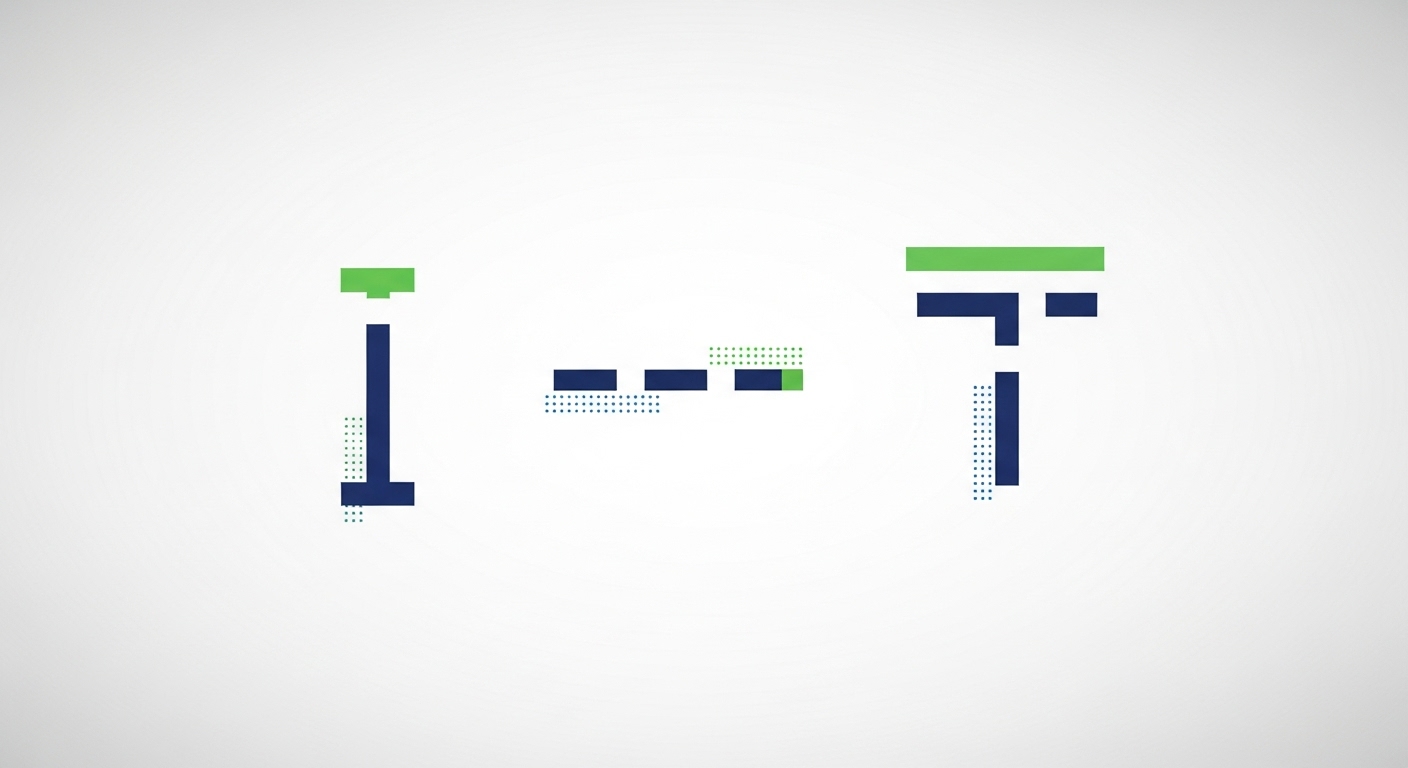
2.1 The I-Shaped Professional (The Deep Specialist)
- Operational Characteristics: I-shaped professionals are often termed “single-point specialists.” In marketing, this might be a Data Scientist who can build complex attribution models using Python and SQL but lacks any understanding of consumer psychology or brand voice.
- Organizational Utility: These individuals are essential for solving “wicked problems”—highly technical challenges that require 10,000+ hours of mastery to address. They are best deployed in environments where the workflow is predictable and the handoffs are clean, such as R&D departments or highly segmented enterprise corporations.
- The “Tunnel Vision” Liability: The primary critique of the I-shaped employee in modern marketing is “tunnel vision.” Because they lack the horizontal bar of context, they often optimize their specific metric (e.g., optimizing a query for speed) to the detriment of the broader business goal (e.g., shipping the campaign on time). They are described as being “an inch wide and a mile deep”. In Agile teams, I-shaped members can create critical dependencies; if the specific specialist is unavailable, the entire workflow halts because no other team member possesses the “horizontal” linguistic overlap to pick up their work.
2.2 The Dash-Shaped Generalist (The Connective Tissue)
At the opposite pole lies the Dash-shaped individual, sometimes referred to as a “Generalist” in the purest sense.
- Operational Characteristics: Often described as “a mile wide and an inch deep,” these individuals possess a working vocabulary of many fields. They function well as “routers” of information, connecting disparate teams, or as early-stage founders who must execute minimally viable versions of every function (sales, support, copy, code).
- The “Jack of All Trades” Paradox: While versatile, Dash-shaped marketers face an existential threat in scaling organizations. As a company grows, the demand for “good enough” execution diminishes in favor of “best-in-class” performance. A Dash-shaped marketer who can write “okay” copy and run “okay” ads becomes a liability when competing against specialized competitors.
- Obsolescence Risk: In an AI-augmented future, the shallow execution skills of the Dash-shaped generalist are most at risk of automation. Generative AI can often produce “average” output faster than a human generalist, forcing these individuals to acquire vertical depth to survive.
2.3 The T-Shaped Marketer: The Agile Standard
The T-shaped model represents the synthesis of the I and Dash, creating a “Generalizing Specialist.” This profile is widely considered the minimum viable competency model for members of high-functioning Agile squads.
2.3.1 Anatomical Breakdown
- The Vertical Bar (Depth): This is the domain of authority. A T-shaped content marketer, for example, possesses expert-level command of SEO, narrative structure, and editorial strategy. This depth allows them to execute high-value work independently.
- The Horizontal Bar (Breadth): This represents “Empathy” and “Basic Competence.” It is not merely knowing about other fields, but knowing enough to do. A T-shaped content marketer might know enough HTML to fix a broken tag without calling a developer, or enough Analytics to pull their own reports. This reduces friction and “wait times” in cross-functional teams.
2.3.2 The Mechanism of “Swarming”
The strategic value of T-shaped skills is best observed in the Scrum practice of “swarming.” When a critical bottleneck emerges (e.g., a deadline for a landing page launch), I-shaped team members are useless if the bottleneck is outside their specialty. T-shaped members, however, can leverage their horizontal skills to assist. The designer might write draft copy; the developer might quality-check the analytics tags. This “staff liquidity” ensures that the flow of value is not arrested by resource constraints.
Table 1: Comparative Analysis of Fundamental Shapes
| Geometric Profile | Depth | Breadth | Strategic Weakness | Optimal Environment |
|---|---|---|---|---|
| I-Shaped | Extreme (Expert) | Minimal (Novice) | Creates bottlenecks; lacks contextual empathy | R&D; Highly Siloed Enterprise |
| Dash-Shaped | Minimal (Novice) | Extreme (Broad) | Lack of execution capability; risk of mediocrity | Pre-Seed Startups; Project Coordination |
| T-Shaped | High (Expert) | Moderate (Competent) | Single point of failure if vertical becomes obsolete | Agile Squads; Scale-ups; Agencies |
2.4 The “Fat-T” Variation
A critical evolution of the T-shape is the Fat-T marketer. This concept addresses a critique of the thin horizontal bar: that superficial knowledge is often insufficient for true collaboration.
- Definition: A Fat-T marketer possesses a “thickened” horizontal stroke. They do not just have “awareness” of adjacent fields; they have genuine functional competence.
- Context: This is particularly prevalent in MarTech ecosystems (e.g., Salesforce/Pardot professionals), where a marketer must have substantial technical depth (SQL, API integrations) just to perform their core strategic role. They are described as “integrators” or “bridgers” who prevent the fragmentation of strategy and technology.
3.
The Complexity of Expertise: Multi-Stemmed Models
As digital marketing matures, the “single vertical” of the T-shape is increasingly viewed as insufficient for senior roles. The convergence of data, creative, and technology has given rise to multi-stemmed models that demand depth in multiple, often disparate, domains.
The π-Shaped (Pi-Shaped) Marketer
The π-shaped (Pi-shaped) professional is defined by a broad horizontal base supported by two distinct pillars of deep expertise.
The “Life of Pi” Metaphor
The terminology is frequently linked to the protagonist Pi Patel from the novel/film Life of Pi. As noted by Scott Brinker and others, Pi required two distinct masteries to survive: the ability to navigate the ocean (survival skills) and the ability to handle a Bengal tiger (animal husbandry). In the marketing context, this metaphor illustrates the necessity of mastering two conflicting domains to survive in the modern ecosystem.
The Hybridization of “Left” and “Right” Brain
The most valuable configuration of the π-shaped marketer is the synthesis of analytical and creative disciplines.
- The Dual Pillars: Typically, one leg represents a “Left Brain” discipline (e.g., Data Analytics, Python, Financial Modeling) and the other a “Right Brain” discipline (e.g., Brand Storytelling, Visual Design, UX).
- Operational Efficiency: Organizations prize π-shaped individuals because they internalize the friction that usually exists between two people. A marketer who can both design a user interface (UX) and code it (Front-End Dev) can iterate five times faster than a designer and developer working in tandem, as the “handoff” cost is eliminated. This allows businesses to reduce headcount while increasing velocity.
The M-Shaped and Comb-Shaped Models
Extending the logic of the π-shape, we encounter the M-shaped and Comb-shaped profiles.
- M-Shaped: Represents a professional with three verticals (or multiple specialties), creating a shape resembling the letter ‘M’. This is often seen as a natural evolution of the π-shape over a long career.
- Comb-Shaped: This model visualizes a broad horizontal base with many specialized verticals, resembling the teeth of a comb.
- The “Generalizing Specialist” vs. The “Renovator”: Comb-shaped individuals are often referred to as “Renovators” or “Painters” in colloquial terms—senior practitioners who can execute an entire project end-to-end. In a product management context, a Comb-shaped PM might have “teeth” in Engineering, Design, Marketing, and Finance. While the depth of every tooth may not equal that of a dedicated I-shaped specialist, the aggregate value of the combination allows for unique strategic insights that no specialist could generate.
- Recruitment Dynamics: “Quiet Hiring” trends often target these individuals. Instead of hiring three new specialists, organizations identify internal Comb-shaped employees who can stretch to cover emerging gaps.
The Key-Shaped Marketer: A Nuanced Realism
While the Comb-shape implies equal depth across multiple verticals, the Key-shaped model offers a more realistic representation of human capability.
- The “Teeth” of the Key: In a key, the teeth are of varying lengths. Similarly, a Key-shaped professional possesses a horizontal handle (breadth) and multiple verticals of varying depth.
- The Variance of Depth: They might have “Mastery” in SEO, “Competence” in Data Analysis, “Proficiency” in Copywriting, and “Familiarity” with CSS.
- Strategic Unlocking: The metaphor extends to function: specific problems require a specific “key” to unlock. A problem might require a leader who understands 60% of engineering and 90% of marketing. A T-shaped person fails here (0% engineering), and an I-shaped person fails (100% engineering, 0% marketing). Only the Key-shaped individual with the specific configuration of “teeth” can resolve the challenge.
The V-Shaped Marketer and the Versatilist
The V-shaped model is frequently associated with the Gartner term “Versatilist.” It differs from the T-shape in its structural implications regarding the gradient of knowledge.
- Structural Gradient: The T-shape implies a sharp drop-off: Expert in A, Novice in B, C, D. The V-shape implies a gradual deepening of skills adjacent to the core. If the core is Content Marketing, the adjacent skills of SEO and Social Media are not merely “broad” awareness but “semi-deep” capabilities, forming the sloping sides of the V.
- Career Trajectory: This model often describes the journey of a specialist widening their scope to become a manager. As they rise, the “I” widens at the top into a “V” as they learn the context of their specialty.
Leadership Architectures: X, E, and The Executive Mindset
As professionals transition from individual contribution to leadership, the competency models shift focus from execution to enablement and strategy.
The X-Shaped Leader (The Executive Nexus)
The X-shaped model is the definitive geometry of the C-Suite and high-level organizational change management.
- Anatomy of the X:
- The Convergence Point: The center of the X represents the leader’s original core competence (their “T-shaped” origin). This grounding ensures they retain credibility with subject matter experts.
- The Diverging Arms: The four arms represent:
- Strategy: The ability to set long-term vision.
- Leadership/People: The ability to motivate diverse teams.
- Execution: The drive to deliver results.
- Identity/Credibility: The personal brand and ethical standing.
- Change Management: The X-shaped leader is particularly vital during organizational transformations. Snippets highlight Pixar’s Ed Catmull and John Lasseter as prime examples of X-shaped leadership. They transitioned from deep technical/artistic roles (computer science/animation) to roles focused entirely on “creating a fertile environment” for others. Their value was no longer in doing the animation, but in bridging the gap between the technical and creative cultures of the studio.
- Generational Relevance: With the workforce now spanning Baby Boomers to Gen Z, X-shaped leaders are essential for bridging generational communication gaps, translating the values of one cohort to another to maintain cohesion.
The E-Shaped Professional (The 4 Es)
The E-shaped model is less about geometric competencies and more about the quality of engagement. It is defined by the “4 Es”:
- Experience: A proven history of navigating complex situations.
- Expertise: Deep domain knowledge.
- Exploration: A relentless curiosity to innovate and find new paths.
- Execution: The tangible ability to deliver results.
- The Innovation Engine: Unlike the X-shape, which focuses on management, the E-shape focuses on innovation. Leonardo da Vinci is frequently cited as the archetype. In a marketing context, E-shaped individuals are the “intrapreneurs” who don’t just manage the status quo but actively explore new channels (Exploration) and build the systems to exploit them (Execution).
Radial and Organic Models: Beyond the Cartesian Axis
The limitation of “letter-shaped” models is their reliance on a simple X/Y axis of breadth and depth. More advanced frameworks utilize radial or organic visualizations to capture the complexity of modern talent.
The Star-Shaped Framework (Polar Capabilities)
The Star-shaped model abandons the linear horizontal/vertical distinction in favor of a polar graph (or radar chart) visualization.
- Visualizing the Polymath: The center of the star represents the individual. Each point of the star represents a different skill domain, and the length of the point corresponds to proficiency. A “Star-shaped” person has significant depth in many directions, growing outward into a galaxy of skills.
- Career Mapping: This model allows for a more personalized career map. Instead of trying to fit into a pre-defined “T,” a professional can map their unique constellation of skills (e.g., high coding, medium design, high public speaking, low finance).
- The “North Star” Alignment: In product marketing, the Star framework often refers to the North Star Metric—a single key performance indicator that aligns the diverse “shapes” of a team. While distinct from the skill shape itself, the North Star framework provides the gravitational center that allows T, Pi, and Comb-shaped people to collaborate effectively.
- STAR Interview Technique: It is crucial to distinguish the Star skill model from the STAR interview method (Situation, Task, Action, Result), which is a behavioral assessment tool often used to verify the “Execution” component of a candidate’s shape.
The Octopus-Shaped Marketer (The Fluid Adapter)
The Octopus model is a behavioral metaphor emphasizing adaptability and decentralized intelligence.
- Decentralized Autonomy: An octopus has nine brains—one central brain and one in each arm. This biological fact serves as a powerful metaphor for the modern marketer who must operate with high autonomy across multiple channels. An Octopus-shaped marketer does not need to query the “central brain” (the CMO) for every decision regarding a tweet or an email subject line; they possess the localized intelligence to execute independently in real-time.
- The Fluid Company: This model is closely tied to the concept of the “Fluid Company” (propounded by agencies like Zeus Jones). In a fluid organization, structures change rapidly to meet market needs.
The Octopus-shaped employee thrives here because they lack a rigid “shape”—they can contort their skillset to fit the immediate gap, holding different “tools” in each arm.
- Micro-Specialization: Each arm of the octopus can hold a different specialization (e.g., Arm 1: Social, Arm 2: Analytics, Arm 3: Community Management), allowing for simultaneous multi-threaded execution.
6. The “Full Stack” Debate: Myth or Modern Necessity?
A pervasive term in recruitment is the “Full Stack Marketer,” borrowed from the “Full Stack Developer” concept. This terminology provokes significant debate regarding its feasibility and definition.
6.1 Defining the Full Stack
A Full Stack Marketer is theoretically capable of managing the entire marketing stack: from the technical infrastructure (server-side tracking, APIs) to the creative layer (copywriting, video editing) and the strategic layer (positioning, pricing).
- Startup Necessity: For seed-stage startups, the Full Stack Marketer is not a luxury but a survival mechanism. With limited runway, a startup cannot hire an Email Specialist, a PPC Specialist, and a Content Strategist. They require a single individual—often a Comb-shaped or Fat-T profile—who can execute “good enough” versions of all these tasks to generate initial traction.
6.2 The Critique: The Myth of Total Mastery
Critics, such as Cody Boyte, argue that the “Full Stack” concept is a dangerous myth. They contend that true mastery of the entire stack is impossible due to the sheer volume of information and the rate of change in each sub-discipline.
- The “Master of None” Trap: The risk is that a Full Stack marketer produces mediocre work across the board—code that is buggy, copy that is bland, and strategy that is derivative. This is the “Dash-shaped” trap rebranded.
- Reframing the Definition: The consensus among experts is that a successful “Full Stack” marketer is actually a T-shaped or Key-shaped person with exceptional learning agility. They don’t “know” everything, but they possess the “Stack Overflow” mindset—the ability to rapidly find, learn, and apply the necessary technical knowledge to solve an immediate problem.
7. Organizational Design and Team Topology
The choice of competency models is not merely an HR decision but a structural one. The aggregate “shape” of a team determines its operational capabilities.
7.1 The “Shape” of High-Performance Teams
Modern theory, heavily influenced by Team Topologies, suggests that teams should be designed as Comb-shaped entities.
- The Comb-Shaped Team: A team is composed of overlapping T-shaped individuals. If Member A is deep in SEO and broad in Content, and Member B is deep in Content and broad in SEO, their overlap creates resilience.
- Cognitive Load Management: By distributing depth across multiple T-shaped members, the team reduces the “cognitive load” on any single individual. A Dash-shaped team suffers from high cognitive load (everyone trying to learn everything), while a Comb-shaped team relies on “transactive memory”—knowing who knows the answer rather than knowing it oneself.
7.2 Contextual Hiring: Startup vs. Enterprise
- Startups (The Search for Pi and Comb): Startups need “Staff Liquidity.” The loss of a single employee can be catastrophic. Therefore, startups prioritize Pi-shaped or Comb-shaped individuals who provide internal redundancy. If the primary PPC manager quits, the Pi-shaped Product Manager can step in temporarily.
- Enterprises (The T-Shaped Aggregate): Large organizations prioritize T-shaped teams. They have the budget for “best-in-class” I-shaped expertise but require the T-shape to prevent those experts from becoming isolated silos. The goal is to build a machine where deep experts can “swarm” on complex problems without friction.
7.3 Agency vs. In-House Dynamics
- The Agency Model: Agencies function by aggregating deep I-shaped and T-shaped talent. Clients hire agencies specifically to access the “vertical depth” they cannot justify hiring full-time (e.g., a Technical SEO expert needed only 5 hours a month). Agency employees are often forced into a T-shape: they must have deep expertise to satisfy the client but broad skills to manage multiple accounts.
- In-House Evolution: In-house teams typically begin with Generalists (Dash) and evolve toward T-shaped specialists as they scale. The tension often arises when a Generalist “hits the ceiling” of their depth and blocks the company’s growth, necessitating their replacement or evolution into a T-shape.
8. The Future Horizon: AI and the Disruption of Geometry
The rapid integration of Artificial Intelligence is fundamentally rewriting the rules of competency shapes. The “AI Generalist” is emerging as a disruptive force.
8.1 AI as the “Prosthetic Depth”
Historically, acquiring “depth” (the vertical bar) took years. To become a competent coder or illustrator required 10,000 hours. Generative AI has collapsed this timeline.
- The Empowered Generalist: A T-shaped marketer can now use AI to generate competent code, legal contracts, or graphic assets instantly. AI acts as a “prosthetic” that extends the horizontal bar downward, giving generalists temporary, functional depth in areas they haven’t mastered.
- The Shift to Orchestration: The value of the human marketer shifts from execution (writing the code) to orchestration (prompting the AI, verifying the output, and integrating it). This favors the Comb-shaped or Octopus-shaped marketer who can manage multiple AI agents simultaneously across different domains.
8.2 The “AI Generalist” Paradox
There is a divergent view in the market regarding AI’s impact on hiring.
- View A: The Rise of the Generalist: Because AI handles specialized execution, companies will hire Generalists who can use AI to do the work of three specialists.
- View B: The Return to Specialization: Because AI makes “average” work free and abundant, human value will retreat to the extremes of deep, hyper-specialized expertise that AI cannot yet mimic. In this view, the I-shaped expert becomes more valuable as the only source of “non-hallucinated” truth.
8.3 Future-Proofing: The Learning Agility
Ultimately, the only static “shape” is obsolescence. The most resilient model for the future is arguably the Octopus: a core of strategic intent (the head) with flexible, adaptable arms that can pick up new tools (AI agents) and discard them as they become outdated. The vertical bar of the future is not a specific skill (like SEO), but the capability to learn itself.
9. Conclusion
The geometry of marketing talent is a dynamic language used to describe the tension between the need for depth and the necessity of connection. From the T-shaped standard that powers agile squads to the Key-shaped and Comb-shaped profiles that drive innovation, these models provide a framework for understanding human capital in a complex world.
For organizational leaders, the imperative is clear: do not hunt for a single “perfect shape.” Instead, design Comb-shaped teams composed of diverse geometries. Leverage X-shaped leaders to bridge the gaps, empower Pi-shaped hybrids to accelerate velocity, and recognize that in the age of AI, the most critical skill is the plasticity to reshape oneself as the market demands. The successful organization of the future will not be a collection of static “I’s” or “T’s,” but a fluid, living network of “Octopuses” and “Stars,” constantly reconfiguring to navigate the unknown.