

Odoo ERP vs. Nepal: A Strategic Comparison & Analysis
1. Introduction: The Digital Transformation of the Himalayan Enterprise
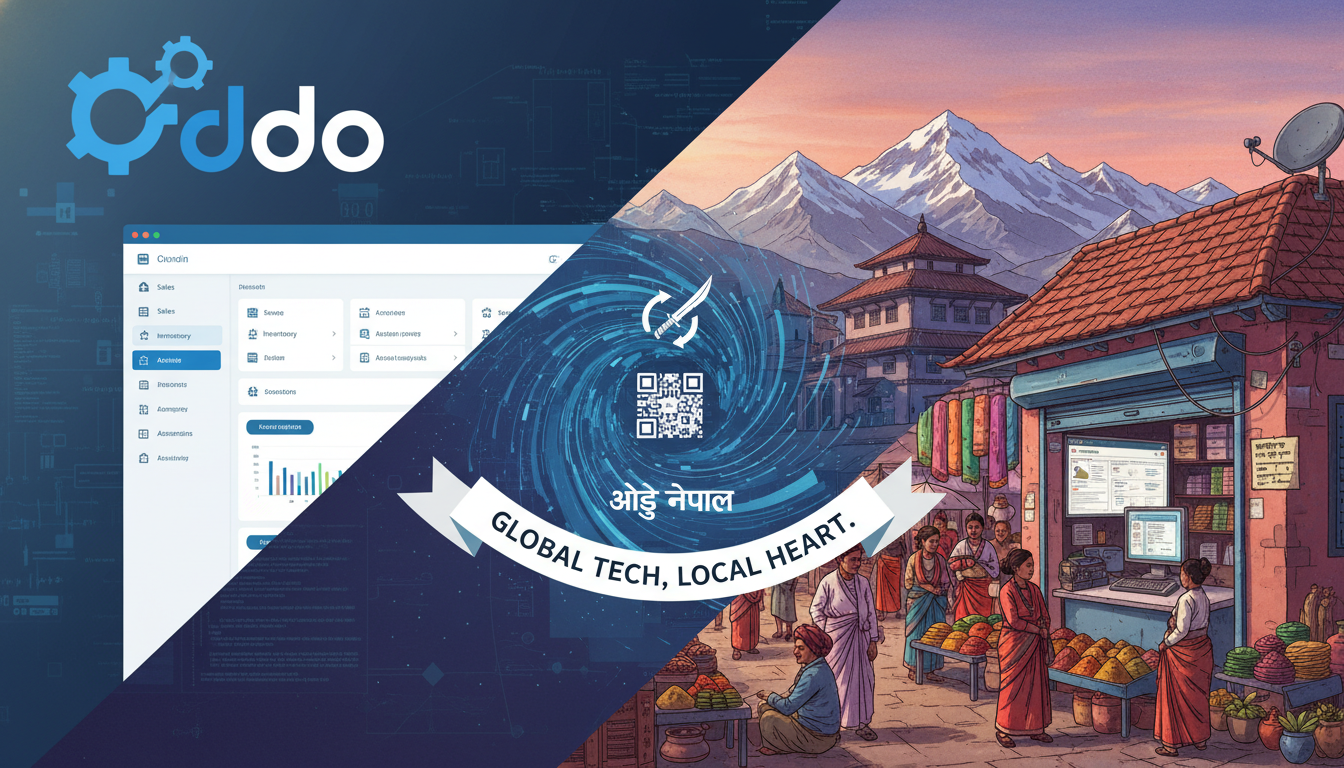
The business landscape of Nepal is currently navigating a profound period of digital transition, shifting from traditional, ledger-based bookkeeping to sophisticated, data-driven Enterprise Resource Planning (ERP) ecosystems. This evolution is not merely technological but cultural, driven by a changing regulatory environment, the globalization of Nepalese trade, and a generational shift in business leadership. The market, once dominated by manual registers and standalone desktop accounting software, is now witnessing a fierce contest between global open-source giants like Odoo, deeply entrenched legacy solutions like TallyPrime, and a resurgence of indigenous software tailored to local complexities like Swastik, FinPro, and Tigg.
This research report provides an exhaustive, granular analysis of the ERP landscape in Nepal for the fiscal years 2024-2025. It dissects the comparative advantages of Odoo ERP against its primary competitors, evaluating them through the lenses of functional capability, regulatory compliance with the Inland Revenue Department (IRD), total cost of ownership (TCO), and adaptability to the unique socio-economic operating environment of Nepal.
1.1 The Evolution from Bookkeeping to ERP in Nepal
Historically, Nepalese businesses—ranging from the trading houses of New Road to the manufacturing corridors of Birgunj—relied on the “Bahikhata” system or basic spreadsheets. The introduction of Tally in the late 1990s and early 2000s revolutionized this by digitizing the “Voucher Entry” process. For nearly two decades, “computerization” in Nepal was synonymous with Tally. However, the limitation of Tally was that it remained fundamentally an accounting tool. It recorded what had happened (financial history) but offered little control over what was happening (real-time operations) or what should happen (forecasting and planning).
The post-2015 era, accelerated significantly by the COVID-19 pandemic, exposed the fragility of siloed systems. Businesses realized that an accounting system that did not talk to the warehouse, or a sales system that did not communicate with procurement, resulted in massive inefficiencies. This realization birthed the demand for ERPs—integrated systems where a single database acts as the source of truth for Sales, Purchase, Inventory, Manufacturing, HR, and Accounting. Odoo ERP has emerged as a frontrunner in this space for the Nepalese mid-market, offering a modular “app-store” approach that promises to unify these disparate functions.
1.2 The Unique Constraints of the Nepalese Market
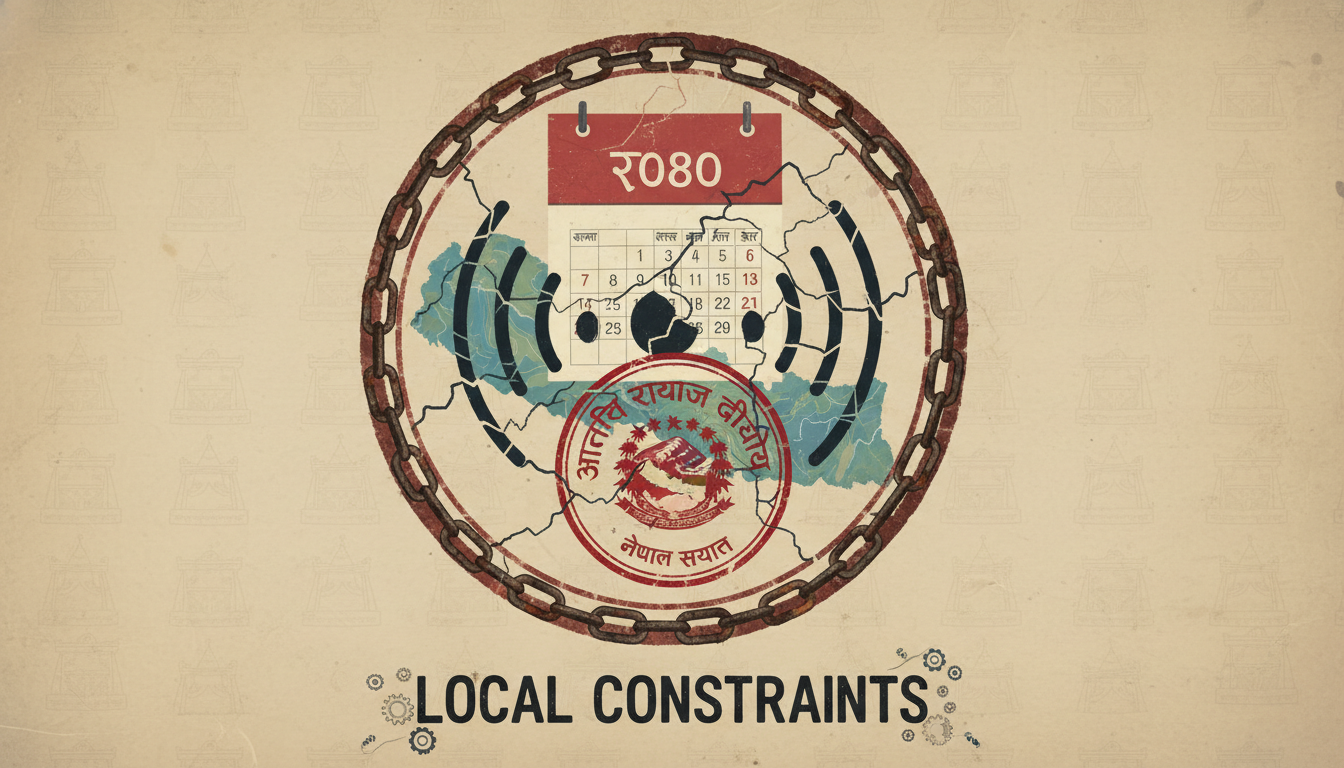
To evaluate any software in Nepal, one must acknowledge that standard global solutions often fail due to specific local constraints:
- Regulatory Rigidity: The Inland Revenue Department (IRD) imposes strict technical standards on billing software, requiring certification that few global SaaS platforms possess.
- The Calendar Conundrum: Nepal operates officially on the Bikram Sambat (BS) calendar. A fiscal year does not align with the Gregorian calendar, typically spanning from mid-July (Shrawan) to mid-July (Ashad). Software that cannot natively handle BS dates for transaction entry and reporting is often rejected by operational staff.
- Infrastructure Variability: While Kathmandu Valley boasts fiber-optic connectivity, industrial zones in the Terai or branches in hilly regions often face intermittent internet. This dichotomy creates a friction point between “Cloud-Native” solutions like Odoo/Tigg and “Offline-First” solutions like Tally/Swastik.
2. The Regulatory Framework: The Gatekeeper of ERP Adoption
In Nepal, the selection of an ERP is not solely a business decision; it is a compliance decision. The overarching authority is the Inland Revenue Department (IRD), and its directives form the primary filter for software viability.
2.1 The Electronic Billing Directive 2074
The cornerstone of software compliance in Nepal is the Electronic Billing Directive 2074. This directive mandates that any taxpayer issuing computerized invoices must use software approved by the IRD. The approval process is rigorous and technical, creating a significant barrier to entry for foreign software vendors who are unwilling to modify their core code for a relatively small market.
2.1.1 Technical Requirements for Approval
To be listed in the IRD’s approved software list (which includes over 400 applications as of late 2024), a system must demonstrate:
- Audit Trails: The system must maintain an immutable log of every transaction. If a user modifies an invoice, the system must keep the original version and create a linked modification record. Deletion of posted transactions is strictly prohibited. This requirement specifically targets the “black money” economy, ensuring that sales cannot be wiped from the database to evade VAT.
- Database Security: The directive often necessitates the use of secure database architectures. While proprietary systems like Swastik use encrypted SQL Server instances, open-source systems like Odoo must be configured to prevent direct database manipulation. The IRD list explicitly mentions the backend database technologies of approved software, ranging from MS SQL Server 2008/2012/2016 (used by Swastik, Busy, FinPro) to PostgreSQL (used by Odoo, Tigg) and Oracle (used by heavy enterprise systems).
- Materialized Views: For real-time monitoring, the IRD has moved toward the Central Billing Monitoring System (CBMS). Software must be capable of syncing invoice data to IRD servers in real-time or near real-time via APIs. This integration is crucial for businesses with high turnover (taxpayers with transactions over NPR 250 million are mandated to register in CBMS).
2.1.2 The “Patch” Economy
Global ERPs like Odoo, SAP, and Microsoft Dynamics are not compliant out-of-the-box. They require “localization patches” or add-on modules to meet these standards.
- Odoo’s Compliance: Odoo is listed in the IRD approved list under specific vendors who have submitted their localized versions. For example, Smarten Technologies and other partners have certified specific versions (e.g., Odoo 13, 14, 18) by developing modules that lock down the database and format invoices according to Annex 13 of the VAT regulation.
- Implications: A business cannot simply download Odoo Community Edition from the web and start billing legally in Nepal. They must engage a developer or partner to install the ird-compliance-module or similar proprietary extensions.
2.2 Fiscal Year and Calendar Management
The Nepalese Fiscal Year (FY) presents a unique algorithmic challenge for ERP systems.
- Variable Dates: The FY start date (Shrawan 1st) changes every year relative to the Gregorian calendar (usually falling on July 16th or 17th).
- Reporting: VAT returns must be filed monthly according to the Nepali calendar. An ERP that aggregates data from July 1 to July 31 (Gregorian) will produce incorrect VAT reports for the month of Shrawan, which might span from July 16 to August 16.
- Solution in Odoo: Developers have created the nepali_datepicker and nepali_date modules. These are not just UI widgets; they perform server-side conversions to ensure that a transaction entered as “2081-04-01” is stored as the correct Gregorian timestamp for database consistency while allowing reports to be filtered by the Nepali date range.
- Solution in Tally/Swastik: These systems have native support for “Miti” (Nepali Date), allowing users to toggle between AD and BS seamlessly without external plugins.
3. Odoo ERP: The Modular Disruptor
Odoo (formerly OpenERP) has rapidly ascended the ranks to become the preferred ERP for mid-sized Nepalese enterprises looking to modernize beyond Tally. Its unique selling proposition lies in its modularity—the ability to start small with just inventory and accounting, and scale up to complex manufacturing, e-commerce, and HR management within the same platform.
3.1 Architecture and Technology Stack
Odoo relies on a modern technology stack comprising Python for backend logic, PostgreSQL for database management, and XML/JavaScript (Owl framework) for the frontend.
- Implication for Nepal: This stack is highly favorable for integration. Python’s rich ecosystem allows Odoo to easily connect with local payment gateways (eSewa, Khalti), SMS providers (Sparrow SMS), and biometric devices for attendance. This contrasts with older Visual Basic-based local software which often requires complex DLL bridges to achieve similar integrations.
- Cloud-Native: Odoo is designed for the web. It does not require a remote desktop connection (RDP) or VPN to access from home, a feature that became non-negotiable for many Nepalese businesses during the COVID-19 lockdowns.
3.2 Odoo Editions: Community vs. Enterprise
In Nepal, the market is split between the two editions of Odoo, creating distinct user tiers.
3.2.1 Odoo Community Edition (The “Free” Trap?)
Many freelance developers and small IT shops in Kathmandu offer Odoo implementation based on the free Community Edition.
- Pros: Zero license cost. It lowers the barrier to entry for SMEs.
- Cons: It lacks critical features like the full Accounting Report engine (Dynamic Balance Sheets, P&L), Mobile App support, and the Studio customization tool.
The Risk: Implementing Community Edition for mission-critical accounting often leads to higher long-term costs as developers charge heavily to build custom reports that are standard in the Enterprise version.
Furthermore, IRD compliance modules are often less maintained for Community versions compared to Enterprise versions supported by official partners.
Odoo Enterprise Edition (The Strategic Choice)
Official partners like Smarten Technologies, Innovax, and Precision Pyramid advocate for the Enterprise edition.
- Cost Structure: Odoo’s pricing has evolved to be more competitive in developing markets. The standard pricing (often around $7 – $10 per user/month depending on the plan and region-specific discounts) includes all apps.
- Key Features for Nepal:
- Unlimited Accounting: Full dynamic reports, critical for audit trails.
- Mobile App: A native app that allows sales staff to create orders from the field—highly relevant for FMCG distributors in Kathmandu’s congested traffic.
- Studio: Allows non-technical administrators to add simple fields (e.g., “Ward Number” or “PAN”) to customer forms without writing code.
The Odoo Partner Ecosystem in Nepal
Success with Odoo in Nepal is highly correlated with the quality of the implementation partner. Unlike Tally, which is a standardized product, Odoo is a “project.”
- Smarten Technologies (Silver Partner): Positioned as a leader in the retail and trading sector. Their client list includes Laltin Multipurpose Co-operative, True Wellness, and Suvida Foods. They have specialized expertise in integrating Odoo with retail hardware (POS) and have a dedicated “Smarten POS” solution. They are also explicitly listed in the IRD approved software list for their Odoo customizations.
- Innovax Solutions: A “Ready” partner focusing on diverse sectors including education and services. Their approach emphasizes the adaptability of Odoo for non-standard business models.
- Precision Pyramid: Another key player, often focusing on larger implementations involving manufacturing and supply chain complexities.
- Freelance/Uncertified Market: A significant portion of Odoo implementations in Nepal are handled by independent developers found on Upwork or local tech circles. While cost-effective, these implementations often suffer from poor documentation and lack of long-term upgrade paths.

Functional Deep Dive: Odoo in the Nepalese Context
Inventory Management (The Double-Entry Advantage)
Nepalese traders often struggle with “stock vs. accounts” reconciliation. Tally records inventory as a memo; Odoo records it as a financial transaction.
- Mechanism: When a product moves from “Stock” to “Customer,” Odoo automatically posts a journal entry crediting the Stock Valuation Account and debiting the Cost of Goods Sold (COGS).
- Impact: This provides real-time profitability analysis per invoice. For trading houses in New Road handling thousands of SKUs, this granular visibility helps identify “dead stock” and margin leaks effectively.
Manufacturing (MRP)
For Nepal’s manufacturing hubs (e.g., cement, noodles, steel), Odoo’s MRP capabilities are superior to Tally and Swastik.
- Bill of Materials (BoM): Odoo supports multi-level BoMs (e.g., flour -> dough -> noodles -> packaging).
- Work Centers: It can track time spent at specific machines (e.g., the extrusion machine vs. the packaging line), allocating labor and overhead costs precisely. Tally generally treats manufacturing as a simple “Input -> Output” conversion without tracking the process cost.
e-Commerce Integration
With the rise of online shopping in Nepal (Daraz, Sastodeal, and brand-owned sites), Odoo offers a native e-commerce module.
- Case Study: Jeevee, a prominent online health and beauty platform in Nepal, utilized Odoo to reshape its online shopping experience. The integration allowed for seamless logic between frontend sales and backend logistics/inventory, adhering to local regulations. This illustrates Odoo’s capability to serve as the backbone for high-volume digital commerce in Nepal, managing the complexity of thousands of daily orders and deliveries.
The Incumbent: TallyPrime
Tally is more than software in Nepal; it is the vernacular of accounting. “Do you know Tally?” is a standard interview question for any finance role. TallyPrime, the latest iteration, attempts to bridge the gap between its legacy simplicity and modern demands.
The Dominance of the “Audit Culture”
The primary driver of Tally’s market share is the Auditor community. Almost every Chartered Accountant (CA) and Registered Auditor (RA) in Nepal uses Tally.
- The Workflow: At the end of the fiscal year, businesses simply export their Tally data (or send the backup file) to their auditor. If a business uses Odoo or SAP, they often have to export data into Excel or re-enter summary data into Tally just to satisfy the auditor’s workflow. This “double work” is a significant friction point for Odoo adoption.
- Compliance: TallyPrime’s Nepal Edition comes pre-configured with the specific VAT returns, Purchase Registers, and Sales Registers required by the IRD. It handles the 13% VAT, TDS rates, and Annexure 13 natively.
Functional Limitations vs. Simplicity
- Speed: Tally is keyboard-driven. An experienced operator can enter a voucher in seconds without touching a mouse. Odoo’s web interface, while pretty, requires clicks and page loads, which can feel “slow” to a data entry operator used to Tally.
- Scope: Tally is fundamentally an accounting and basic inventory tool. It is not a CRM. It does not track leads, manage helpdesk tickets, or host a website. For businesses that only need to file taxes and track receivables, Tally is perfect. For businesses wanting to manage customer relationships or complex manufacturing, Tally forces them to use disparate systems (Excel, separate CRM), leading to data silos.
Pricing and TCO
- License: Tally follows a perpetual license model. A single-user license costs approximately NPR 25,000 – 30,000, and a multi-user license is around NPR 67,500 (plus taxes).
- TSS (Tally Software Services): To get remote access and updates, users must pay an annual renewal fee (approx. 20-25% of license cost).
- Hardware: Tally is light; it runs on basic Pentium/Core i3 machines with 4GB RAM, whereas Odoo requires a server (cloud or local) and better client machines.
Indigenous Solutions: Swastik and FinPro
Between the global open-source nature of Odoo and the Indian dominance of Tally lies a robust layer of Nepalese software. These are built in Nepal, for Nepal.
Swastik Business Accounting
Swastik is a heavyweight in the Nepalese trading sector. Developed by Hitech Valley/Swastik team, it is engineered to handle the specific trade practices of the region.
- The “Trader” Logic: Swastik excels in features like Batch-wise inventory (crucial for expiry dates in Pharma/FMCG) and Scheme Management (complex discounts). It supports multi-godown tracking and unit conversions (e.g., buying in Cartons, selling in Pieces) more intuitively for local traders than Tally.
- Technology: It is primarily a Windows desktop application (Visual Basic / SQL Server). While stable and secure (using MS SQL 2000/2008/2012 backend), it faces the “legacy” trap. It is not cloud-native. Remote access usually requires third-party tools or VPNs, unlike Odoo’s browser-based access.
- Cost: Competitive with Tally, often priced around $200-$300 (NPR 25,000 range) for a perpetual license, making it highly attractive for SMEs.
FinPro (Sagar International Computech)
FinPro dominates the institutional sector—specifically Cooperatives (Sahakari) and Educational Institutions.
- Sector Specificity:
- Cooperatives: FinPro has logic to handle daily saving collections, loan interest calculations (diminishing/flat), and member share management—features that are completely absent in standard Odoo or Tally.
- Education: It integrates with student billing systems (eAcademy) to handle fee collection, exam results, and payroll for teachers.
- Support: Being a Kathmandu-based entity (Ravi Bhawan), Sagar International Computech offers onsite support, which is a critical trust factor for traditional boards of organizations.
The Cloud Wave: Tigg and the SaaS Challengers
As internet reliability improves, a new segment of “Cloud Accounting” is emerging, challenging the desktop dominance of Tally and Swastik.
Tigg: The “Nepali Cloud”
- Mobile-First Strategy: Tigg offers a robust mobile app that allows business owners to view dashboards, approve transactions, and even scan documents. This appeals to the younger generation of entrepreneurs who manage businesses on the go.
- Hybrid Compliance: It is cloud-based but fully IRD certified. It solves the “Foreign SaaS” problem by hosting locally or ensuring the application logic adheres strictly to the Electronic Billing Directive (e.g., maintaining the audit trail in the cloud).
- Pricing Strategy: Tigg operates on a SaaS subscription model:
- Standard: ~NPR 15,000/year (10k transactions).
- Professional: ~NPR 20,000/year (25k transactions).
- Enterprise: ~NPR 32,000/year (40k transactions).
This pricing undercuts the implementation cost of Odoo while offering similar remote accessibility.
The Global SaaS Mismatch (Xero, QuickBooks)
- The Compliance Wall: They do not connect to the IRD’s CBMS system. They do not generate “Annex 13” VAT reports.
- Usage: They are primarily used by:
- Tech startups that want a “Silicon Valley” stack.
- Outsourcing firms (BPOs) in Nepal whose clients are in the US/Australia.
NGOs funded by international donors requiring specific reporting formats.
For a typical Nepalese trading house, the effort to “localize” Xero (manual VAT calculation, lack of Nepali dates) makes it unviable.
7. Enterprise Tier: SAP Business One
When a Nepalese business outgrows the mid-market, it typically looks toward SAP Business One (SAP B1).
7.1 The “Ceiling” of Odoo and Tally
Large conglomerates (like the Chaudhary Group, Golchha Group, etc.) often face issues with Odoo regarding governance and scale. While Odoo can scale, it requires massive server resources and maintenance. Tally fails at data volume and lack of audit controls (too easy to manipulate for a corporate environment).
7.2 SAP B1 Positioning
- Stability & Governance: SAP B1 is rigid. It enforces processes. A user cannot simply “delete” or “backdate” entries easily. This rigidity is a feature, not a bug, for corporate governance.
- Partner: Neo Software is the primary driver of SAP B1 in Nepal. They provide the necessary hand-holding, localization, and integration with the SAP ecosystem.
- Cost: SAP B1 is expensive. Implementation can range from $50,000 to $100,000+, with high annual maintenance. It is an investment for companies with turnovers in the billions.
8. Niche Vertical Solutions
Beyond the generalists, specific industries in Nepal demand specialized ERPs.
8.1 Sparrow ERP (Electronics & High-Tech)
For the emerging electronics assembly industry in Nepal (e.g., mobile assembly, IoT devices), generic ERPs fail in component sourcing.
- Specialization: Sparrow ERP integrates with global component distributors (Digikey, Mouser) to fetch real-time pricing and availability. It manages complex BoMs for PCBs and electronics, a level of detail Odoo achieves only with heavy customization.
- Cost: Custom pricing, often subscription-based for cloud deployments.
8.2 Hospitality and Retail
- Hotel Management: Specialized software like HMS or Opera dominates 5-star hotels. However, Odoo is making inroads in boutique hotels and restaurant chains due to its integrated POS and Inventory (Kitchen Order Ticket management).
- Retail Chains: Bhatbhateni and similar giants often use enterprise-grade POS systems (like LS Retail on Dynamics or custom Oracle stacks), but mid-sized chains are increasingly looking at Odoo for its unified omnichannel capability.
9. Integration and APIs: The New Frontier
The modern Nepalese ERP cannot exist in isolation. It must connect to the digital ecosystem.
9.1 SMS Integration (Sparrow SMS)
Transactional SMS (OTPs for login, order confirmations, payment alerts) is a standard expectation.
- Integration: Sparrow SMS is the dominant provider. Odoo and Tigg integrate well via APIs to send automated SMS triggers. Legacy desktop apps often struggle with this, requiring “SMS credit” dongles or complex setups.
9.2 Payment Gateways
Integrating eSewa, Khalti, and Fonepay into the ERP allows for automated reconciliation of digital payments. Odoo’s flexible payment acquirer module makes this easier to build than Tally’s rigid architecture.
10. Comparative Analysis Matrices
10.1 Feature Comparison Matrix
- Feature: Accounting
- Odoo ERP (Enterprise): Advanced (Analytic)
- TallyPrime (Nepal): Excellent (Voucher)
- Swastik / FinPro: Very Good
- Tigg: Good
- SAP Business One: Advanced
- Feature: IRD Compliance
- Odoo ERP (Enterprise): Via Partner Modules
- TallyPrime (Nepal): Native
- Swastik / FinPro: Native
- Tigg: Native
- SAP Business One: Customization Req.
- Feature: Nepali Date (BS)
- Odoo ERP (Enterprise): Via Modules (nepali_date)
- TallyPrime (Nepal): Native
- Swastik / FinPro: Native
- Tigg: Native
- SAP Business One: Customization Req.
- Feature: Inventory
- Odoo ERP (Enterprise): Double-Entry, Traceable
- TallyPrime (Nepal): Basic (Memo-like)
- Swastik / FinPro: Advanced (Batch/Lot)
- Tigg: Moderate
- SAP Business One: Advanced
- Feature: Cloud/Remote
- Odoo ERP (Enterprise): Native Cloud
- TallyPrime (Nepal): Remote Access (Limited)
- Swastik / FinPro: Desktop (LAN)
- Tigg: Native Cloud
- SAP Business One: Cloud or On-Prem
- Feature: Mobile App
- Odoo ERP (Enterprise): Full Native App
- TallyPrime (Nepal): Companion App (View)
- Swastik / FinPro: No / Basic
- Tigg: Full App
- SAP Business One: Limited App
- Feature: User Experience
- Odoo ERP (Enterprise): Modern, Web-based
- TallyPrime (Nepal): Retro, Keyboard
- Swastik / FinPro: Windows Forms
- Tigg: Modern Web
- SAP Business One: Traditional ERP
- Feature: CRM/Sales
- Odoo ERP (Enterprise): Fully Integrated
- TallyPrime (Nepal): None
- Swastik / FinPro: Basic Customer DB
- Tigg: Basic
- SAP Business One: Integrated
- Feature: Target Size
- Odoo ERP (Enterprise): Mid to Large
- TallyPrime (Nepal): Micro to Mid
- Swastik / FinPro: SME / Trading
- Tigg: Micro to SME
- SAP Business One: Large Enterprise
10.2 Cost of Ownership Projection (5-Year Horizon for a 10-User Company)
- Cost Component: Initial License
- Odoo ERP: Low (Subscription)
- TallyPrime: High (One-time ~68k)
- Swastik: Moderate (~30k)
- SAP B1: Very High
- Cost Component: Implementation
- Odoo ERP: High ($5k – $20k)
- TallyPrime: Minimal
- Swastik: Low
- SAP B1: Very High ($50k+)
- Cost Component: Annual Fees
- Odoo ERP: High (Sub + Hosting)
- TallyPrime: Low (TSS ~15k)
- Swastik: Low (AMC)
- SAP B1: High (Maint.)
- Cost Component: Hardware
- Odoo ERP: Server/Cloud Costs
- TallyPrime: Basic PCs
- Swastik: Basic PCs
- SAP B1: Server Infrastructure
- Cost Component: Training
- Odoo ERP: High Effort
- TallyPrime: Minimal (Market ready)
- Swastik: Low
- SAP B1: High Effort
- Cost Component: Total TCO
- Odoo ERP: High
- TallyPrime: Low
- Swastik: Low
- SAP B1: Very High
Note: Odoo’s initial entry is cheap, but the recurring subscription and hosting costs accumulate. Tally is expensive upfront but cheap to run. SAP is expensive on all fronts.
11. Strategic Recommendations
The decision matrix for a Nepalese business owner in 2025 comes down to three factors: Scale, Compliance, and Ambition.
11.1 When to Choose TallyPrime or Swastik?
- Scenario: You are a trading house in Kathmandu or a hardware store in Narayanghat. Your primary goal is to file VAT returns on time and track how much your customers owe you. You have an accountant who has used Tally for 10 years.
- Verdict: Stick with Tally or Swastik. The learning curve and cost of Odoo are not worth the “extra” features you won’t use. The compliance safety net is your priority.
11.2 When to Choose Odoo ERP?
- Scenario: You are a manufacturing company in Butwal expanding to retail, or an e-commerce startup in Lalitpur. You want your website sales to automatically deduct inventory. You want your sales team to punch orders from their phones while visiting clients. You need to know the exact cost of production including electricity and labor.
- Verdict: Odoo is the only viable choice that balances cost and functionality. It bridges the gap between the chaotic data silos of startups and the rigid structure of enterprise corporations. Crucial Step: Hire a partner like Smarten or Innovax who has a proven “Nepal Localization” module. Do not attempt a vanilla implementation.
11.3 When to Choose Tigg?
- Scenario: You run a chain of coffee shops or boutique stores. You are rarely in the office. You need a POS system that syncs to the cloud so you can check daily sales from your iPhone. You want legal billing but hate the complexity of Tally.
- Verdict: Tigg is the modern, lightweight alternative that fits this lifestyle business model perfectly.
11.4 When to Choose SAP Business One?
- Scenario: You are a Group of Companies preparing for an IPO or seeking foreign investment. You need a system that external auditors (Big 4) will trust implicitly. You have a dedicated IT department.
- Verdict: SAP Business One. It provides the “institutional grade” assurance that Odoo sometimes lacks in the eyes of conservative financial auditors.
In conclusion, the Nepalese ERP market is no longer a monopoly. It is a diverse ecosystem where Odoo acts as the aggressive disruptor, forcing incumbents to evolve. For the Nepalese business, this competition is healthy, offering more choices than ever to align technology with business strategy. The key to success lies not just in selecting the software, but in selecting the partner who understands the unique rhythm of business in the Himalayas.