


Digital & Grassroots Campaigns: Seamless Integration
Grassroots Meets Digital: The Strategic Integration of Online Campaigns and Ground Operations
Executive Summary
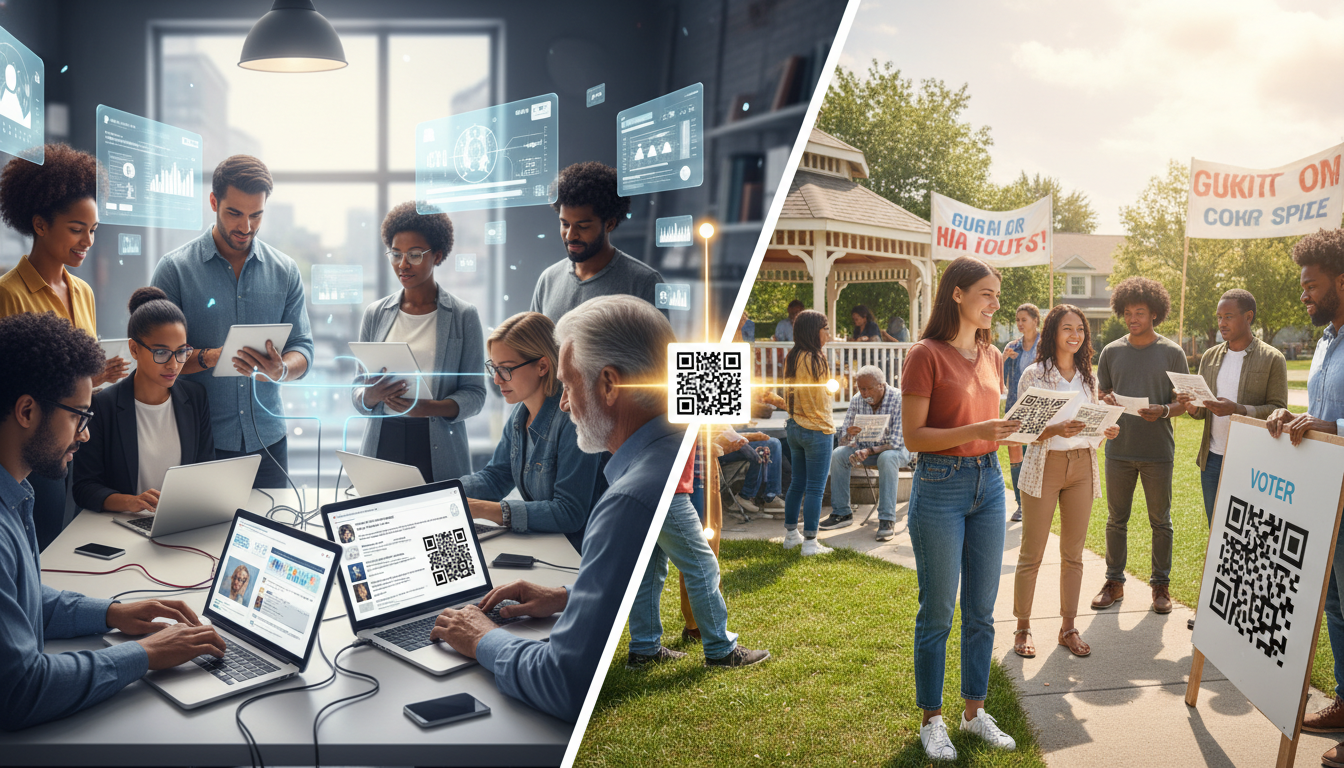
The modern political campaign has transcended the traditional binary that once separated the “air war“—mass media broadcasting and digital advertising—from the “ground game” of door-knocking and phone banking. In the contemporary electoral landscape, these domains have converged into a single, hybrid ecosystem where success is determined by the seamless integration of offline mobilization and online data architectures. This report provides an exhaustive analysis of this convergence, often termed “networked ward politics,” detailing how campaigns operationalize the loop between physical interactions and digital databases.
Drawing on extensive research from electoral contests in the United States, India, Brazil, the United Kingdom, and beyond, this document explores the mechanisms of Offline-to-Online (O2O) integration. It examines the resurgence of QR codes as vital logistical tools for converting anonymous physical crowds into identifiable digital activists, the use of encrypted messaging apps like WhatsApp to structure hyper-local command hierarchies in the Global South, and the evolution of the “Digital War Room” from a reactive press office into a proactive content engine that amplifies live events. Furthermore, it critically assesses the limitations of digital-only strategies, demonstrating through case studies such as the 2022 Beto O’Rourke campaign and the 2024 Indian General Election that high-volume digital engagement cannot substitute for the relational infrastructure of field operations. The findings suggest that the most potent campaigns are those that use digital tools to empower physical networks, turning passive online followers into active offline organizers through rigorous data integration and friction-reduction technologies.
The Theoretical Framework of Hybrid Campaigning
The Evolution from “Air War” to “Networked Wards”
Political science has traditionally bifurcated campaign strategy into two distinct spheres: the capital-intensive “air war” and the labor-intensive “ground game.” The air war, characterized by television advertising and, more recently, programmatic digital ad buying, has historically been the primary vehicle for persuasion, designed to sway undecided voters and define the candidate’s image on a macro scale. In contrast, the ground game—comprising canvassing, phone banks, and get-out-the-vote (GOTV) operations—has been the engine of mobilization, essential for ensuring that identified supporters actually cast their ballots.
Research analyzing U.S. presidential elections from 2004 to 2012 firmly established the distinct utility of each: mass media advertising is statistically more effective at influencing nonpartisan or independent voters, while face-to-face personal selling is superior for “closing the deal” with partisan voters and driving turnout. However, the proliferation of digital technology and social media has fundamentally blurred these lines, giving rise to a new paradigm known as “networked ward politics“.
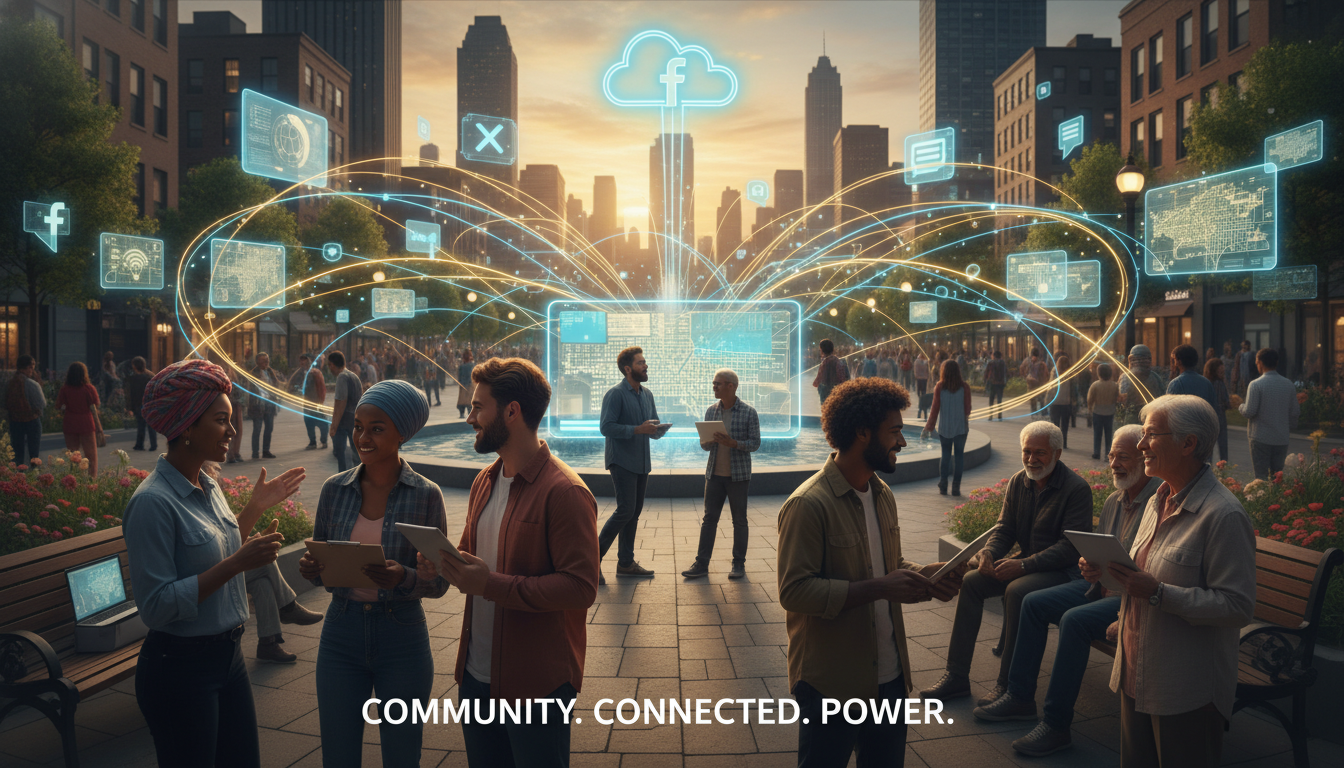
This concept reimagines the traditional political “ward”—a strictly geographical unit of organization—as an expansive, fluid network that unites online social graphs with offline community ties. In a networked ward, a volunteer’s value is not merely their ability to walk a specific precinct map, but their capacity to leverage their entire social network for persuasion and mobilization. Digital tools allow campaigns to fashion their supporters into stewards of these personal networks, bridging the gap between the impersonal broadcast of the air war and the intimate trust of the ground game. This evolution demands a shift in resource allocation, moving away from a siloed approach where digital and field departments operate independently, toward an integrated model where every digital interaction is designed to trigger a physical action, and every physical interaction is captured as a digital data point.
The Offline-to-Online (O2O) Data Loop
The central nervous system of the modern hybrid campaign is the Offline-to-Online (O2O) data loop. This operational framework posits that the primary failure point in traditional campaigning is the loss of data fidelity between the “street” and the “database.” In pre-digital eras, data collected on clipboards might take days or weeks to be manually entered into a central system, by which time the momentum of the voter interaction had dissipated. The O2O loop seeks to eliminate this latency, ensuring that every offline interaction—a handshake at a rally, a door knock, a petition signature—is instantly captured as a digital signal that informs immediate follow-up communication.
This loop operates bi-directionally. In the “offline-to-online” direction, a canvasser marking a voter as “undecided” on a mobile tablet immediately updates the central Constituent Relationship Management (CRM) system. This data point can then trigger a specific, automated digital ad flow targeting that voter’s household with persuasive content relevant to the issues they discussed at the door. Conversely, in the “online-to-offline” direction, a supporter’s digital behavior—such as signing up on a website or engaging with a specific Facebook post—can automatically route them to a field organizer’s task list for a personal phone call or house visit.
The efficacy of this loop is contingent on the sophistication of the campaign’s “tech stack.” Platforms like NGP VAN, NationBuilder, and Pipedrive have evolved to serve as the “source of truth,” integrating disparate data streams from fundraising, field, and digital departments into a unified voter profile. This integration allows for “minute-by-minute” adjustments to campaign strategy, where resource allocation can be shifted in real-time based on the aggregate data flowing in from the field. The O2O loop thus transforms the campaign from a series of disjointed efforts into a responsive, data-driven organism capable of reacting to the electorate’s shifting mood with precision and speed.
The “Digital-Only” Fallacy and the Persistence of the Ground Game
Despite the seductive scalability of digital tools, empirical evidence consistently indicates that digital engagement without offline mobilization is insufficient for electoral victory. The phenomenon of “slacktivism“—where supporters engage in low-effort online actions like sharing posts or signing petitions but fail to take substantive offline action—remains a tangible threat to campaigns that over-index on social media metrics.
Research into the 2022 midterms and various gubernatorial races highlights that while digital tools can effectively amplify a message and generate fundraising revenue, they cannot replicate the deep trust and accountability established through face-to-face interaction. This is particularly true in local contexts and among marginalized communities where trust in institutional messaging is low. The “ground game” remains the primary mechanism for converting latent support into actual votes.
For instance, studies of the 2022 Texas gubernatorial election contrasted the digital-heavy strategy of Beto O’Rourke with the entrenched field operations of Governor Greg Abbott. While O’Rourke dominated social media engagement and online fundraising, his campaign struggled to build the necessary physical infrastructure to mobilize rural and Hispanic voters, demographics that respond better to long-term relationship building than to viral content. Similarly, analysis of the 2024 elections suggests that digital “buzz” and misinformation often failed to translate into electoral outcomes when not paired with a robust ground operation capable of capitalizing on that energy. Thus, the most effective campaigns use digital tools not as a replacement for the ground game, but as force multipliers that make field operations more efficient, targeted, and data-rich.
Operationalizing O2O: QR Codes and Physical Touchpoints
One of the most efficient technologies for bridging the physical-digital divide is the Quick Response (QR) code. Once dismissed as a technological novelty, the QR code has matured into a vital logistical tool for political campaigns, offering a friction-free method to convert anonymous physical crowds into identifiable digital supporters. Its ubiquity, accelerated by the COVID-19 pandemic, has made it a standard interface for connecting the offline world to online campaign infrastructure.
The Mechanics of Friction-Free Conversion
The primary utility of the QR code in political campaigning is the reduction of friction. In the context of user experience (UX) design, “friction” refers to any cognitive or physical effort required to complete a task. Traditional methods of volunteer recruitment or fundraising at physical events—such as filling out paper forms, typing URLs into a browser, or waiting in line to swipe a credit card—are high-friction activities that result in significant drop-off rates. The QR code circumvents these barriers by providing “instant access,” allowing a user to jump directly to a specific action with a single camera scan.
Volunteer Recruitment Flows: Converting Attendees to Activists
At physical rallies, town halls, and protests, the conversion of passive attendees into active volunteers is a critical Key Performance Indicator (KPI). Traditional methods involving clipboards and paper sign-up sheets suffer from multiple failure points: illegible handwriting, delays in data entry, the loss of sheets, and bottlenecks that prevent staff from capturing data from large crowds.
Self-Check-In and “Walk-In” Workflows:
Modern mobilization platforms like Mobilize have integrated QR code technology directly into their event management workflows. Organizers can generate unique QR codes for specific event shifts.
When attendees arrive, they scan the code to check themselves in. This action serves a dual purpose: it logs their attendance in the campaign’s database (verifying the reliability of the supporter) and, critically, captures the contact information of “walk-ins”—supporters who attended without prior registration.
- The Data Capture Mechanism: For a walk-in attendee, the act of scanning the code triggers a simplified sign-up flow on their mobile device. Once completed, their data is instantly synced to the campaign’s CRM, marking their status as “Completed.” This bypasses the need for manual data entry and allows the campaign to immediately target these new leads with follow-up communications, such as a “Thank You” text message containing a link to sign up for the next canvassing shift.
- Placement Strategy: To maximize scan rates, campaigns must strategically place these codes on high-visibility assets. Best practices include displaying large QR codes on podium signs during speeches, projecting them on screens behind the candidate, and printing them on the backs of business cards or “palm cards” distributed by canvassers. This ensures that the call to action is omnipresent throughout the physical space.
2.1.2 Fundraising: The “Line-Busting” Technique
QR codes are also revolutionizing low-dollar fundraising at physical events by capitalizing on the emotional energy of a live rally. The “impulse give” is a powerful phenomenon, but it is often stifled by the logistics of collecting payments.
- Express Pay Integration: By linking QR codes to donation pages enabled with “Express Pay” options (like Apple Pay, Google Pay, or saved payment methods in platforms like ActBlue), campaigns can reduce the donation process to a few seconds. This is particularly effective at fundraising receptions, where long lines for physical credit card swipers can discourage donors.
- Operationalizing the Flow: Instead of funneling donors through a choke point, campaign staff can circulate through the crowd wearing lanyards with large QR codes. Donors scan the code, complete the transaction on their own device, and show the email receipt at the door for entry. This “line-busting” technique significantly increases throughput and reduces the staffing requirements for event entry.
- Direct Mail Attribution: Beyond live events, QR codes are essential for tracking the efficacy of direct mail. By appending unique tracking parameters (UTMs) to the QR link on a mail piece, a campaign can determine exactly which flyer or postcard drove a specific donation or sign-up. This data bridges the attribution gap, allowing campaign managers to calculate the Return on Investment (ROI) of offline mailers with the same precision as digital ads.
2.2 Best Practices for QR Code Implementation
Successful deployment of QR codes requires adherence to specific technical and strategic best practices to ensure high conversion rates and data integrity.
- Mobile-First Destination: It is imperative that the landing page linked to the QR code is optimized for mobile devices. Directing a user to a desktop-formatted donation page or a complex volunteer form on a smartphone increases bounce rates and wastes the engagement opportunity. The page should load quickly and feature large, touch-friendly buttons.
- Clear Call to Action (CTA): A QR code is an abstract symbol; without context, it is meaningless. Every code must be accompanied by a clear imperative text, such as “Scan to Join,” “Scan to Donate,” or “Scan to Volunteer.” This primes the user for the action they are about to take and builds trust.
- Single Goal Focus: To avoid “choice paralysis,” each physical asset should feature a single QR code focused on a specific goal. Including multiple codes (e.g., one for Facebook, one for donating, one for volunteering) on a single flyer dilutes the message and reduces overall conversion rates. The campaign should determine the primary objective of the touchpoint and focus the QR code exclusively on that action.
- Data Tracking and Analytics: Campaigns should utilize dynamic QR codes or tracking links (through services like Bitly or directly via CRMs like NationBuilder) to analyze performance. This data reveals valuable insights, such as the geographic locations where scans are happening, the time of day engagement peaks, and the types of devices being used. This information can inform future decisions about where to place physical ads or hold events.
| Application | Touchpoint | User Action | Data Outcome |
|---|---|---|---|
| Volunteer Recruitment | Rally Podium / Palm Card | Scan to Self-Check-In | Instant log in CRM; tagged as “Active Attendee” for follow-up. |
| Fundraising | Event Lanyard / Direct Mail | Scan to Express Pay | Donation processed; attribution data (UTM) captured for ROI analysis. |
| Voter Registration | T-Shirt / Window Decal | Scan to Register | User directed to state voter portal; interaction logged for GOTV targeting. |
| Information Access | Candidate Business Card | Scan to Bio/Policy | User accesses detailed platform; retargeting pixel fired for future digital ads. |
2.3 Case Studies in QR Utilization
Union Elections: Increasing Turnout with Accessibility
Votem’s CastIron platform has demonstrated the power of QR codes in the context of union elections. By integrating QR codes into the voting process, unions have reported turnout increases of up to three times compared to traditional methods. The codes provide a secure, direct bridge to encrypted mobile ballots, significantly lowering the barrier to entry for members who may not have easy access to desktop computers or polling stations. This case highlights the role of QR codes in democratizing access to participation.
I Love Black People : The Wearable Tech Strategy
During the 2020 election cycle, the organization “I Love Black People” executed an innovative GOTV campaign by printing QR codes on limited-edition t-shirts. These shirts were distributed to supporters in battleground states, effectively turning them into mobile information hubs. Anyone interacting with a wearer could scan the code to access critical election information, such as polling locations and registration deadlines. This strategy leveraged the “Influencer Effect” at a hyper-local, peer-to-peer level, using physical apparel to distribute digital resources.
3. The Dark Social Frontier: WhatsApp and Peer-to-Peer Mobilization
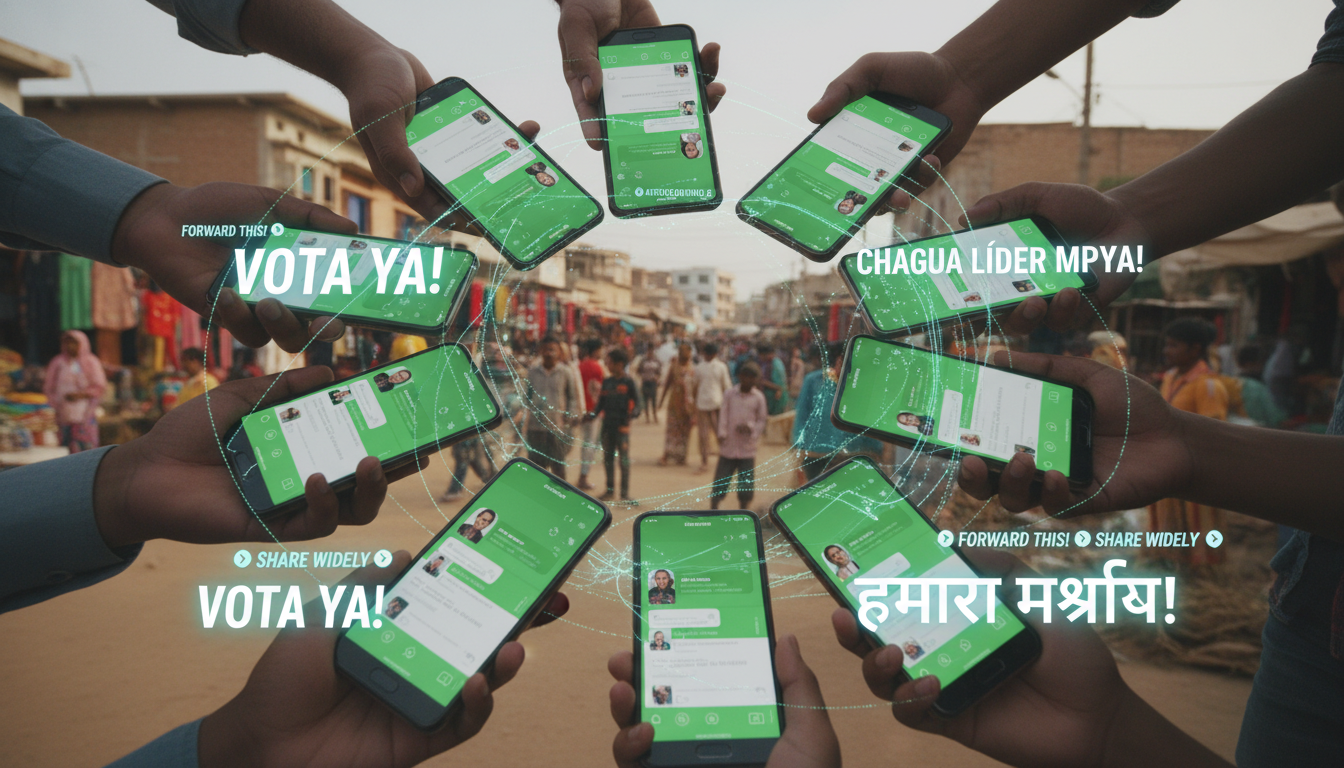
While QR codes serve as the bridge between the physical and the web, encrypted messaging applications (EMAs) like WhatsApp and Telegram have emerged as the primary infrastructure for “networked ward” politics, particularly in the Global South. Often referred to as “dark social” because their traffic is private, encrypted, and difficult to track, these platforms allow for granular, military-style management of grassroots machinery that rivals traditional party structures.
3.1 The Hierarchical Structure of Digital Militias
In countries with high smartphone penetration and low trust in traditional media, political parties have professionalized the use of WhatsApp, creating sophisticated hierarchical structures that mirror military organizations. This “digital militia” model allows for the rapid dissemination of narratives and the precise coordination of physical actions.
3.1.1 India: The BJP’s “Panna Pramukh” Model
- The “Page President” Structure: At the base of the BJP’s hierarchy is the “Panna Pramukh” (Page President), a party worker responsible for a single page (“panna”) of the electoral roll. This page typically contains the names of 30-60 voters (roughly 5-10 families). Above the Panna Pramukh are Booth Presidents, Ward Presidents, and Mandal Presidents, creating a strict chain of command that extends from the national leadership down to the individual street.
- Digital Mirroring: This offline hierarchy is perfectly mirrored on WhatsApp. A Panna Pramukh creates a WhatsApp group specifically for the voters on their assigned page. Information flows downwards from the national “IT Cell” to state leaders, then to district, mandal, and finally the booth/page level. This ensures that a message crafted in the party’s Delhi headquarters reaches a voter’s smartphone in a remote village within minutes. Crucially, this message is mediated by a local neighbor (the Panna Pramukh) whom the voter knows and trusts, lending the content a veneer of personal credibility that mass media lacks.
- The “Saral” App: To manage this vast network, the BJP utilizes the “Saral” app. This proprietary tool allows the party to track the hierarchy, upload voter data, and monitor the performance of Panna Pramukhs. Volunteers are encouraged to register voters on the app, uploading photos, demographic details, and beneficiary status for government schemes. While this raises significant privacy concerns, it provides the party with an unmatched “real-time” view of their ground game, allowing them to grade booths as “strong” or “weak” and deploy resources accordingly.
3.1.2 Brazil: The Pyramid of Influence and “Supergroups”
Similarly, in Brazil, supporters of Jair Bolsonaro developed a “pyramid structure” for WhatsApp mobilization during the 2018 and 2022 elections, though with a greater emphasis on automation and mass-broadcasting.
- The Pyramid: The structure consists of three tiers. At the top are “Influencers” and campaign strategists who create content (memes, videos, narratives). In the middle are the “Bolso-Army”—dedicated administrators who manage multiple groups, enforce ideological purity, and ban dissenters.
At the bottom are “Average Brazilians”—ordinary voters who consume and share the content within their personal networks.
- Automation and Supergroups: Unlike the hyper-local BJP model which relies on manual forwarding, the Brazilian model leverages software to automate posting across thousands of public groups. The introduction of Telegram “Supergroups” (allowing up to 200,000 members) and WhatsApp “Communities” has facilitated this broadcast capability, allowing admins to bypass forwarding limits designed to curb misinformation.
- Cross-Platform Feedback Loop: Research on the January 8th riots in Brazil indicates a tight coupling between platforms. Propaganda is often tested on Twitter to gauge engagement and refine narratives before being pushed into WhatsApp and Telegram groups for mass distribution. This creates a “propaganda feedback loop” that manufactures consensus and coordinates physical actions, such as the “Selma’s Party” code word used to organize the riots.
3.2 Strategic Advantages and Risks of Dark Social
The use of WhatsApp and Telegram for mobilization offers distinct strategic advantages over public social media platforms like Facebook or Twitter:
- Intimacy and Trust: Messages received in a private group from a friend, family member, or neighbor (like the Panna Pramukh) carry significantly higher credibility than a public post from a political page. This “relational” aspect makes persuasion more effective.
- Evasion of Moderation: Because messages on platforms like WhatsApp are end-to-end encrypted, they are invisible to independent fact-checkers and platform moderators. This makes them ideal vectors for unchecked political narratives, rumors, and misinformation, as seen in both the Indian and Brazilian contexts.
- Operational Command: These groups function as command and control centers for physical logistics. They are used to mobilize attendees for rallies, coordinate transport, and organize protests in real-time, translating digital instructions into physical mass movement.
3.3 Western Adaptations: Peer-to-Peer (P2P) Texting
In Western democracies like the United States and the United Kingdom, regulatory environments (such as the TCPA in the US and GDPR in Europe) and platform usage patterns restrict the kind of automated mass-messaging seen in Brazil. However, the core principle of “relational organizing” via mobile messaging has been adapted through Peer-to-Peer (P2P) texting.
Tools and Compliance:
platforms like Hustle, GetThru (formerly Relay), and Spoke enable campaigns to send thousands of text messages per hour. Crucially, each message is technically sent one-by-one by a volunteer pressing a “send” button, which allows campaigns to legally bypass the ban on “robocalls” or automated texts to cell phones. This method preserves the personal touch of a one-on-one conversation while achieving scale.
Case Study: Progressive Turnout Project
The Progressive Turnout Project (PTP) utilized ThruTalk to execute a massive voter contact program, making over 40 million calls and texts. Their data revealed that integrating voice and text channels significantly increased conversion. For example, sending a text message with a ballot request link immediately after a phone conversation resulted in a higher rate of ballot returns than phone calls alone. This demonstrates the power of P2P texting not just as a standalone tool, but as a reinforcement mechanism for other modes of contact.
4. Amplifying the Physical: Live Streaming and Digital War Rooms
The concept of the “Digital War Room” has evolved significantly. No longer just a reactive press office monitoring the news, the modern war room is a proactive content engine designed to amplify physical events to a global online audience. The objective is to make local events feel massive, create “Fear Of Missing Out” (FOMO), and turn every attendee into a content creator for the campaign.
4.1 The Digital War Room Workflow
Modern campaigns operate war rooms that function as 24/7 command centers, integrating social listening, content production, and rapid response capabilities into a unified workflow.
Real-Time Monitoring and Intelligence:
Using enterprise-grade social listening tools like Sprinklr or specialized political monitoring software, war room staff track voter sentiment and emerging narratives on a minute-by-minute basis. During high-stakes moments like debates or rallies, staff monitor social conversations to identify viral moments instantly. This allows the campaign to understand not just what is being said, but how it is being received by different demographic segments.
Rapid Response: The “Shock and Awe” Strategy:
Speed is the currency of the digital war room. When a candidate makes a strong point at a rally or a gaffe occurs on the opposing side, the war room’s video team clips, captions, and distributes that moment within minutes. This strategy, often described as “shock and awe,” was pioneered in 2016 and has been refined since. The goal is to dominate the news cycle by flooding social feeds with favorable content before the opposition or traditional media can frame the narrative. This requires a “walls down” approach where digital, communications, and research teams work in close physical proximity to eliminate approval bottlenecks.
Cross-Functional Integration:
Effective war rooms break down the silos between field, digital, and communications teams. For instance, a field report about a localized issue—such as a specific pothole complaint or a rumor spreading in a neighborhood—can be instantly escalated to the war room. The digital team can then generate a targeted response or ad for that specific district, creating a responsive feedback loop that addresses local concerns with campaign-level resources.
4.2 Live Streaming as a Mobilization Tool
Live streaming has transcended its role as a mere broadcast medium to become an interactive mobilization tool. Platforms like Facebook Live, Twitch, and YouTube allow for real-time engagement that humanizes the candidate and lowers the barrier to entry for supporters.
Interactive Engagement and “Parasocial” Intimacy:
By enabling features like live chat and Q&A, candidates can respond to viewer comments in real-time. This creates a sense of “parasocial” intimacy, where viewers feel a direct personal connection to the candidate. This approach is particularly effective for reaching younger voters who may not consume traditional television news but are highly active on interactive platforms. Candidates like Alexandria Ocasio-Cortez and Beto O’Rourke have utilized this to great effect, turning mundane activities like cooking or driving into political mobilization events.
The “Second Screen” Phenomenon:
Research indicates that a significant portion of the electorate engages with social media while watching televised political events, a behavior known as “second screening.” While studies suggest that this multitasking can lead to “visual overload” and reduced information retention, it also results in higher emotional engagement. Campaigns leverage this by providing “second screen” content—fact-checks, memes, and donation links—pushed out in real-time during the broadcast to capture the attention of these engaged viewers.
4.3 User-Generated Content (UGC) and Greenfly
One of the most significant developments in hybrid campaigning is the systematic harvesting and distribution of User-Generated Content (UGC). Authentic content created by real supporters is often perceived as more trustworthy (“social proof”) than polished campaign advertisements.
The Greenfly Model:
Platforms like Greenfly allow campaigns to automate the collection of photos and videos from volunteers, staff, and supporters at events. Instead of relying solely on professional photographers, the campaign can aggregate thousands of authentic, raw perspectives from the crowd. This allows the campaign to rapidly build a “story bank” of content that reflects the diversity and energy of their movement.
Distribution and the Network Effect:
Once collected, this content can be repackaged and sent back out to supporters to share on their own personal networks. This creates a powerful “network effect,” where the campaign’s message is distributed through the personal channels of thousands of advocates. This strategy bypasses the algorithmic suppression often applied to official political page content, ensuring that the message reaches voters through trusted personal connections.
5. Case Studies in Success and Failure: The Necessity of the Ground Game
Despite the increasing sophistication of digital tools, recent election cycles have provided harsh lessons on the limitations of “digital-only” or “digital-first” strategies. The “ground game”—the physical infrastructure of field offices, door-knocking, and community presence—remains the decisive factor in converting digital enthusiasm into electoral victory.
5.1 The “Digital-Only” Trap: Beto O’Rourke vs. The Abbott Machine
Beto O’Rourke’s 2022 gubernatorial campaign in Texas serves as a cautionary tale regarding the limits of digital organizing. O’Rourke, a “digital native” candidate famous for his viral livestreams and massive online fundraising, built a campaign that excelled in the air war but faltered on the ground against Governor Greg Abbott’s entrenched machinery.
The Deficit:
Analysis of the campaign reveals a critical deficit in traditional ground operations. While Democrats often relied on virtual phone banks and digital organizing—a habit formed during the COVID-19 pandemic—Republicans in Texas aggressively returned to in-person field operations. Interviews with operatives suggest that the Republican “ground game” allowed for organic, bottom-up mobilization that digital outreach could not replicate.
The reliance on digital tools created a “slacktivism” gap, where high online engagement metrics (likes, shares, views) masked a lack of genuine enthusiasm and commitment among likely voters.
The Failure to Connect:
O’Rourke’s digital celebrity did not translate into the necessary turnout among key demographics, particularly rural Hispanics in South Texas. These communities, which have traditionally been Democratic strongholds, require long-term, face-to-face relationship building. The lack of a consistent physical presence allowed the GOP to make inroads through direct engagement, demonstrating that digital reach cannot substitute for the trust built through physical community presence.
5.2 The Relational Engine: Stacey Abrams and the “One Georgia” Model
In contrast, Stacey Abrams’ operations in Georgia—even in her 2022 loss—demonstrated the power of deep, sustained ground investment. Abrams did not just run a campaign; she built an infrastructure (Fair Fight, New Georgia Project) that operated year-round, not just during election cycles.
Holistic Engagement:
The “Abrams Playbook” involves engaging voters in their communities continuously—at church, at the door, and in local businesses. This approach recognizes that mobilizing Black voters requires an approach “as diverse as the Black voting coalition,” moving beyond symbolic gestures to substantive, consistent presence. This model prioritizes hiring local organizers who understand the cultural nuances of their specific “networked wards,” creating a resilience in the Democratic vote share in Georgia that was notably absent in other Southern states.
Investment in Field:
Abrams’ fundraising prowess was directed heavily into field operations. This investment created a machine capable of registering hundreds of thousands of new voters and turning them out, fundamentally shifting the demographic landscape of the Georgia electorate. While she did not win the governorship in 2022, the infrastructure she built is widely credited with delivering Georgia for Joe Biden in 2020 and electing two Democratic Senators.
5.3 The Service Model: AAP’s Mohalla Clinics in India
The Aam Aadmi Party (AAP) in Delhi, India, offers a unique example of integrating governance and service delivery into the ground game. The AAP’s model centers on “Mohalla Clinics”—primary health centers established in local neighborhoods.
Service as Mobilization:
These clinics are not just health facilities; they are political touchpoints. They serve as a tangible demonstration of the party’s commitment to public welfare. The “Mohalla Sabha” (neighborhood assembly) structure empowers local volunteers to manage these clinics and address other local issues, effectively creating a permanent, service-oriented ground game. This model builds immense trust and loyalty, turning beneficiaries into party volunteers and advocates. It demonstrates how delivering tangible services can be the most effective form of “ground game,” creating a base of support that is resilient to the “air war” of larger, better-funded opponents.
5.4 Labour Party UK 2024: Data-Driven Governance
The UK Labour Party’s 2024 strategy highlights the integration of digital data with field operations. Labour’s approach focused on a “National Data Library” and improved data sharing to deliver data-driven public services. This reflects a broader trend where political parties are not just using data to win elections, but positioning themselves as capable of using data to govern effectively. The party’s manifesto emphasized the use of technology to reach new segments of the electorate and modernize campaign infrastructure, suggesting a move towards a more professionalized, data-centric ground game that integrates digital insights into every level of party organization.
6. Technological Infrastructure and Workflow Integration
To successfully execute a hybrid campaign, organizations must employ a robust “tech stack” that integrates these disparate elements—CRM, field, digital, and messaging—into a unified, automated workflow.
6.1 The CRM as the “Source of Truth”
The central hub of any modern campaign is the Constituent Relationship Management (CRM) system. It serves as the single repository for all voter data, ensuring that every interaction is recorded and actionable.
- Platforms: NGP VAN is the industry standard for Democratic campaigns in the US, offering powerful tools for voter file management and canvassing. NationBuilder and Pipedrive offer comprehensive alternatives that integrate website management, donation processing, and communication tools, making them suitable for campaigns of various sizes.
Integration and Syncing: A crucial workflow is ensuring that data from field apps (like MiniVAN or Ecanvasser) syncs instantly with the central CRM. This allows the digital team to see in real-time who has been canvassed. For example, if a voter is marked as “hostile” at the door, the system can automatically suppress digital ads to that household to save money. Conversely, a positive interaction can trigger a “Thank You” email or a targeted donation ask.
6.2 Mobilization and Action Platforms
- Mobilize: This platform has come to dominate the volunteer event space. Its key feature is the “promoted events” network, which allows campaigns to tap into a pre-existing pool of millions of volunteers. Its seamless integration with CRMs ensures that a sign-up on Mobilize automatically populates the voter file, triggering confirmation emails and SMS reminders without manual intervention.
- ActionNetwork: Preferred by progressive movements and unions, ActionNetwork excels in letter campaigns, petitions, and federated organizing. Its structure allows a central organization (like the AFL-CIO) to share data, templates, and actions with local chapters while maintaining data sovereignty, facilitating a distributed but coordinated organizing model.
6.3 The Tech Stack Table
Key Tools in the Hybrid Campaign Tech Stack:
Category: CRM / Database
Primary Tools: NGP VAN, NationBuilder, Pipedrive
Key Function in Hybrid Campaign: Central repository of voter data; synchronizes field and digital interactions; “Source of Truth.”
Category: Field / Canvassing
Primary Tools: MiniVAN, Ecanvasser, Qomon
Key Function in Hybrid Campaign: Digital collection of offline interactions; map-based turf management; real-time sync to CRM.
Category: Volunteer Mgmt
Primary Tools: Mobilize, ActionNetwork
Key Function in Hybrid Campaign: Event recruitment, shift scheduling, automated confirmations, and cross-promotion of events.
Category: P2P Messaging
Primary Tools: Hustle, GetThru, Spoke
Key Function in Hybrid Campaign: Scalable personalized conversations; bridging SMS and CRM data; “Text-to-Join” workflows.
Category: Encrypted Messaging
Primary Tools: WhatsApp, Telegram, Signal
Key Function in Hybrid Campaign: “Dark social” organizing; hierarchical command-and-control (Global South focus); supergroups.
Category: Content / UGC
Primary Tools: Greenfly, Sprinklr
Key Function in Hybrid Campaign: Harvesting and distributing supporter content; social listening; digital war room operations.
7. Strategic Conclusions and Future Outlook
The comprehensive analysis of current political campaigning reveals a decisive shift: the most successful operations are those that deconstruct the barrier between “online” and “offline.” The “Air War” and “Ground Game” are no longer separate theatres of conflict; they are mutually reinforcing layers of a single, integrated strategy.
Key Takeaways:
- Data is the Bridge: The effectiveness of a hybrid campaign is ultimately determined by the speed and accuracy of its data loop. A door knock that is not digitized is a wasted interaction; a digital like that does not lead to a physical action is a vanity metric. The seamless synchronization of these data points is the hallmark of a modern campaign.
- Localization is King: Whether through the “Panna Pramukh” system in India or “Networked Wards” in the US, the most powerful mobilization happens at the hyper-local level. Digital tools are most effective when they are used to empower trusted community members to organize their own networks, rather than simply broadcasting from the top down.
- Friction Reduction: Technologies like QR codes and P2P texting succeed because they remove friction. They make the leap from “passive supporter” to “active volunteer” as easy as a camera scan or a text reply, significantly increasing conversion rates at every step of the engagement ladder.
- The Human Element: Automation and AI can scale operations, but they cannot replace the persuasive power of a human conversation. The goal of technology in this context should be to facilitate more human interactions, not to replace them.
Future Trends:
Looking ahead, we can anticipate the rise of AI-driven grassroots tools, where generative AI helps canvassers draft personalized emails or texts to their neighbors, further lowering the barrier to entry for organizing. However, this will likely be met with increased regulatory scrutiny on data privacy and “dark social” manipulation, particularly regarding the use of encrypted apps and deepfakes. Campaigns that can navigate this ethical and regulatory landscape while maintaining a robust, integrated “ground-digital” infrastructure will define the next era of political mobilization. The future belongs to those who can merge the scale of the internet with the intimacy of the doorstep.
